Abraham Accords need 'constant push' six years on, says Sen. Lankford in i24NEWS special interview
Reflecting on the six years since the signing ceremony on the White House South Lawn, Lankford said the accords proved more durable than critics expected, including in the aftermath of October 7


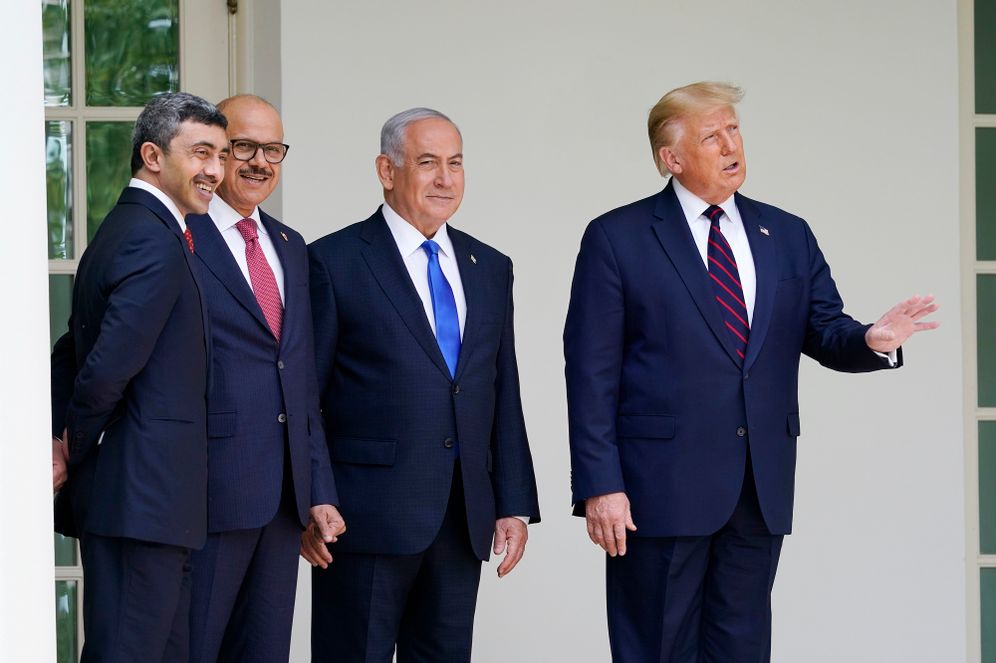
The Abraham Accords will "never" advance on its own and requires a constant push from Congress and the White House. That is what Sen. James Lankford (R-OK), co-chair of the Senate Abraham Accords Caucus, told i24NEWS' Mike Wagenheim on American View.
Sen. Lankford spoke to i24NEWS to help mark the sixth anniversary of the Abraham Accords, which normalized relations between Israel and the UAE, Bahrain and Morocco, with Sudan and, more recently, Kazakhstan later joining.
Reflecting on the six years since the signing ceremony on the White House South Lawn, Lankford said the accords proved more durable than critics expected, including in the aftermath of October 7. "Everyone said the Abraham Accords won't hold, won't make a difference during that time period, and that has proved to be absolutely not true," Lankford said, adding that the growth in economic, humanitarian, and technology cooperation among signatory countries has made "a difference in the last six years."
Lankford also said he had expected the accords to expand well beyond economics. Already this week, news came out regarding a meeting between US Central Command (CENTCOM), the defense chiefs of Israel and many of their Gulf allies, evidence of a growing military partnership.
"When you start economic engagement, you start person-to-person engagement outside of government. Then you start developing that relationship back and forth. That then expands to government leaders," the senator said. "Government drags behind business leaders most of the time in most issues."
Host Mike Wagenheim asked Senator Lankford whether expectations of a domino effect, with one Middle Eastern country after the other normalizing relations with Israel, were too high, particularly with Saudi Arabia. In response, Lankford said yes, at least on timing.
The senator argued the bigger obstacle to expansion is that the US has not clearly defined what member states get in return for joining. "Nations that are already a member: Morocco, UAE, Bahrain. They've asked the question several times. What does America bring to the table?" he said. "America has not been able to define that yet. I think America still owes the rest of the region that."
On why the accords survived the Israel-Hamas war despite friction, Lankford pointed to relationships built before the agreements were signed. "It held together because people already knew each other. They had their phone numbers. They had already engaged... Once those relationships started, people wanted to be able to maintain those relationships long term, even when there's an enormous challenge like the war against Hamas."
He recalled 'real conversations' during the early Biden administration over whether they would continue trying to advance the cooperation. "Is this the Trump Accords or is this the Abraham Accords?" the Senator exclaimed, noting that there was "about six or eight months that there was a real dialog behind the scenes."
On the prospect of new countries joining, including Lebanon and Syria, which have both been floated as potential candidates, Senator Lankford said active talks are underway, though the timing remains uncertain. "There are active conversations with new members," he said, noting that some countries have said they want to see progress on a Palestinian state or other resolutions before joining. According to the senator, the central question remains who legitimately represents the Palestinians in any negotiation.
However, Senator Lankford also acknowledged what he called a shift in Israel's standing in Congress, from a largely nonpartisan issue a decade ago to one that now draws significant opposition from Democrats. "I've seen over 100 members of the House, for instance, vote against any kind of support for Israel," he said, calling the shift "very, very frustrating."
Nevertheless, while discussing Israel's upcoming elections and its future relationship with the US, Lankford said that whereas several regional governments are waiting for Israel's election results before committing to further negotiation, the US-Israel relationship "is not based around who's elected this week."
On the Iran war, Senator Lankford argued that the war actually strengthened rather than damaged US relationships with Gulf allies, demonstrating US commitment to allies like Bahrain and the UAE. "I think this has been a reminder of how close our relationship is with Bahrain and with the UAE, in particular," he stated, adding that both countries "have taken a tremendous amount from the Iranians" and have seen direct US intelligence, training, and missile-defense support in response.
Lankford was blunt when asked whether the accords have reached a point where they could sustain themselves without constant political attention from Washington, regardless of future administrations. "Never," he said. "It's always going to need a push."
The senator said the State Department is "easily distracted with a lot of issues globally," and that without sustained pressure from Congress and the White House, expansion of the accords risks becoming one of "a list of 100 other priorities, which means none of them are a priority."
Lankford believes America's overall role in the accords is primarily as a convener and, at times, an intermediary between countries that lack direct relationships with one another. "The United States has a role to be able to say if relationships are broken, how can we pull two people together," he said, adding that many of those diplomatic introductions happen "behind the scenes, out of the public eye," including conversations between Israeli officials and other regional leaders that remain largely unknown to the public.