Election analysis: Israel's 3.25% threshold has got to go
The problem in Israel is that even this goal isn't achieved. Enter the "technical bloc." Parties merge with a wink and a nod: Have a shotgun wedding to register a joint list to pass the 3.25% mark

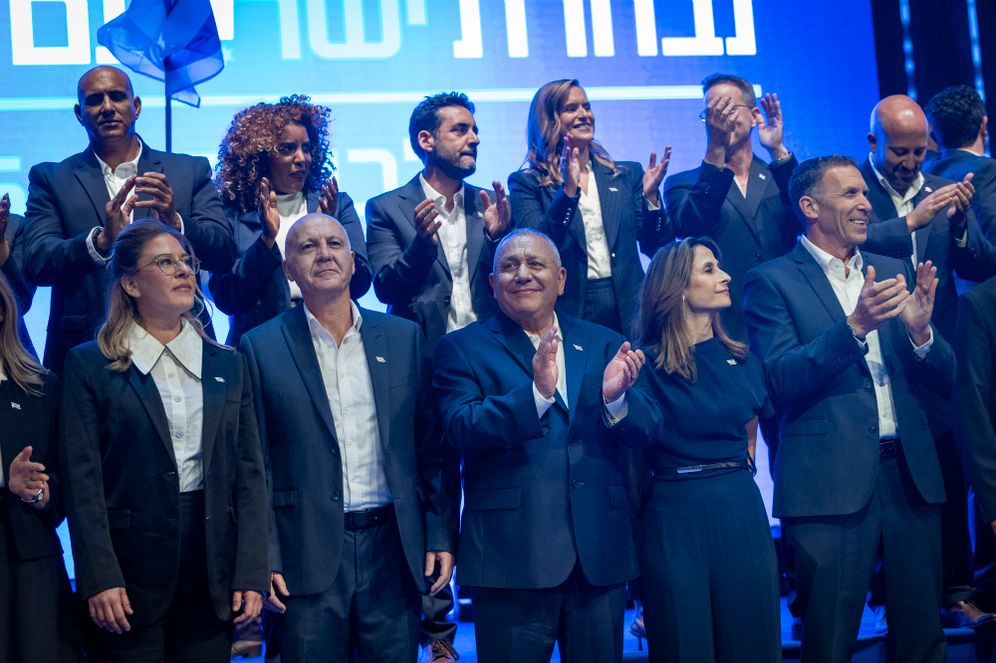
Israel's election campaign is dominated by a number, not by issues. On October 27, Israel will chart the future of its security after October 7, the future of its politics after the 2023 judicial overhaul protests, and the future of its society in the drafting of Haredi yeshiva students.
And Israeli television panels are dominated by none of these. Instead, politics in Israel are dominated by the magic number of 3.25%.
That's Israel's electoral threshold. A party that gets 3.25% of the vote in the October 27 election nabs four seats in the Knesset. Get 3.2499999%? Your party is shut out completely.
That difference can be decisive. A small number of votes cast can also cast a verdict on the result of the entire election. Whether a party gets 3.25% (four seats) or 3.249999% (zero) can swing the entire parliamentary math, especially in a closely divided country.
For example: The Amcha Israel Party of former general Ofir Winter sits in polls either just below or just above the threshold. Pass the threshold by a hair, and add four seats to the pro-Benjamin Netanyahu bloc. Miss the threshold by a hair, have votes wiped out, and give seats by default to the opposition. The difference in real-world public support is slight; the impact on real-world politics is great.
So great that Israeli analysts almost universally see the threshold as the single most important factor in deciding the entire election. While a campaign should focus on issues at play, discussion is instead bogged down by what, in practice, really matters in determining an outcome: a number with a decimal point, not critical issues about Israel's security or identity.
In a democratic process, that's a serious flaw. Even beyond the campaign chatter, the fundamental goal of an election is to translate public will into public policy. Setting a threshold high enough to decide an election foils that goal and even undermines public legitimacy.
Of course, every parliamentary democracy without first-past-the-post districts must set some threshold. Countries across Europe do, from Germany (at 5%) through Italy and Spain (at 3%) and the Netherlands (famously, or infamously, at 0.67%). Israel itself set a threshold at 1% before upping it to 1.5% in 1992, to 2% in 2006, and then to 3.25% in 2015.
A higher threshold does have merits. In principle, a higher threshold weeds out smaller parties with little public support but substantial leverage in deciding parliamentary majorities. To many, that was the goal in Israel: To streamline the work of the government and Knesset by forcing smaller players to merge. At 3.25%, the parliament might still be left with goldfish, but at least it wouldn't have minnows.
The problem in Israel is that even this goal isn't achieved. Enter the "technical bloc." Parties merge with a wink and a nod: Have a shotgun wedding to register a joint list to pass the 3.25% mark. After elections? Wink, nod, and break up.
Suggested articles
The Knesset has lax rules about factions breaking into smaller units. So what ran as a unit of four seats on October 27 could become two separate units of two seats come November 27. As a result, the 3.25% threshold did not even achieve the core purpose for which it was set. In Israel's recent history, these scenarios have frequently played out, for example, with the one-seat far-right Noam faction of sometimes-deputy-minister/always-nuisance Avi Maoz.
The time for change has come. Israel must lower the electoral threshold back to 2% and, constitutionally, find ways to penalize parties that break up as a technical bloc.
True, any threshold by definition wastes votes. But the electoral and democratic stakes are lower. The psychological—and mathematical—impact of a wasted 1.99999% of the vote is substantially lower than that of 3.2499999%. In the aggregate, a given election could still lead to a similar number of lost votes and even to a threshold playing a decisive role. But the risk is more distributed when the threshold number is distributed.
So after October 27, let's tackle the security, political, and cultural issues facing Israel. And let's also take on a critical constitutional one: Lowering a single critical number that does so much damage.