Israel's new Venezuela diplomatic opening can bring down Hezbollah and IRGC in Venezuela in time - analysis
Tuesday’s agreement is modest by design. But it is the first crack in a door shut for seventeen years, at a moment when Venezuela needs outside help and has unusual room to maneuver

On June 24, two earthquakes of magnitude 7.2 and 7.5 devastated northern Venezuela. When the first Israeli search-and-rescue team reached the affected areas, team member Avi Cohen told Infobae: “The first impression was of very great devastation. There are many damaged buildings and some completely collapsed.” The latest death toll at 6301 ( 11 August, Assembly President Jorge Rodríguez) makes it one of the deadliest natural events in Latin America.
Asked whether seventeen years of severed relations had complicated the mission, Cohen was blunt: “In this kind of disaster, political differences are set aside. We came to help. We don't do politics; we do engineering, and we work for people.”
That earthquake mission became the foundation for something unprecedented: on 11 August, Israel and Venezuela signed their first formal agreement since diplomatic relations were severed under Hugo Chávez in 2009. The deal is deliberately narrow, a consular mechanism and continued technical cooperation, not a restoration of full ties.
The joint statement notes that Israel’s relationship with Venezuela’s Jewish community serves as “an important bridge of historic friendship between the two countries.” Both governments used near-identical, evidently pre-negotiated language to announce it. In international relations, that is a sign of how fragile and carefully managed this contact remains. But it is an opening.
And that same discipline is the model Israel will need moving forward.
Now this would not have been possible without the U.S. capture of then-President Nicolás Maduro in January in an operation tied to a 2020 narco-terrorism indictment, weeks after Washington designated the Venezuelan military-linked Cartel de los Soles a terrorist organization on 24 November 2025. Interim President Delcy Rodríguez now leads Venezuela, and while the regime is largely the same, Rodríguez is widely seen as more pragmatic than her predecessors on economics and foreign relations: a CSIS expert told TIME in July she is “seen as a more pragmatic figure” than an ideological hard-liner, even as she keeps hardline rhetoric for domestic audiences.
Suggested articles
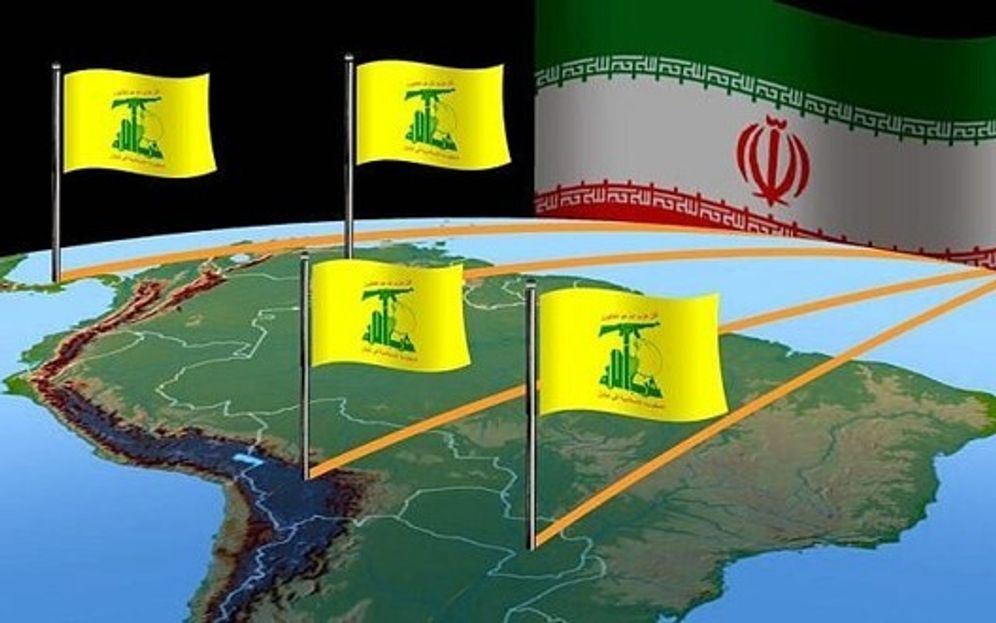
That combination, real constraint alongside real pragmatism, is what makes the opening worth pursuing. Venezuela has hosted Hezbollah and IRGC networks for two decades with little disruption, because no government in Caracas has had both the will and the political room to move against them.
In October 2025, Senate Caucus Chairman John Cornyn’s hearing, titled “Global Gangsters: Hezbollah’s Latin American Drug Trafficking Operations,” produced testimony that Hezbollah may draw as much as $200 million a year, roughly a third of its global funding, from South America, against $700–800 million a year from Iran’s Qods Force. Tareck El Aissami, once Venezuela’s vice president, was accused in Senate testimony by former Treasury official Marshall Billingslea of personally facilitating passports for Hezbollah operatives, more than 10,400 issued between 2010 and 2019 alone.
Suggested articles
It enabled Hezbollah’s deadliest attack outside the Middle East, the 1994 bombing of the AMIA Jewish center in Buenos Aires. Iran’s own footprint is even more overt: Tehran has supplied drone technology to Venezuela since 2006, and in December the U.S. Treasury sanctioned Venezuelan firm EANSA for assembling Iranian attack drones at El Libertador Air Base with direct IRGC coordination.
Since Israel dismantled Hezbollah’s senior leadership in 2024, the Quds Force has taken direct control of rebuilding Hezbollah, the same apparatus with two decades of practice in Venezuela. Better relations with Caracas could open a second front against this network, as the Tri-Border Area (Brazil, Argentina, and Paraguay) has been the only pressure point Israel has had until now.
Getting there requires patience, not haste. Every step must be defensible in Caracas as serving Venezuelan interests, at least initially, and be as non-sensitive as possible. Once the calculus in Caracas is that full relations with Israel will be an asset rather than a liability, then the door opens to security cooperation.
That likely means starting with more earthquake recovery work and support for Venezuela’s Jewish community, then testing economic cooperation, and only later, once trust has been built, probe security cooperation against Hezbollah and the IRGC, pausing immediately if any step risks the gains already made.
Tuesday’s agreement is modest by design. But it is the first crack in a door shut for seventeen years, at a moment when Venezuela needs outside help and has unusual room to maneuver. The payoff, if patience holds, would be a real setback for Hezbollah’s financing and Iran’s regional posture, felt as far away as Lebanon, Iran, and most importantly, Northern Israel.
Brian McDonald, Geopolitical analyst and Postgrad, Defense Studies Department King’s College London, authored this piece.