Israeli election: Why the decision on Abu Shehadeh’s disqualification matters - analysis
The Central Elections Committee's disqualification of Abu Shehadeh, if upheld by the Supreme Court, would make him the first Arab candidate barred from running since 1965

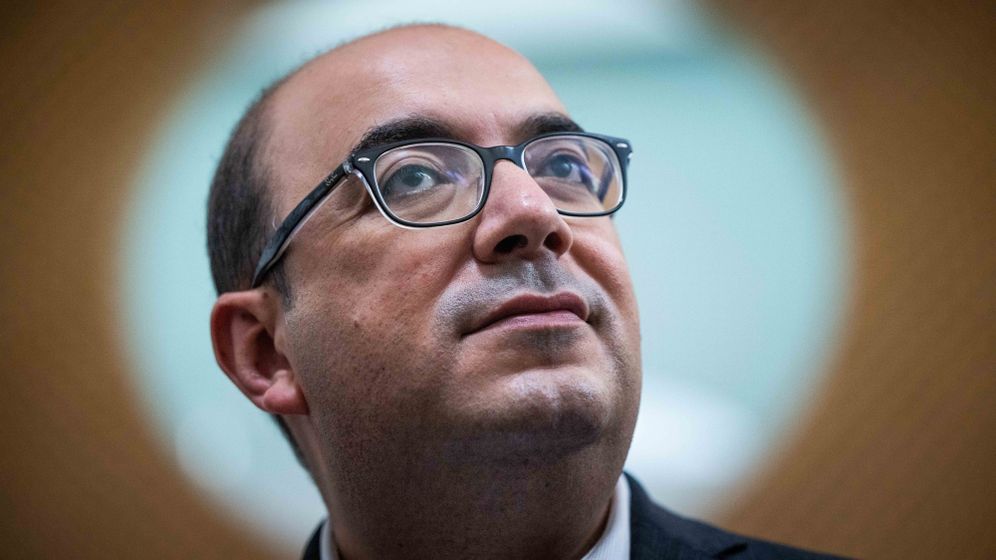
In what may be the ultimate irony, the 138,617 people who cast ballots for the ultra-nationalist Palestinian Balad party in the 2022 Israeli election may have enabled the formation of the most right-wing government in Israel's history.
Balad received 2.91% of the vote, which was just short of Israel's 3.25% electoral threshold. Those votes were discarded, increasing the pool of right-wing votes among the ballots that were counted.
Had those votes been cast instead for another Arab party, it is unlikely that Prime Minister Benjamin Netanyahu would have received the blocking majority he needed to form a government.
Now, it is possible that Balad will decide its second election in a row.
The Central Elections Committee voted as expected to disqualify Balad leader Sami Abu Shehadeh o. Wednesday. What was more of a surprise was that both Attorney-General Gali Baharav-Miara and Supreme Court deputy president Noam Solberg supported the disqualification.
They cited what Abu Shehadeh wrote on October 8, 2023, praising the perpetrators of the massacre. Endorsing terrorism is grounds for disqualification by Israeli law.
If the Supreme Court rules in favor of the disqualification, Abu Shehadeh would be the first candidate prevented from running since Michael Ben-Ari in 2019 and the first Arab since 1965.
The disqualification could either ignite Arab voters to cast ballots in the October 27 election, or it could make them feel disempowered and persuade them to stay home on Election Day.
Their decision could be critical because of the volatility of Arab electoral turnout.
The last Knesset elections, going backward, have seen Arab turnout of 53.2%, 44.6%, 64.8%, 59.2%, 49.2%, and 63.5%. The two peaks came in 2015, when the Joint List of Arab parties was founded, and in 2020, when the Joint List won 15 seats and became Israel’s third-largest party. The nadirs came after the Joint List split up.
That large difference between those highs and lows could be decisive enough to determine whether a candidate for prime minister obtains enough support to form a government or whether we will be going back to the polls at the beginning of 2027.
Either way, Balad voters will continue to play a key role in deciding Israel's future.