Air Force officer shot down over Iran describes "miraculous" survival and rescue in first interview
In his first interview, the weapons systems officer known by his call sign "Bravo" told 60 Minutes he survived a damaged parachute, a 7,000-foot climb with broken bones, and evaded Iranian forces

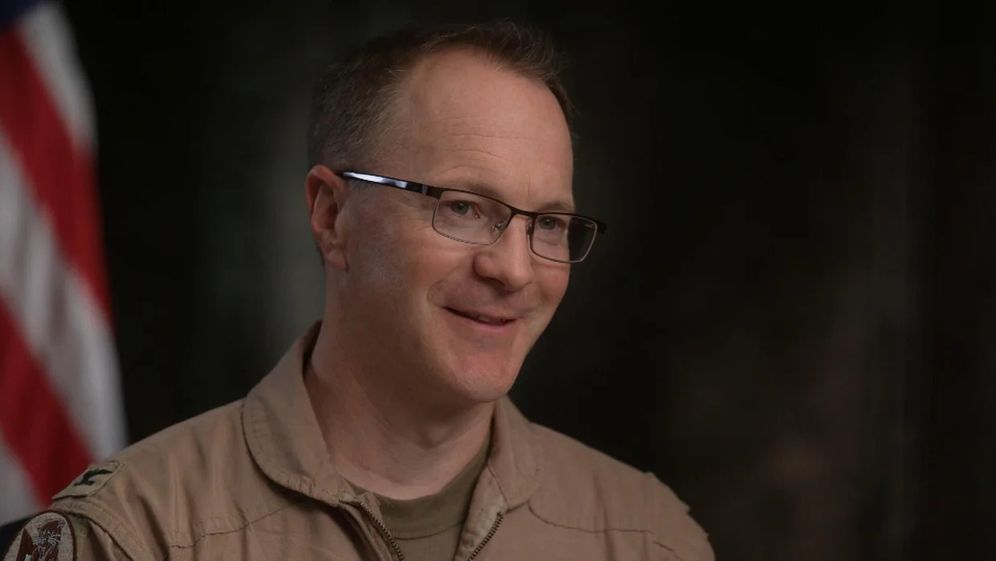
Bravo and his pilot, call sign Alpha, ejected from their F-15E jet, Dude 44, after it was struck by an Iranian missile five weeks into the war. The two officers were stranded miles apart in a mountainous desert region with Iranian bounties on their heads, triggering a massive rescue operation to bring them home. Now, months later, Bravo sat down with 60 Minutes for the first interview by either officer since the crash.
"That day was just another day in the war for us, until the moment we got hit by an Iranian weapon," Bravo said, describing the impact as being hit by a "freight train." He credited Alpha with saving both their lives by ejecting them in time: "I will be thankful, to my dying day, for my pilot and crewmate Alpha for saving our lives and ejecting us."
Bravo's parachute was damaged in the strike, and he described looking up mid-fall to see it missing. "That was the most terrifying thing I've ever seen," he said, adding that he prayed, "Lord, your will be done. But if I'm getting through this, I need help."
Bravo and military debriefers estimated he was falling between 70 and 100 miles per hour. Despite breaking his back, shoulder, and arm in the landing, Bravo called his survival "a miracle" and "a testament to God's provision."
After the crash, Bravo did what any trained soldier would do: find the high ground. The soldier climbed a 7,000-foot ridgeline despite his injuries, saying, "never let a lack of motivation put you on Iranian TV," and crediting the military's "warrior ethos" for helping him push through the terrain.
Bravo also praised the airmen who maintained his ejection seat and survival gear, saying it "outperformed the design specifications" despite damage from the missile.
https://x.com/i/web/status/2099288255250223304
This post can't be displayed because social networks cookies have been deactivated. You can activate them by clicking .
After nearly 48 hours, rescuers reached Bravo on the ridgeline as Iranian soldiers massed at the base of the mountain, a moment he called "one of the greatest moments of my life." According to US military sources, Iranian forces came within a few hundred meters of Bravo as they searched for him.
Gen. Dan Caine addressed the decision to launch the extraction in daylight, saying, "Any time you go behind enemy lines in daylight it's going to be dicey. We would much rather go at night, but given the threat, the decision was taken to boldly go behind enemy lines to get to him because anyone else could."
A clandestine US Air Force unit ultimately extracted Bravo and more than 90 special operators after the rescue aircraft's landing gear became stuck in desert sand; the US later bombed the marooned plane to keep it out of Iranian hands.
Bravo said he never doubted the military would come for him, citing his faith and "the men and women of the United States military." Of his wife, he said, "I was really proud of her and grateful for the strength that she showed" after their first call following his rescue.
Asked what he wants Americans to take from his story, Bravo said, "This is not a story about what I went through. Instead, it's a story of the teamwork, the training, of the faith, of the decisions, the leadership, to do something that will live in history as an example of what America is willing to do to uphold our promise and leave no man behind."