"Find Me, Okay?": Three years after October 7, Eden Yerushalmi's family lets the cameras in — one last time
A new documentary follows the family of the Nova festival hostage murdered in Hamas captivity, from the fight to bring her home to the struggle to keep living without her

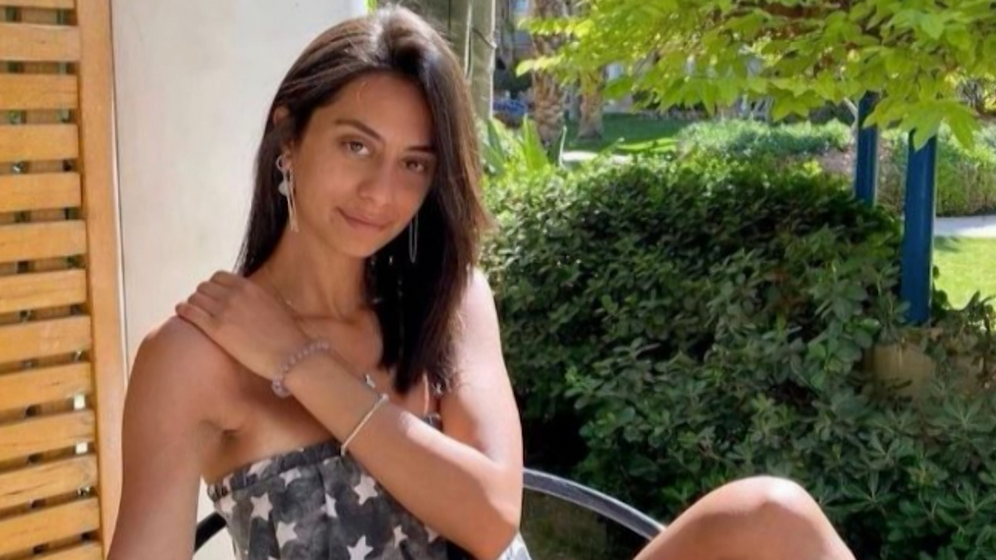
"Find me, okay?"
Those were Eden Yerushalmi's last words to an emergency dispatcher on the morning of October 7. She was 24, hiding behind a bush near the Nova music festival, whispering into her phone while Hamas terrorists closed in.
"They're shooting at me," she told the dispatcher. "I can't believe this is happening to me."
Hours earlier, she had been dancing with her friends. By the end of the call, she was gone, kidnapped into Gaza.
Three years later, those three words are the title of a new documentary. Her younger sister May is showing me around the family home, and almost nothing in it looks the way Eden left it.
"The house is not the same without her"
There's new furniture. New walls. A new layout. On the way in, a memorial to Eden's beloved motorcycle. The patio is full of the flowers that she so loved.
"A lot of things have changed," May says. "The house is not the same without her, so we couldn't live in a house that she isn't part of. Eden didn't see it like this."
After Eden was murdered, the family completely renovated the house. May says their old home belongs to the past, to a period when the home was always full of people coming and going while the family fought to bring Eden back.
"At some point we just wanted some kind of new starting point," she says. "Even though the ending wasn't a good one, we wanted a new beginning."
The house used to be a happy place. Eden was always dancing in it.
"Eden is always here, in the heart," May says. "But this house is not the same home. A lot of things I had in common with Eden, I don't have anymore, because I don't have someone to do these things with. Like dancing in the house. So everything is changed. My identity is changed."
"You stay with me!"
On October 7, Eden was working as a bartender at Nova. When the attack began, she and her friends tried to flee by car. Terrorists opened fire on the vehicle and killed her friends Dorin Atias and Lior Maimon.
Eden hid among their bodies, and later in the forest. For hours, she was on the phone with her sisters and with emergency services, begging for someone to find her.
"I'm alone, and I'm in the bushes," she told the dispatcher. "I really need you to help me."
Then her sisters heard gunshots on the line. Eden cried out that they had caught her. The phone went dead.
Her childhood best friend, Arbel, who was at the festival with her, managed to escape. She has spent the past three years living with that.
"These days I wake up in the morning, and it's like, why you? Why you and not her, and not the others?" Arbel says.
She describes strangers stopping her on the street, people who follow her on Instagram, telling her how strong she is. "And I'm like, you don't see the panic attack and the nervous breakdown I had an hour ago, that almost tore my house apart."
Ask them who Eden was, and they light up for a moment.
"Eden was the funny one, the lazy one, but the stronger one," Arbel says. "It's a cliché, but she really was everything."
"She was a free spirit, the life of the party," May adds. "She was always dancing – at home, outside, everywhere. She had friends of all ages. And she was kind. She had a really, really good heart."
Eden was a newly certified pilates instructor. She loved animals, fashion and sewing, played matkot on the beach, and rode her motorcycle all over Tel Aviv. She had a trip to Greece planned for right after the festival.
A film meant to end in a reunion.
About a month after October 7, filmmakers began documenting the Yerushalmi family. Everyone thought they knew how the story would end.
"It was meant to be a triumphant story," says producer Yaniv Hoffman. "It was meant to be a story about hope, about reunion."
May remembers that optimism. "It was all about when Eden's coming, when she's coming back. This fantasy of meeting her for the first time after she was kidnapped."
Arbel remembers it too. In the middle of the war, she and May would sit in her room and picture the moment. "We imagined how we'd go to the hospital," she says. "How we'd buy her a crown."
Then, in late August 2024, almost a year after she was taken, Eden was shot dead by her captors along with five other hostages: Hersh Goldberg-Polin, Carmel Gat, Alex Lobanov, Almog Sarusi and Ori Danino. The IDF recovered their bodies two days later from a Hamas tunnel deep beneath Rafah in southern Gaza. The army said they had been murdered shortly before troops reached them.
Eden was shot in the head at close range. There were marks on her hands from trying to defend herself.
May chose to see her sister's body. She gave her one last hug goodbye and could feel her bones. When Eden died, she weighed just 36 kilos, about 79 pounds.
"And I thought the movie was over," Hoffman says. "We said, that's it, we're done."
But it wasn't. The family decided there was more to tell. The film became something else: not the story of bringing Eden home, but a record of a family trying to figure out how to live once she wasn't coming back.
Arbel never wanted to make it in the first place.
"It's not normal to film this in our situation. Cameras, people asking questions. No way," she says. "But Eden hadn't come home. It was like, okay, if it can help bring Eden home, let's do it."
"This is what post-trauma is"
Now the film is out, and watching it means reopening everything.
"It's very scary to let people into our life – not our life, our trauma," May says. "These are moments I don't really want to remember."
"This is the most exposed thing I've done in my life," Arbel says.
What they both want people to understand is that October 7 never ended for them.
"I'm 23. I'm a kid," May says. "This happened to me when I was 20. And I feel like I'm not myself. I don't enjoy the simple pleasures in life. The passion I had is gone. The faith I had is gone."
For a while after the murder, she says she stopped believing altogether. "After all your prayers, you're just left with nothing.
"Some days you don't want to get out of bed. Some days you're afraid to leave the house," she says. "This is what post-trauma is."
"I hope you're waiting for me at home"
The documentary also reveals something few people knew. For months, the family had almost no idea what Eden went through in captivity. Then the army found hours of footage Hamas had filmed of her in Gaza.
"We knew nothing about Eden in captivity. We wanted to see something of her," May says. "When they told us there was a lot of footage, it was amazing."
In one clip, Eden speaks to her family directly. "She said, 'I hope you're waiting for me at home.'"
Over three years, the family pieced together what that waiting really looked like. Three times, they received proof that Eden was alive, the last just three weeks before she was killed. After her body came home, the army told them more. For her final weeks, Eden was held in a narrow tunnel where the hostages could barely stand. They had to sleep in a single line. There were no windows, no light, and almost no air. There was hardly any food, and a bucket served as a toilet.
"I don't know if I could be in there a day," her older sister Shani said in a past interview.
May puts it differently. "She was a hero," she says. "She survived 11 months in those tunnels."
May has the footage on her phone. She doesn't watch it.
"I'm happy it was filmed, because this is mine forever," she says. "But she's not there. It's not something you can watch and smile."
One of the film's most powerful moments, Hoffman says, was caught by accident on the family's street, on the day the last hostages came home from Gaza. A neighbor walked past the camera and asked who they were filming for. When the cameraman said the Yerushalmi family, the neighbor told him this was the saddest day since October 7.
"This day was supposed to be happy, because the last of them came back," May says.
"We were happy," Arbel adds. "But we have our sadness."
"Eden's Complex"
Part of the family home has now been transformed into a memorial. May calls it Eden's Complex, and her father built it. Every Tuesday, a Torah lesson is held there in Eden's memory.
The walls are covered with photos and news clips. Arbel stops at one article and shows me her arm. "This one gives me chills," she says. She remembers how, whenever the family went to relatives for a meal, they packed an extra change of clothes, just in case word came that Eden was on her way back.
May points out a photo of Eden as a newborn, wrapped in a yellow blanket. Yellow, the color of the hostage campaign.
"There are all these little things," she says. "We call them signs."
Suggested articles
Choosing to live
For three years, the Yerushalmis have fought to keep Eden's name alive. Making this film has also helped them see that remembering Eden can't mean disappearing themselves.
"We want people to still remember her and keep her name here," May says. "But we're not doing interviews anymore. It's very hard to put all this energy into it all the time, always putting Eden first. Right now we need to put ourselves first."
"This is life," Arbel says.
"This is life," May agrees. "We need to heal ourselves, be together as a family, and live."
"To be happy," Arbel adds.
"Yes," May says. "To go on."
"Find Me, Okay?" is directed and edited by Yula Gidron and produced by Jeff Hoffman, Hilla Medalia, Maria Ionova, Yaniv Hoffman and Omer Hazan, for Above the Clouds Productions and Medalia Productions. It is now being screened in select theaters across the globe.