Israel heads to the polls: Inside the most consequential election in its history
As Israel heads to its first post–October 7 election, Netanyahu faces his toughest political test yet, but coalition math could still keep him in power

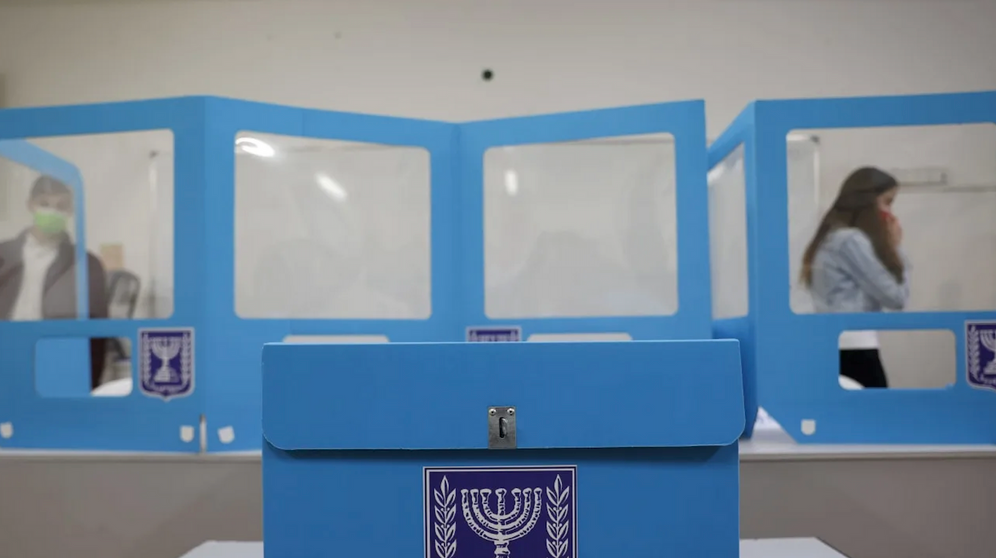
Israelis will vote on October 27, the first national election since the October 7 massacre reshaped the country. And this time, the man who has dominated Israeli politics for a generation looks genuinely vulnerable.
For years, Israeli Prime Minister Benjamin Netanyahu has been the great political survivor - the guy everyone counts out, right before he claws his way back in. But this election feels different.
His security credentials, the thing that used to be untouchable, took a direct hit on October 7th. And even with the public largely behind the wars against Hamas, Hezbollah and Iran, trust in his leadership hasn't recovered.
Here's the thing, though: none of his rivals have a clean shot at power either. That’s because Israel's electoral math is brutal.
How Israeli Elections Actually Work
Israel runs a parliamentary system. There 120 seats in the Parliament, which is known as the Knesset, and those seats are allocated by proportional representation to national party lists. A political party must secure at least 3.25% of the vote, which is around 4 seats, to clear the threshold, and make it into the Parliament.
Now, no party has ever won an outright majority on its own. Not once. So coalitions get built after the fact, stitched together from multiple parties. That gives even small factions outsized leverage over who becomes prime minister, and how long they stay there. The ultra-Orthodox parties know this game better than anyone; they've used their leverage for years to protect exemptions from military service for their community by banding together with other right wing parties, like Netanyahu’s Likud to make it into the government.
Elections are technically supposed to happen every four years. But in practice, that rarely happens. In fact, Israel cycled through five elections between 2019 and 2022 before Netanyahu finally locked in a majority and formed the most right-wing government in the country's history. This time around, that government is actually completing its full term, which is unusual by recent standards.
How the Lists Actually Get Built
It’s important to understand that Israel votes for parties, and not people. The whole country is one giant electoral district, and every party runs a single ranked slate of up to 120 names. Your vote goes to the party. Once a party gets enough votes to make it into the parliament, the politicians that actually get seats in the Knesset depends on where they are ranked in the party’s list. If you’re near the top, you're in. But if your name is near the bottom, you're basically running for nothing. Every party has to lock in its final list six weeks out. This election- that lock in date is September 9th.
And there's no single rulebook for how a party builds that list. Some hand the whole thing to the leader. Others fight it out in open primaries. A few are experimenting with new systems entirely. But how a party builds its slate says a lot about who it's trying to represent, and who's really calling the shots.
For example, most parties simply let the leader decide, full stop. It's the least democratic method, and party dissidents complain about it constantly, but it also hands maximum control to whoever's at the top. The Ultra orthodox parties Shas and United Torah Judaism are examples of that....where the leadership picks candidates and then the rabbinic Councils of Torah Sages sign off.
The Arab parties Hadash and Balad go a different route: internal committee votes rather than a leader's say-so, which allows some consensus-building but tends to squeeze out female candidates in head-to-head races. Hadash actually saw every male contender for its fifth slot drop out this spring so a woman could take the seat unopposed, a workaround that drew its own backlash over how thin that gesture toward gender equality really was.
Only two parties are actually letting their rank-and-file choose: The Democrats and Likud. The Democrats, the Labor-Meretz merger, run what's called a "zipper" primary, alternating male and female candidates all the way down the list so gender parity is essentially guaranteed, on top of reserved slots for Meretz veterans and for Arab, Druze, Circassian and kibbutz-community candidates.
Likud's system is the most tangled of all: a national vote covering the bulk of the list, eight slots Netanyahu gets to hand-pick outright, a set of geographic district seats, and a handful of reserved symbolic slots for a young candidate, a Druze candidate, an immigrant, a candidate with a disability, plus guaranteed floors for women throughout. Netanyahu has actually tightened his own grip on the process this cycle, pushing through internal bylaws that hand him direct control over those eight high-ranking slots. Likud holds its primary August 17.
Who's Actually Challenging Netanyahu
The name generating the most buzz right now is Gadi Eisenkot, former IDF chief of staff, a man who lost his own son in Gaza. He launched his party in September of 2025, called Yashar (that means "Straight" or "Honest" in Hebrew). Eisenkot has built an image as the anti-Netanyahu: a security hawk, a political outsider, someone whose personal sacrifice contrasts sharply with decades of Netanyahu in power and an ongoing corruption trial.
And the polling has stood out. A Channel 13 poll in July showed Eisenkot's Yashar party overtaking Likud for the first time since Yashar's founding, with Yashar projected at 23 seats to Likud's 22. Kan's public broadcaster had them tied at 23 apiece.
In that same wave of polling, Eisenkot also edged out Netanyahu as the public's preferred choice for prime minister, 46% to 36%, though more recent numbers have tightened considerably, with one Channel 12 survey showing the two men dead even at 38% each.
Then there's the Bennett-Lapid alliance. Right-wing Naftali Bennett and left-wing Yair Lapid are an odd couple from opposite ends of the spectrum who managed to oust Netanyahu once before, in 2021, by joining together to build a patchwork coalition that even included an Islamist Arab party for the first time in Israeli history. That government lasted eighteen months.
This cycle, the two have merged their operations under the banner "Together" (B’Yachad), and while they were briefly running second nationally, Eisenkot's surge has pushed them into third place in most current polls, hovering around 15-16 seats.
Avigdor Lieberman rounds out the trio of serious challengers. A former Netanyahu ally turned sharp critic, Lieberman quit the government back in 2018 after accusing the government of surrendering to terror by accepting a ceasefire with Palestinian militants in Gaza. His party, Yisrael Beiteinu, draws heavily on Israel's Russian-speaking immigrant community and consistently polls in the 9-11 seat range, which is enough to potentially make him kingmaker again. This time Lieberman also receives support from those who demand mandatory military service for all and are furious with any exemptions for yeshiva students.
The Coalition Map
So what does the coalition map look like today?
Right-wing Prime Minister Netanyahu's coalition includes:
- His own Likud party
- Far-right wing Bezalel Smotrich's pro-settler Religious Zionism
- Far-right Itamar Ben-Gvir's Jewish Power
- The ultra-Orthodox parties, Shas and United Torah Judaism (which formally quit the government in 2024 but have continued propping it up from outside, and remain almost certain to back Netanyahu for prime minister again if the numbers allow it.)
In the opposition against Netanyahu, you have:
- Eisenkot's Yashar
- Bennett and Lapid's B'Yachad
- Lieberman's Yisrael Beiteinu
- The left-wing Democrats under former general Yair Golan
- Four parties representing Israel's Arab minority - Hadash-Ta'al, Ra'am and Balad
In addition to those major parties, there are more small parties emerging during these elections, among them “The Zionist Home – The Reservists”, a political party representing the IDF reservists, and a new party formed by ex-Likud ministers Gilad Erdan and Yuli Edelstein, who are introducing themselves as right-wing alternative to Netanyahu’s Likud.
But even with Eisenkot's momentum, the math is unforgiving. The combined Jewish opposition parties still land roughly three seats short of the 61 that are needed to govern, even if Eisenkot’s Yashar party were to win more seats than Likud.
That means any path to actually removing Netanyahu almost certainly runs through the Arab parties, a scenario that's already causing friction inside Eisenkot's camp over whether to even entertain it.
What's Actually Driving Voters
These are the four issues that keep surfacing again and again in the polling:
1. The reckoning over October 7. Calls for an independent state commission of inquiry into the security failures that allowed the Hamas attack have become a defining fault line. Netanyahu has resisted one, and it's a demand that isn't going away.
2. The Haredi draft crisis. Two years of war have placed a disproportionate burden on secular and religious-Zionist Israelis serving and dying in Gaza and Lebanon, while Israel’s ultra-Orthodox population largely remains exempt. It's arguably the single most combustible issue of the campaign.
3. The cost of living. Israel remains one of the most expensive countries in the world to live in, driven by housing shortages, import barriers and limited competition, and the war has only added strain to a defense budget that's roughly doubled since 2023.
4. Judicial reform. The fight over the Supreme Court's independence, which convulsed the country before October 7, hasn't disappeared. It's simply been reframed by the war around it.
Interestingly, when Israelis are asked to name their single top priority, political and governance concerns, replacing the government, judicial reform, actually outrank security and diplomatic issues like dismantling Hamas or settlement policy, according to JPPI's polling. Among Arab citizens, the picture flips almost entirely: crime and violence, along with the cost of living, dominate as top concerns.
Where This Leaves Things
Essentially every analyst tracking this race calls a referendum on Netanyahu. A referendum on his handling of October 7, on his corruption trial, on eighteen years, on and off, of Netanyahu-era politics. Likud is currently polling in the low-to-mid 20s, down from the 32 seats it won in 2022. Whether Netanyahu can once again defy the numbers, as he has, over and over, or whether Eisenkot's outsider momentum finally converts into a governing coalition, remains the open question heading into autumn.
One thing seems certain: with September's candidate-list deadline still ahead, and parties still merging, splitting and repositioning, the shape of this race is far from settled.