Flydubai hijacking: How passengers stopped co-pilot from crashing plane into Tel Aviv - report
Corriere della Sera reconstructed the FlyDubai hijacking attempt by cross-referencing testimony from a variety of human and digital sources

Flight FZ1073 departed Dubai for Tel Aviv at 7:05 a.m. on September 30 with 174 passengers aboard, captained by Smit Machchhar, a 38-year-old Indian pilot, alongside First Officer Hamam al-Hammami, a 29-year-old Omani who had been fired from Oman Air over views that authorities considered too close to Islamic extremism before being hired by Flydubai eight months earlier.
According to Israeli intelligence, al-Hammami had planned to kill the captain, continue the flight undetected, and crash the plane into skyscrapers in Tel Aviv before fighter jets could respond.
The flight proceeded normally through its climb and cruise phases. At 9:15 a.m., with the aircraft at 34,000 feet on autopilot, al-Hammami told the captain he wanted to pray, a request that did not strike Machchhar as unusual, despite falling between the traditional prayer times.
Four or five minutes later, al-Hammami retrieved the cockpit's emergency axe and struck Machchhar from behind, severing his arm and causing severe blood loss as the captain fought back.
Machchhar dragged himself toward the cockpit door, which al-Hammami repeatedly forced shut. Around 9:20 a.m., five-year-old passenger Nina Manes asked to use the restroom; her mother, Tali, overheard the struggle inside the cockpit and alerted an off-duty pilot seated in business class, who opened the door and discovered the attack underway.
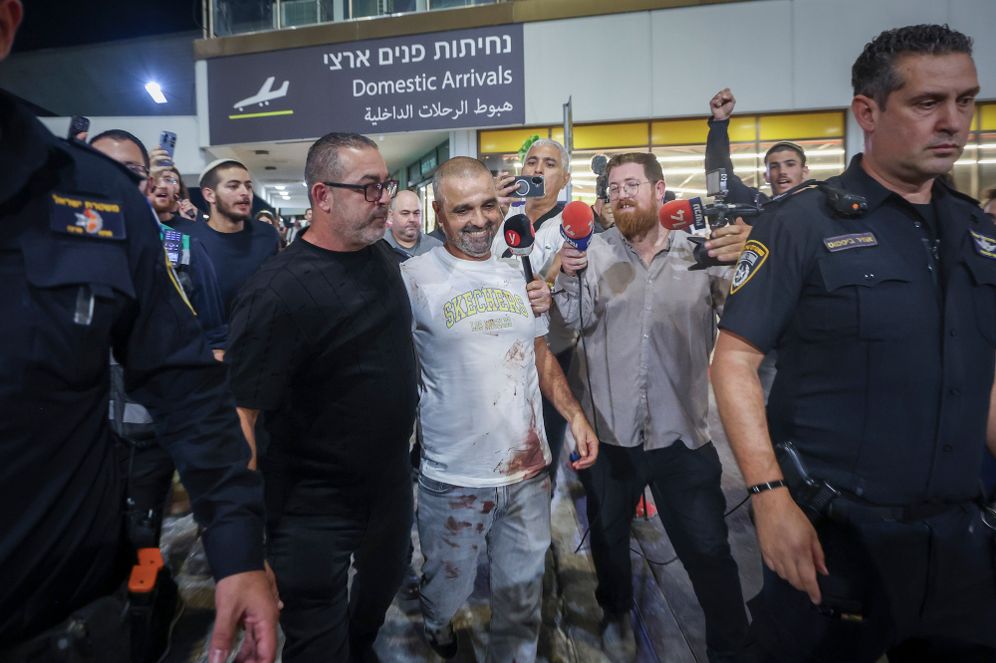
Several Israeli passengers, most of whom had military training, intervened, intervened to restrain al-Hammami and attend to the captain.
At 9:21 a.m., al-Hammami disengaged the autopilot and pushed the control stick forward, causing the plane to lose 16,000 feet in just over 30 seconds. Investigators are examining whether he also cut the fuel supply to the engines, as cabin emergency lights, which activate only when the aircraft loses main power, were visible in footage of the incident.
During the dive, the aircraft exceeded its structural limits, causing part of the rudder to detach. Passenger Yaniv Hayoun said he pulled back on the control stick to help stabilize the plane before two off-duty pilots took over and returned it to normal flight.
At 9:31 a.m., a general emergency code was transmitted in the confusion rather than the specific hijacking code. The hijacking code was transmitted at 9:38 a.m. as the plane approached Jordanian airspace.
Saudi air traffic control redirected the flight to Tabuk, where it landed safely at 10:57 a.m. Machchhar was hospitalized with serious injuries, and al-Hammami was handed over to Saudi authorities.
The incident has raised questions for the aviation industry about airline pilot vetting procedures, the design of cockpit security doors that can inadvertently block rescuers, the role of onboard emergency axes, and how al-Hammami's past social media activity, including footage from 2023 showing him filming Israeli aircraft, went unexamined for years before the attack.
Suggested articles
- Netanyahu, Miri Regev ‘celebrating failure’ after Flydubai hijacking attempt, Bennett says | Yuval Barnea
- Australia investigates ties of FlyDubai co-pilot accused of attacking Israel-bound flight | i24NEWS
- Israel's Transport Ministry says it doesn't conduct foreign pilot security checks, relies on airlines | i24NEWS