Israel plans global response to award-winning Gaza War film 'NAZA' - report
Israel’s reported campaign is expected to include official military responses, paid digital advertising, media appearances and briefings for foreign opinion leaders

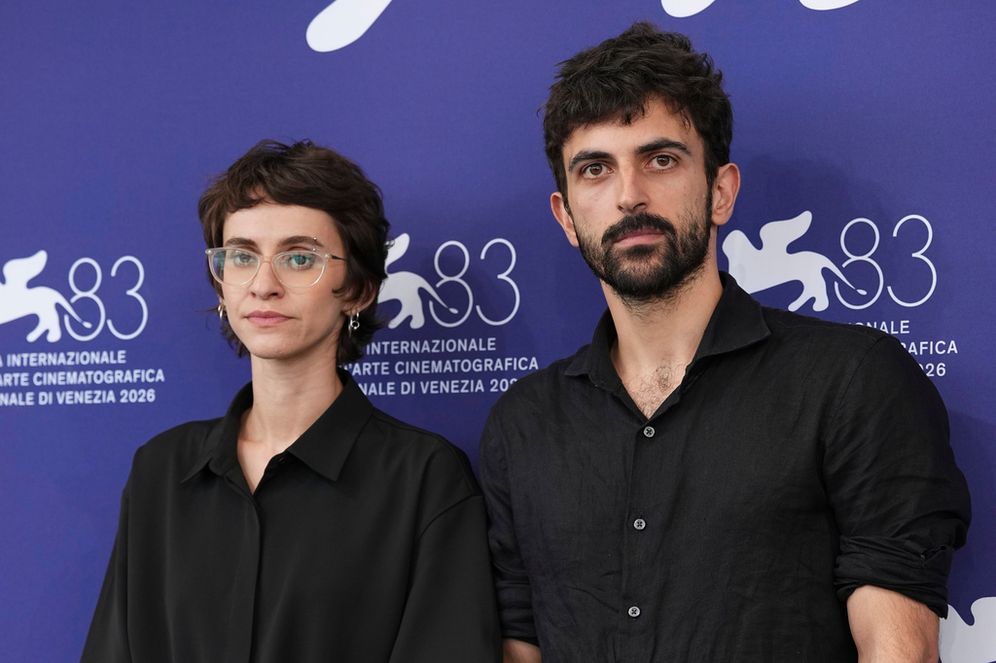
Israeli officials are preparing an international campaign to counter allegations made in “Naza,” an Israeli documentary about military operations in Gaza that won the jury prize at the 83rd Venice Film Festival.
The National Public Diplomacy Directorate, Foreign Ministry and Israel Defense Forces are holding intensive discussions about the response, according to officials familiar with the preparations. The campaign is expected to span several platforms, with a particular focus on digital media.
“We are deeply engaged with this,” senior public-diplomacy officials told YNET. They accused the film of presenting a distorted account of the war and rejected its allegations concerning genocide and the deliberate killing of civilians.
The documentary, created by Yuval Abraham and Rachel Szor, was filmed on rooftops in Tel Aviv during the Gaza war. It features interviews with 24 men and women who are presented as having served in Unit 8200, the Israeli military’s signals-intelligence division.
According to descriptions of the film, the interviewees make serious allegations about the IDF’s targeting policies, airstrikes and use of artificial intelligence. They claim that technology was used to recommend targets based partly on intercepted telephone communications, even when attacks risked killing relatives or other civilians. The film also alleges that uninvolved Palestinians were intentionally killed.
Israeli officials strongly dispute those claims. They say the military’s collateral-damage procedures are designed to minimize civilian casualties while targeting Hamas and other armed groups operating in densely populated areas.
Officials also argue that Hamas deliberately places civilians in danger by operating among the population and using civilian infrastructure. The film’s assertions, they say, omit the steps Israel takes to cancel, delay or redirect attacks when civilians are detected near a target.
Diplomats have recommended making documented examples of such decisions central to Israel’s response. In June 2024, for example, the IDF said it twice postponed an attack on Hamas and Palestinian Islamic Jihad operatives located in classrooms at a UNRWA school compound in Nuseirat after civilians were identified nearby.
The military publicized three other cases that February: a munition diverted after an ambulance was detected, an attack canceled because civilians unexpectedly entered the target area, and another strike delayed until noncombatants had left.
Israel’s planned campaign is expected to include official military responses, paid digital advertising, media appearances and briefings for foreign opinion leaders. Foreign Ministry Director-General Eden Bar Tal was also expected to convene a meeting on the film.
Diplomats say the documentary presents a significant challenge because it was made by Israelis and relies on purported testimony from Israeli soldiers and officers. That may make its allegations more difficult to dismiss as the product of hostile foreign media.
The controversy has also triggered a heated political debate inside Israel.
Culture and Sports Minister Miki Zohar called for authorities to examine whether the filmmakers could be stripped of their Israeli citizenship, accusing them of disloyalty and of assisting Israel’s enemies during wartime.
“Freedom of expression is not a license to betray the state,” Zohar wrote on X.
His demand drew criticism from French Jewish philosopher Raphaël Enthoven, a prominent supporter of Israel. Enthoven argued that the proper response was to disprove the film’s allegations if they were inaccurate—not to threaten its creators with exclusion from the national community.
Former IDF chief of staff Gadi Eisenkot also condemned the documentary, accusing its creators of presenting a one-sided and distorted portrayal of Israeli soldiers. He said criticism was legitimate in a democracy but argued that attacking the military’s moral standing on an international stage crossed a line.