Record 46 countries boycott UN Durban Conference Anniversary
It's unclear why France has decided not to boycott the Durban Conference Anniversary this time, particularly as antisemitism has risen sharply

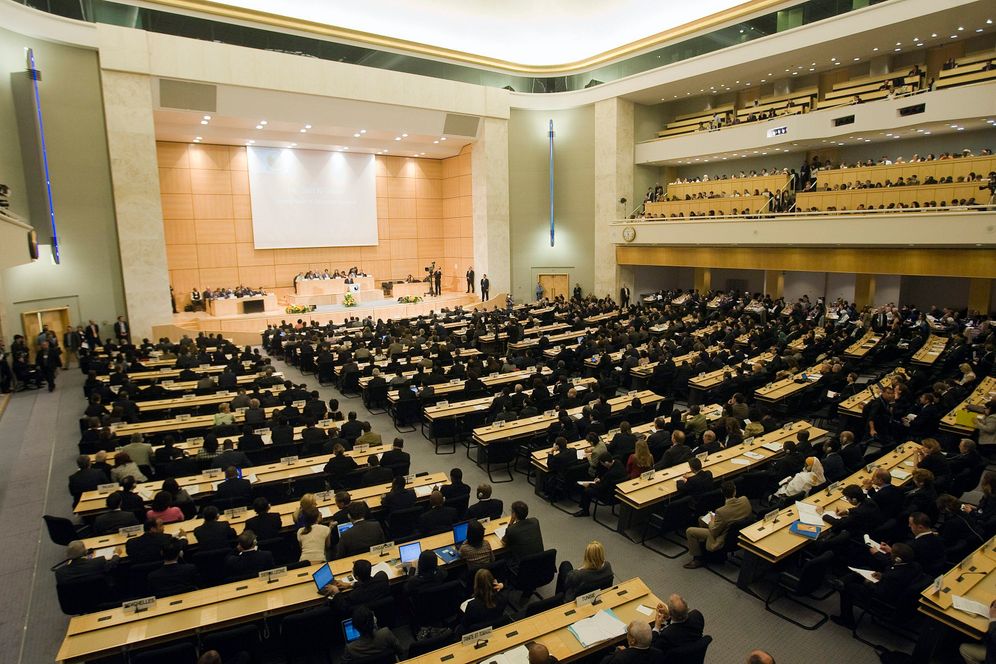
A record number of countries chose to boycott the 25th anniversary of the UN's Durban Conference this year as a result of campaigning by Israel's UN Ambassador Danny Danon and Israel's Foreign Ministry
Some 46 countries boycotted the anniversary events, an increase from 38 in 2021. This includes countries with recently strained relationships with Israel such as the UK, the Netherlands, and Italy. Several new countries joined the boycott including many from South America, especially those who experienced changes in government such as Argentina, Bolivia, and Venezuela. Additionally, many Pacific nations also joined the boycott such as Micronesia, Palau, Papua New Guinea (PNG), and Samoa.
However, several countries decided not to boycott despite having done so previously. Particularly noticeable was France, which decided not to boycott this time around, as well as Austria, Estonia, Montenegro, and Uruguay.
France decided to boycott the conference in 2021 due to concerns over "antisemitic statements" at previous meetings. France also boycotted previous meetings in 2009 and 2011.It's unclear why France has decided not to boycott this time, particularly as antisemitism has risen sharply.
The original Durban Conference was ostensibly about tackling global racism but devolved into a series of attacks on Israel and a forum for antisemitism, leading Israel and the US to pull out in 2001. There were claims from Jewish attendees that members of the Palestinian Solidarity Committee of South Africa distributed copies of "The Protocols of the Elders of Zion."
Part of the issue stems from the use of the phrase "Zionism is Racism," which dates back to the now-annulled UNGA Resolution 3379 that stated as much. The phrase was intended to serve as a placeholder, but when attendees attempted to escalate the language by referring to atrocities suffered by other peoples as "holocausts," Israel and the US withdrew.
Eventually, semantic arguments took over the debate and compromises were made that left almost no country happy with the final text. In the end, the conference spent most of its time engaged in ineffective discussions that meant a conference aimed at tackling global racism only gave serious consideration to tackling anti-African racism. Antisemitism, Islamophobia, and "anti-Arabism" were each only mentioned once, while the term ‘racism’ was largely only used to refer to anti-African prejudice.
The conference is rarely remembered outside diplomatic circles today, as it occurred only three days before 9/11. The conference became so controversial that even many human rights NGOs dissociated themselves from it, including Human Rights Watch, Amnesty International, and the Lawyers Committee for Human Rights.