Life in Gaza, three years after October 7
Hamas operatives largely keep a low profile, but armed men still appear in the streets at night

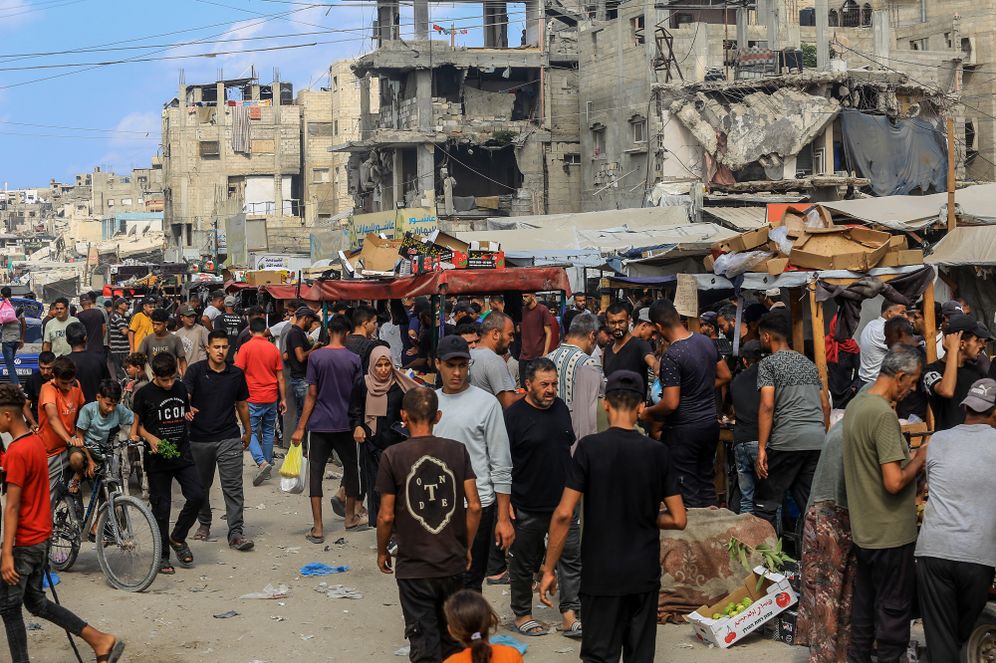
In the three years since the October 7 massacre, the state of Israel and the region as a whole have changed beyond recognition. The same applies to the Gaza Strip. According to the most recent available satellite imagery, roughly 80% of all buildings in Gaza have been damaged or destroyed during the war.
Israeli forces currently control 63% of Gaza's territory. In the remaining 37%, some two million Gazans live in the densely populated city centers and tent cities across the Strip. And life there is uncertain, with many fearing a resumption of the fighting as Hamas refuses to concede power and disarm.
The prevailing mood is one of frustration and despair. For three years, residents have waited for the war to end and for the technocratic committee meant to run Gaza to begin operating there. That moment still seems distant. "Three years have passed with people hoping that the war would end, but it hasn't, and we are still stuck," one woman in Gaza told i24NEWS. "As you know, people have been living in tents for three years, and this is extremely difficult."
Tension rose in the days leading up to the anniversary, as many families stockpiled food in case of an emergency. The fear that a major military operation could see the IDF take over what remains of the Strip has not gone away. "We don't feel stable, and honestly, we don't feel that there is any real hope for peace," she said.
Hamas operatives largely keep a low profile, but armed men still appear in the streets at night. Residents often cannot tell whether these men belong to Hamas or to one of the armed groups operating from behind the Yellow Line. "To be honest with you, we don't know who they are," she said.
Residents also say Hamas finances itself in part by imposing various taxes on residents and merchants, which some describe as extortion. "Here, we know very well that Hamas must hand over all its weapons," the Gazan said. "The people of Gaza want to get rid of Hamas and its rule, so that this situation we are living through and suffering from can finally come to an end."
Food and basic goods are available, the woman said. "There is no famine at all. Food and other goods are available, but not everyone has the means to buy them. The poor and those who don't have jobs depend on free aid and on groups that cook free food in the streets and distribute it to them."
Work in Gaza is scarce. Many of the available jobs in the various NGOs operating in the Strip are subject to Hamas's approval, as it decides who can get hired. If you're not affiliated with Hamas, chances are you won't find work.
Despite criticism in Western and Arab capitals, where Israeli plans to encourage emigration from Gaza have been branded "ethnic cleansing," the woman who spoke with i24NEWS said she hopes to leave at the first opportunity. "I intend not to return," she said.