How the Houthis became a global threat
Their advance along Yemen’s Red Sea coast could squeeze vital shipping routes, endanger Saudi oil exports and open another front in the confrontation with Iran

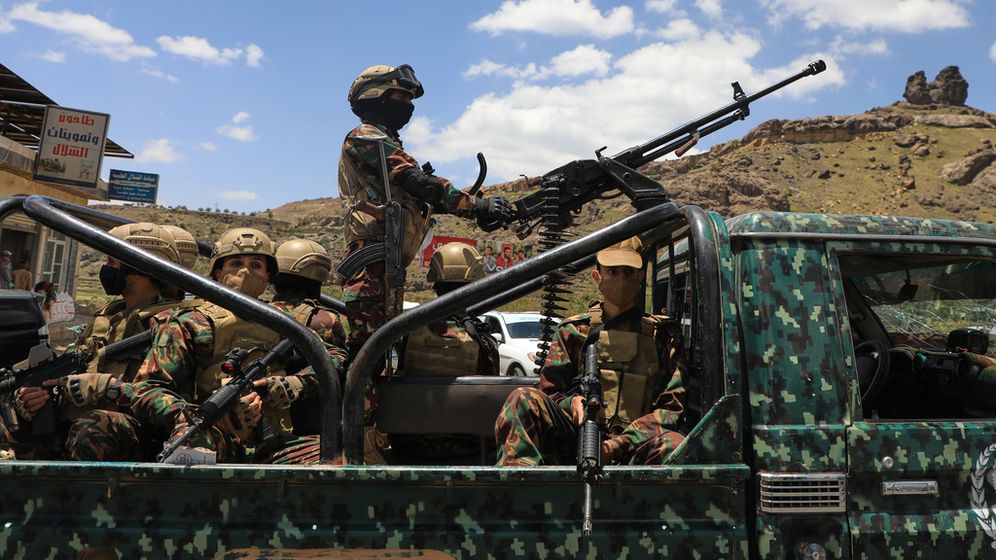
The Houthis are no longer just a Yemeni rebel group fighting for control of territory inside one of the Middle East’s poorest countries.
Their latest advances along Yemen’s Red Sea coast are putting them in a position to threaten one of the world’s most important shipping routes, pressure Saudi Arabia, and give Iran another powerful card to play in its confrontation with the United States.
And that is why what is happening in Yemen matters far beyond Yemen.
So, who exactly are the Houthis?
The Houthis, formally known as Ansar Allah, are an armed, Iran-backed, political and religious movement rooted in Yemen's Zaidi Shia Muslim minority.
They seized the capital, Sanaa, in 2014, forcing Yemen’s internationally recognized government out of the city.
Saudi Arabia feared that the Houthis could take control of most of Yemen and turn the country into an Iranian-aligned state directly on its southern border. So Riyadh led a coalition of Arab countries into the war. The goal was to defeat the Houthis and restore Yemen's internationally recognized government. It didn't work.
Years of war devastated Yemen, killing more than 150,000 people and leaving the country divided between Houthi-controlled territory in the north and west and areas controlled by the internationally recognized government and allied forces in the south and east.
A truce largely kept the front lines quiet from 2022. That is now changing. The Houthis have launched a rapid offensive along the Red Sea coast, capturing the port city of Mokha and strategically important islands including Perim and the Hanish islands. That matters because of where those territories are located.
The geography is the real story
Look at a map of the Arabian Peninsula and you can see why this is becoming an international problem. On one side is the Strait of Hormuz, between Iran and Oman.
On the other side is the Bab el-Mandeb, between Yemen and Djibouti. Both are narrow maritime chokepoints, where huge amounts of trade typically travel through daily.
Hormuz is the gateway for enormous amounts of oil and gas leaving the Persian Gulf. Bab el-Mandeb is the gateway between the Red Sea and the Gulf of Aden, connecting shipping from Asia and the Middle East to the Suez Canal and, ultimately, Europe.
The Houthis are now expanding their presence around the Bab el-Mandeb. And they have already demonstrated that they can disrupt international shipping.
That means Iran and its allies now have potential leverage over both ends of the Arabian Peninsula's critical maritime routes.
How closely are the Houthis tied to Iran?
The Houthis are backed by Iran, which has supplied them with weapons, training and other military support.
They identify themselves as part of Iran's so-called "axis of resistance", alongside groups including Hezbollah and Hamas.They are part of the broader network of Iran-aligned armed groups across the Middle East.
But there is an important distinction: the Houthis are not simply an Iranian military unit taking orders from Tehran. They have their own political goals, their own domestic agenda and their own reasons for fighting Saudi Arabia.
Still, the relationship is strategically valuable for Iran. Tehran can support a powerful armed group capable of threatening Saudi Arabia and international shipping without necessarily putting Iranian forces directly on the battlefield.
And when the Houthis escalate, they create another problem for Iran's regional rivals.
Why is Saudi Arabia so worried?
Saudi Arabia has spent years trying to avoid being dragged back into an all-out war in Yemen. But the Houthis are now attacking Saudi territory and threatening its energy infrastructure.
That is particularly dangerous because the war in Iran has already disrupted the Strait of Hormuz. Saudi Arabia has therefore been relying more heavily on its East-West pipeline, which allows oil to bypass Hormuz and reach the Red Sea.
But that pipeline was recently hit by drones out of Iraq, which are believed to have been launched by Iran-backed militias there.
And now the Houthis are expanding their control around the other side of the peninsula. So Riyadh faces a nightmare scenario:
Hormuz is disrupted by Iran, while Bab el-Mandeb is threatened by Iran's Houthi allies. That could severely limit Saudi Arabia's ability to get its oil to global markets.
And that is where the global economy comes in
This isn't just about military strategy. It is about oil. It is about shipping. And ultimately, it is about prices that consumers around the world feel.
If ships cannot safely pass through Bab el-Mandeb, companies have to make a choice: risk sending vessels through the area or take a much longer route around Africa. That adds days to journeys and increases fuel, insurance and transportation costs.
And if large amounts of oil cannot move normally through either Hormuz or the Red Sea, global energy supplies become even tighter. That can push up the price of crude oil.
And higher oil prices can feed into everything from gasoline and diesel to transportation, manufacturing and food.
This is why a relatively small armed group in Yemen can have an outsized impact on the global economy. It is not because the Houthis control a major global economy. It is because they are sitting next to a global economic chokepoint.
So what does this mean for the United States?
Washington is now facing a difficult choice. The US wants to protect international shipping and support Saudi Arabia, a major American partner.
But President Donald Trump does not appear eager to open another major military front. The US previously launched a two-month campaign against the Houthis back in 2025, before Trump halted it after the group agreed to stop targeting Red Sea shipping.
Now Saudi Arabia is again seeking American support. But the Trump administration has so far resisted direct military intervention, reportedly providing intelligence assistance instead.
And that reluctance is important because a major US military campaign against the Houthis could quickly become connected to the much larger US-Iran war.
If Saudi Arabia launches a major offensive against the Houthis, Iran could respond. And suddenly what began as a conflict inside Yemen becomes another front in the confrontation between Washington and Tehran.
And then there is Yemen itself
For Yemenis, this is not an abstract geopolitical chess game. The country is already one of the world's worst humanitarian crises. More than 22 million people are estimated to need humanitarian assistance.
The latest fighting has killed civilians and displaced more than 80,000 people in just the past two weeks, according to UN estimates. Families are fleeing areas around Taiz and the Red Sea coast.
And the fear is that the latest Houthi advances could destroy the fragile calm that has existed since 2022 and pull Yemen back into a full-scale civil war. That is the central dilemma facing the region.
Saudi Arabia cannot simply ignore a heavily armed group advancing toward its border and attacking its territory. But fighting back carries the risk of reopening a devastating war.
The United States wants to protect its allies and global shipping, but does not appear eager to become directly involved. Iran has an opportunity to increase pressure on its regional rivals without necessarily fighting Saudi Arabia or the US directly. And the Houthis are using their strategic position to increase their own power inside Yemen.
The bigger picture
The Houthi advance is therefore about much more than who controls a few islands or a stretch of Yemen's coastline. It is about who controls the gateways connecting the world's energy markets.
Iran has leverage over Hormuz. The Houthis now have growing leverage around Bab el-Mandeb. Saudi Arabia is caught between the two.
And the rest of the world is watching because if either chokepoint remains disrupted for long enough, the consequences will not stay in the Middle East. They will show up in shipping costs, oil prices, supply chains and ultimately in consumers' wallets around the world.
Suggested articles
- American weapons in the hands of the Houthis: What did they find after the fall of Mocha? | i24NEWS
- Hamas directs media outlets to support Houthis' narrative in new attacks, i24NEWS learns | i24NEWS
- Yemen displacement tops 76,000 as Houthi coastal offensive sends 1,400 fleeing to Djibouti - report | i24NEWS