Georgian fighters in Ukraine wrestle with int’l humanitarian law
'A kind of dialogue with armed organizations to leverage some kind of change in policy and behavior'

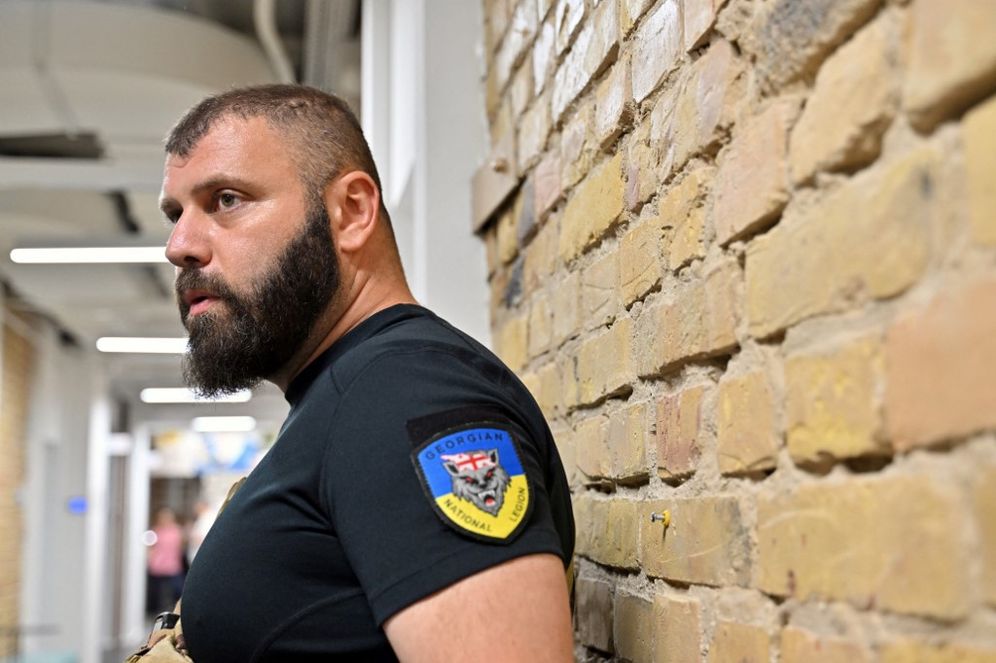
His forearm tattooed "Never forget, never forgive," chief of the Georgian National Legion Mamuka Mamulashvili on Thursday listened intently to a presentation on the need for fighters in Ukraine to respect international humanitarian law.
The event in the Ukrainian capital of Kyiv was organized by a Swiss NGO called Geneva Call, as part of its efforts to meet and provide guidance to a wide range of combatants in Ukraine.
As fighting rages on between Russian invaders and Ukrainian and ally forces, Geneva Call aims to impartially convey the rules of international combat to fighters who may have little or no training, said Marie Lequin, head of its Eurasia region.
Held in an office center with PowerPoint screens, the setting contrasted sharply with the battle-hardened appearance of the Georgian Legion fighters.
A fluent English speaker, Mamulashvili, who is Georgian, leads around 800 fighters from some 32 countries, fighting in southeastern Ukraine. Squadron leaders, mostly bearded and tattooed, flanked him at the session in Kyiv.
The Legion boasts that it recruits only volunteers with combat experience and so far has suffered injuries but no deaths.
https://x.com/i/web/status/1509624626170716168
This post can't be displayed because social networks cookies have been deactivated. You can activate them by clicking .
Issues such as prisoners of war and rules on proportionality were covered. Other topics included whether to give relatives details on how a soldier died – not necessarily – and whether the conflict is legally defined as "international" – it is.
Finally, the participants signed an undertaking to observe international norms, posing with their flag decorated with a red-eyed wolf.
"Today it's one step in a process we call humanitarian engagement... setting up a kind of dialogue with armed organizations to leverage some kind of change in policy and behavior," Lequin said.