The socialist dream comes crashing down: Mamdani’s New York housing policy meets reality
A rent freeze undermining building maintenance, a second-home tax blowing up in court: NYC discovering what happens when socialist ideology runs up against the laws of supply and demand

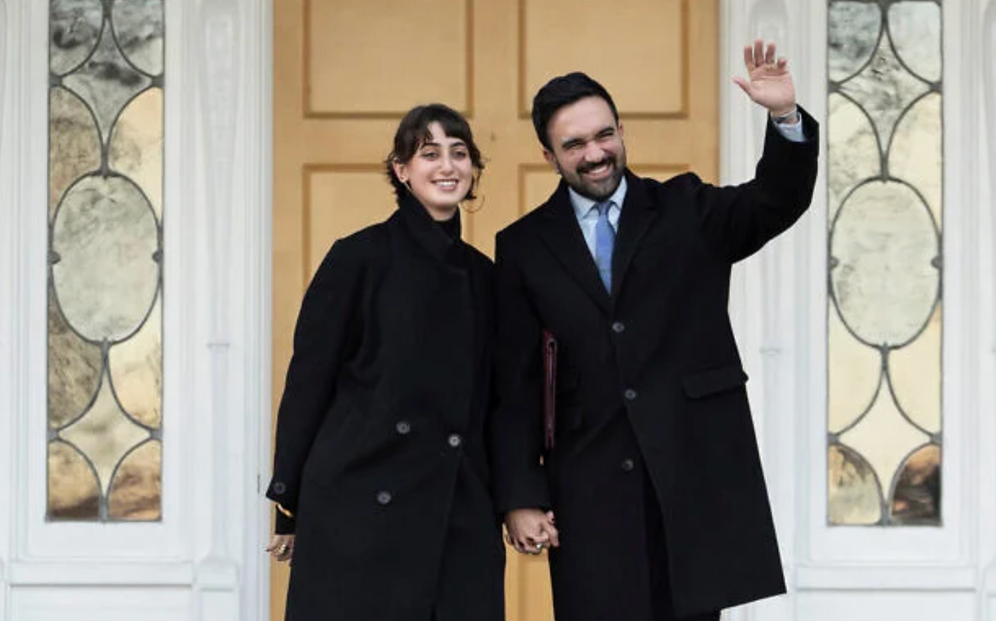
The battle by New York property owners against anti-Israel Mayor Zohran Mamdani took a dramatic turn this month when a New York State Supreme Court judge issued a temporary injunction blocking the city’s pied-à-terre tax.
The ruling halted, at least until a hearing at the end of August, the administration’s attempt to levy enormous tax bills on thousands of residents. It also forced the city to take down an online database containing some 960,000 properties that had been dubbed a “rich-list hall of shame.”
But the chaos surrounding the pied-à-terre tax is not an isolated case. It is the first symptom of a far deeper structural failure. Mamdani, mayor of New York, the citadel of capitalism, represents an avowedly socialist worldview. He is a politician who has never run a private business, never had to meet profit-and-loss targets and has no experience creating wealth or building an enterprise.
His policies are not based on an understanding of how free markets operate, but on the belief that structural problems can be solved by piling on regulation and waging a frontal assault on property owners and the business sector.
Rent freeze: The illusion that wrecks the market
At the beginning of the summer, the Rent Guidelines Board, the municipal panel overseeing roughly one million rent-stabilized apartments in New York, took the unprecedented decision to freeze rents for two years. Earlier this month, a coalition of landlords filed suit against the decision in state Supreme Court on Staten Island.
The plaintiffs argue that the board relied on skewed data, ignored economic realities and acted with a predetermined political bias designed to deliver Mamdani’s signature campaign promise.
Understanding the scale of the failure requires grasping a basic economic mechanism. A rent freeze may sound like an appealing populist solution, but in practice it causes lasting damage. When rents are frozen while operating expenses continue to rise, from municipal taxes and energy and water costs to soaring insurance premiums, a property begins operating at a loss.
Many landlords are not giant corporations, but middle-class families that invested their savings over decades. They now find themselves without the cash flow needed to carry out even basic repairs. Once a tenant stops paying, or rents are set too low, a shortfall of even a few dollars a month can wipe out the entire financial cushion required for maintenance.
One longtime New Yorker who owns three rent-stabilized buildings testified in the lawsuit that her family business is losing about $172,000 a year. Her family had spent years working as building superintendents and maintenance workers to save enough to acquire the properties.
“Freezing the rent does not freeze my mortgage, property taxes, insurance, water and sewer bills, utility costs or the cost of repairs,” Violet Zharku explained. Her buildings have accumulated tens of thousands of dollars in arrears from tenants who stopped paying, a widespread problem the city has failed to address effectively.
In fact, some Mamdani associates appointed to positions in City Hall have boasted about their legal records, including suing the landlords of apartments in which they lived and dragging the proceedings out for years, all to avoid paying rent. The leeches have now taken up key positions, while landlords are being forced to sell their properties, abandon them or stop investing in their maintenance.
60,000 apartments stand empty: The failure of supply and demand
New York’s housing shortage is not inevitable. It is the direct result of regulatory failure. Some 60,000 rent-stabilized apartments across the city currently stand vacant and off the market. They require extensive renovations to meet rental standards, but city and state regulations prevent landlords from recouping even part of the renovation costs through future rents.
Had the city adopted a market-oriented approach, it would have offered economic incentives and targeted exemptions encouraging property owners to renovate these apartments and return them to the market. Bringing 60,000 available housing units back onto the market would rapidly and organically increase supply, producing a natural and efficient decline in prices in accordance with the laws of supply and demand.
Instead, the Mamdani administration and the radical socialist figures surrounding it have chosen confrontation. Mamdani is not alone: Some of his appointees openly espouse communist ideas. The most prominent is Cea Weaver, executive director of the Mayor’s Office to Protect Tenants, who has previously said that New Yorkers should “elect more communists” to public office.
“We need to start treating private property not as something personal, but as something collective,” she has also said. “White people in particular will be affected.”
Rather than producing supply-side solutions, New York City has launched an active war against property owners.
The real objective: Municipal control of private property
The pied-à-terre tax saga is no accident, and the policy was never going to stop with luxury apartments owned by nonresidents. The socialist outlook regards any private ownership of property as a problem requiring correction. Mamdani himself has said that if landlords fail to meet the required standards and codes, the city will subject them to heavy fines and draconian taxation until, inevitably, there is “no alternative”: The authorities will seize the properties and transfer them to nonprofit organizations controlled, naturally, by their activist allies.
The latest moves demonstrate that New York City does not regard housing as a commodity within a free economic system, but as a resource that the state should manage and, in practice, nationalize. Historical experience shows that socialist and communist forces do not know how to create capital, build infrastructure or expand overall prosperity. Their expertise lies in redistribution and taking from others. Once the private sector’s resources run dry, the system collapses in on itself.
The lawsuits brought by property owners through attorney Randy Mastro, who previously served as New York City’s first deputy mayor under Eric Adams, are therefore not merely a defense of private property. They constitute a critical check on the abuse of government power.