How hoax bomb threats are disrupting life across Europe
Dozens of bomb threats have diverted flights, scrambled fighter jets, forced schools to evacuate and taken broadcasts off air. Who's behind the threats, how authorities responding and what's the cost?

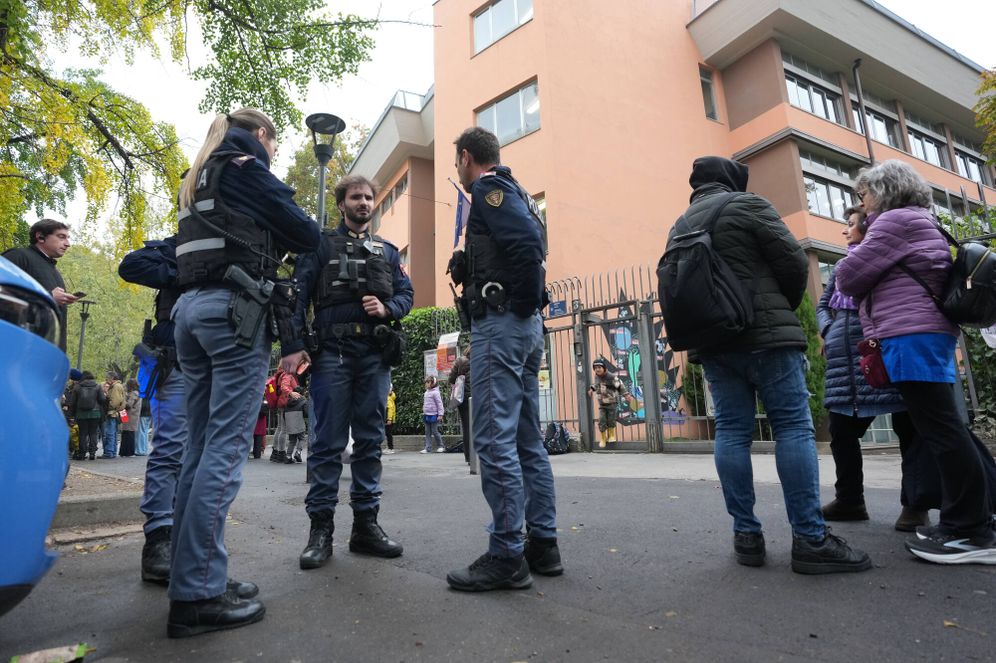
It takes only a few minutes to send an anonymous email warning that a bomb has been planted in a public building or aboard a passenger plane. Soon, flights are diverted, fighter jets scramble, schools evacuate and television stations suspend broadcasts. Bomb squads search buildings and aircraft.
Again and again, those searches have turned up no explosives, and authorities have found no danger to the public. Yet the wave of bomb threats that has swept Europe in recent weeks has disrupted daily life across several countries without a single bomb being planted.
The largest incident came on November 11, when an email warning of a “powerful explosive device with a remote trigger” was sent to about 6,300 schools in Italy. Police responded at hundreds of schools, and students and staff were evacuated from 312 of them.
Police and bomb squads were called in, frightened children were sent home and parents had to change their plans at short notice. Italian Prime Minister Giorgia Meloni said there was no indication of a credible threat, and senior officials described the messages as part of a strategy to sow panic. By then, the disruption was already widespread.
It takes minutes to send an anonymous threat, but checking it can mobilize several branches of the emergency services. Police have to take each message seriously because misjudging the risk could cost lives.
Even when a threat looks unlikely to be genuine, responding to it can tie up considerable resources, disrupt daily life and leave people feeling unsafe. That may be exactly what the senders are counting on.
Passenger flights diverted and fighter jets scrambled
The most dramatic disruptions have come in civil aviation. More than 50 bomb threats targeted passenger flights across Europe between November 2 and 6. EU officials reported receiving 40 to 45 threats over a one-week period, all of which proved to be hoaxes. Some aircraft had to divert, others were escorted by fighter jets, and in some cases passengers were evacuated after landing.
On November 2, a Wizz Air flight from London to Sofia was diverted to Budapest after a threat and was met by Hungarian Air Force fighter jets. The next day, threats targeted two Ryanair flights bound for Rome, one from Lisbon and the other from Dublin. Italian Air Force Eurofighter jets escorted at least one of them. On November 5, an Aer Lingus flight from Dublin to Rome had to land at a French military base. All 151 passengers and six crew members disembarked while bomb disposal specialists searched the aircraft.
Prague was also targeted. On November 6, local police reported threats against nine aircraft linked to the city's airport. A Wizz Air flight from Rome was diverted to Venice, where passengers were evacuated. That same day, Hungarian fighter jets escorted three other aircraft, while French security teams checked four planes that had landed safely at Paris Orly Airport. No explosives were found in any of those cases.
Flights to and from Israel also targeted
On October 18, Austrian Airlines flight OS82 from Tel Aviv to Vienna was diverted to Sofia, Bulgaria, after a threat came in while the aircraft was over Romania. Bulgarian Air Force MiG-29 fighter jets escorted the plane, and security forces searched the aircraft and screened passengers and crew. The flight continued to Vienna after the search turned up nothing.
Delta Air Lines faced two separate threats against its New York–Tel Aviv route in mid-October. In one case, Israeli authorities isolated the aircraft after it landed at Ben Gurion Airport and evacuated passengers so security teams could carry out checks. In the other, an Israel-bound flight was delayed at JFK Airport while the aircraft was checked. Authorities found no indication of a credible threat in either case. For passengers, the threats meant hours of uncertainty, delays and disrupted travel plans.
Schools and broadcasters on alert
By October 19, schools in Northern Ireland, Scotland, Hungary and Serbia had received threats. In Hungary alone, more than 70 schools reportedly received threatening messages. The threats resumed in early November in Italy, Scotland and Northern Ireland. The November 11 email campaign also reached Ireland and forced hundreds of schools in Italy to evacuate.
Broadcasters were targeted as well. On November 6, Irish public broadcaster RTÉ evacuated staff from its Dublin headquarters after receiving a threat. It switched from live broadcasts to prerecorded programming while police searched the building with sniffer dogs. Bulgaria's Nova TV received a message from someone claiming responsibility for the threats against flights. The station activated its security procedures and stayed on air. Britain's Sky News also received threats.
Who is behind the threats?
Who is sending the messages, and why, remains an open question. Authorities have yet to publicly identify who is responsible for the wider campaign, and no government has confirmed the involvement of a foreign state or an armed group. Several senior EU officials have blamed Russia for the hoaxes. Authorities in several European cities reported arrests but gave no details about the suspects, how many people were detained or whether any of the incidents were linked.
The messages could come from someone seeking attention, criminals intent on causing disruption, political activists or people coordinating a wider operation. That uncertainty is itself part of the problem. Every message forces authorities to respond as though the danger is real, even if the threat later proves to be a hoax.
In less than a month, fighter jets scrambled, flights diverted, schools evacuated and broadcasters interrupted live programming. No bomb was found. Yet a few lines in an email were enough to spread fear, disrupt daily life for millions of people and run up substantial costs.