Miracle on the Vistula 2.0: How Poland became an economic powerhouse
Market reforms and EU membership have helped Poland build a trillion-dollar economy, but an aging population, coal dependence and rising defense spending put future growth to the test

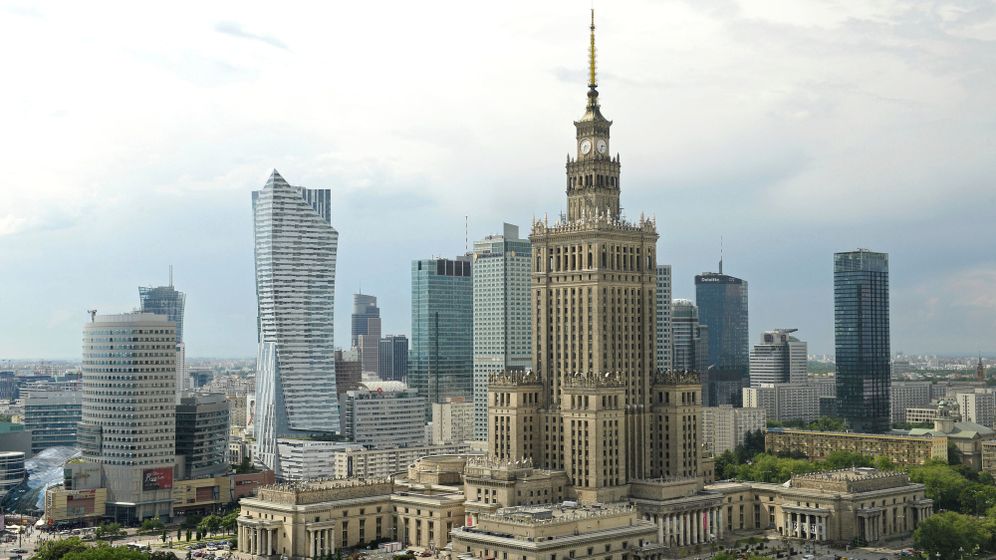
Poland’s GDP crossed the $1 trillion mark this year, placing it alongside Western Europe’s wealthy nations. Its success offers a lesson in managing the transition from central planning to a thriving free market.
When the Berlin Wall fell and the Iron Curtain lifted over Eastern Europe in 1989, they revealed battered, impoverished countries. Poland was a country of endless bread lines, rampant inflation and gray apartment blocks that bore witness to decades of failed central planning. Few imagined that, within three and a half decades, it would become a European success story and one of the world’s most dynamic economies.
This year, Poland reached a major milestone: its gross domestic product surpassed $1 trillion for the first time. That makes it the world’s 21st-largest economy, close to wealthy Switzerland, and fundamentally changes the balance of power within the European Union. Poland is no longer the “poor neighbor to the east,” but an economic engine whose voice carries weight in Brussels, Berlin and Paris. The journey was far from easy. This is how Poland went from Europe’s backyard to an important and growing economic center at the continent’s heart.
**The shock therapy that transformed the country**
Modern Poland’s story began with a bold gamble. While other post-communist countries hesitated and pursued gradual reforms, Poland chose “shock therapy.” In 1990, then-Finance Minister Leszek Balcerowicz introduced a radical program of rapid price liberalization, large-scale privatization and a full opening of the economy to foreign trade.
The initial pain was considerable. Unemployment soared, outdated state-owned factories closed and inflation eroded household incomes. Yet that fiscal discipline laid the foundations for what we see today: a competitive market economy built on private enterprise. Poland was the first country in the former communist bloc to return to growth, in 1992, and has scarcely looked back since. Polish society’s ability to absorb the initial disruption became a strategic advantage, allowing the country to build modern legal and banking systems well ahead of its neighbors.
**The European engine and the German connection**
Poland’s accession to the European Union in 2004 gave fresh momentum to an economy already on the move. For Poland, the EU offered more than grants: it provided market access and an opportunity to join global supply chains.
Over the past two decades, Poland has become a production base for German industry. Its integration into the German economy began with cheap labor, as Polish workers moved to Germany to take manufacturing jobs. Over time, Poland became more than a source of workers. Many German companies relocated factories there, primarily to reduce production costs. Today, Polish factories produce everything from cars and spare parts to household appliances and processed food.
Warsaw made effective use of the billions of euros it received from EU cohesion funds, amounting to €161 billion in each budget cycle, to build highways, railways and digital infrastructure that rival those of Western Europe.
In 2024, following a period of political friction with Brussels, around €137 billion in additional recovery funds was unlocked. That money is now intended to finance the next task: the transition to green energy and comprehensive digitalization, ensuring Poland remains competitive in a low-carbon economy.
**Europe’s “green island”**
One of the Polish economy’s most striking characteristics is its resilience. In 2008, as the global financial crisis shook the world, Poland was the only EU country to avoid recession, earning it the nickname the “green island.”
The explanation lies in a combination of a large domestic market, with around 38 million consumers sustaining demand, and an independent currency, the zloty, which provides monetary flexibility unavailable to eurozone countries. Today’s Poland is more than an exporter. It is a vibrant consumer economy with a growing middle class that drives growth even when conditions abroad are difficult.
Poland has also succeeded in reinventing its image. Once seen as a source of manual labor, it is now a global hub for information technology services, advanced logistics, and research and development. Cities such as Warsaw, Wrocław and Kraków host development centers for international technology giants drawn by the country’s skilled, educated workforce.
Poland also hopes to strengthen its standing within the EU through an ambitious transport project in the center of the country. The plan would connect a new airport with high-speed rail, roads and logistics networks, reinforcing Poland’s role as a gateway between Western and Eastern Europe.
**Geopolitics as an economic catalyst**
Russia’s invasion of Ukraine in 2022 changed Europe’s economic dynamics as well as its security landscape. Poland went from a peripheral transit route to a critical logistical and strategic hub. That position is attracting major investment in defense industries and energy infrastructure as Europe seeks to end its dependence on Russia.
As the EU’s center of gravity shifts eastward, Poland is demanding, and securing, a more prominent seat at the decision-making table, particularly given its position on the eastern flank of both the EU and NATO. It no longer simply implements rules set in Paris. It helps shape policy on security, EU enlargement and border protection.
**The challenges ahead: Can growth continue?**
Despite the celebrations over the trillion-dollar milestone, Poland’s path to lasting prosperity is lined with obstacles. The first is demographic: like much of Europe, Poland is aging. Its workforce is shrinking, threatening labor shortages and mounting pressure on pension and health care systems.
Poland’s restrictive immigration policies do little to ease the looming demographic crisis. To sustain growth, it will need to move from an economy built on efficient production to one driven by breakthrough innovation, a task requiring substantial investment in education and research.
The second challenge is energy. Poland remains heavily dependent on coal, making its energy supply polluting and expensive under the EU’s stringent climate regulations. The transition to nuclear power and renewable energy is an enormous infrastructure undertaking that will cost billions and require years of political stability.
Finally, there is the fiscal challenge. Poland has significantly increased defense spending, now around 4% of GDP, while maintaining generous social programs. The government deficit is expected to reach 6.5% of GDP in 2026, forcing Warsaw to strike a delicate balance between security and fiscal responsibility in the near future.
Poland’s achievement over the past 36 years has been nothing short of remarkable. From a country on the brink of bankruptcy and collective despair, it has become a force that cannot be ignored. Crossing the trillion-dollar threshold provides definitive confirmation that its transformation is complete.
The next chapter in Poland’s story will be its most demanding. Poland is no longer chasing the West; it must begin to lead it. If it can overcome its demographic and energy challenges, a decade from now it may be regarded as more than an economic success story: it could become one of the central pillars of 21st-century Europe.