How Turkey’s submarine-hunting drones could challenge the Israeli Navy
A Turkish naval exercise in September revealed a new military capability that could threaten Israel’s submarine fleet

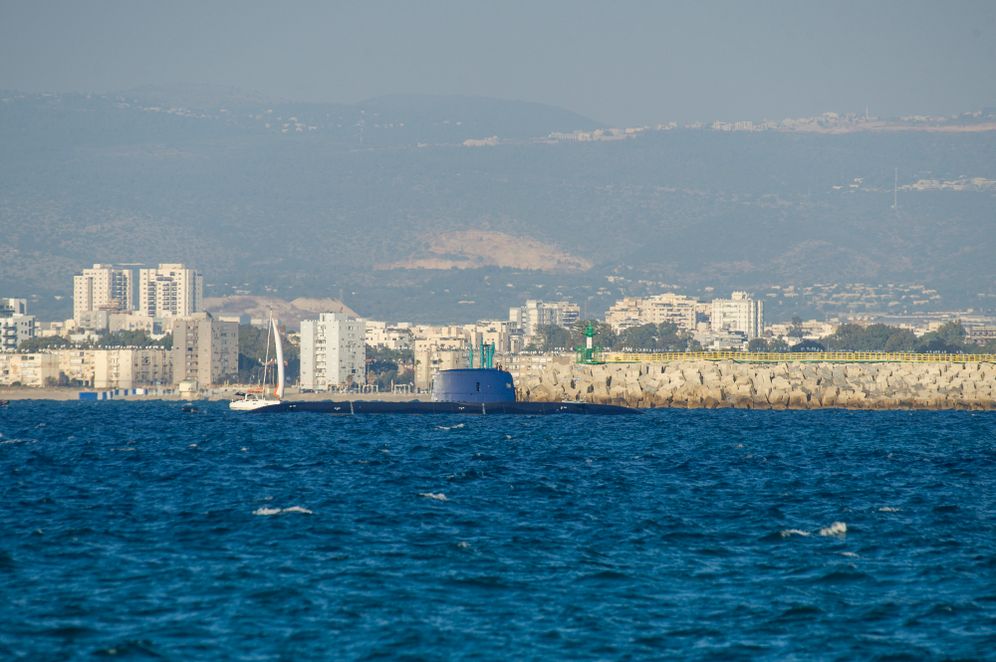
What really happened during Turkey’s naval exercises, and why is Ankara’s growing naval power causing increasing concern in Israel? To understand the picture, we must first look at one of the Israeli military’s most expensive, secret and sensitive assets, now making headlines: the new submarine INS Drakon, alongside the rest of the Dolphin-class fleet.
The fleet’s entire security concept rests on one absolute principle: silence. Once a submarine descends into the depths, no one is supposed to know where it is. But what happens when Israel’s large northern neighbor finds an inexpensive, robotic way to challenge that silence directly from the sky?
The answer emerged on September 22 during the Turkish Navy’s Sea Wolf exercise: an independently conducted national maneuver involving around 100 vessels, 50 aircraft and 14,000 personnel across several maritime theaters simultaneously.
At the center of the test was the amphibious assault ship Anadolu, adapted to operate drones after the United States blocked a deal for F-35B fighter jets. Taking off from its short deck was the Bayraktar TB3, a naval drone with folding wings and a domestically produced turbo-diesel engine, capable of launching from a ski-jump ramp and remaining airborne for more than 24 hours.
The drone did something that caught the attention of intelligence specialists: it dropped two acoustic buoys, known as sonobuoys, into the eastern Mediterranean. These lower underwater microphones deep into the sea to pick up acoustic signals. The key innovation was a data-processing computer installed directly on the drone: the TB3 analyzed the signals in real time while airborne, integrating them with data from buoys dropped by a crewed maritime patrol aircraft operating alongside it.
Put simply, Turkey demonstrated how an inexpensive drone could become a flying acoustic laboratory, listening for submarines from above.
The point here is economic asymmetry: just as cheap drones have challenged heavy tanks on land, Turkey is trying to build an inexpensive robotic sensing network to counter hugely expensive strategic submarines.
Still, the limitations matter. The announcement described only the deployment of buoys and the processing of data. The TB3’s payload is limited to 280 kilograms, no torpedo attack on a submarine from the drone was reported, and two buoys provide only localized coverage. Nor were any data released that would allow an assessment of the system’s performance against an advanced submarine under operational conditions.
So if the drone does not carry out attacks itself, why is this test considered a milestone that concerns naval commanders across the region?
The answer lies in a combat concept that is changing naval warfare. In Turkish doctrine, the TB3 was never intended to operate alone. Its role is to serve as an inexpensive sensor that stays airborne for a full day, monitoring the waters below. Once the drone’s computer picks up a suspicious signal, the data are transmitted in real time to crewed patrol aircraft and warships in the area, which carry the weapons needed to engage the target.
To understand the lethal firepower waiting at the other end of this network, we need to return to an earlier phase of the exercise, held in June. There, Turkey demonstrated AKYA, its first domestically developed heavyweight torpedo. The Sakarya, a German-designed submarine upgraded with a Turkish combat management system called MÜREN, fired the torpedo at the target ship Sokullu Mehmet Paşa.
An underwater explosion beneath a ship’s hull creates a shock wave and an enormous gas bubble that expands and contracts, producing extreme bending forces capable of breaking the ship’s steel keel in two without penetrating the hull. An ATMACA sea-skimming anti-ship cruise missile was also fired during the same event, striking a target 102 kilometers away.
Together, these capabilities — September’s airborne sonar test and the firepower demonstrated in June — illustrate the underlying concern: a shift from traditional, cumbersome naval warfare toward a distributed network of inexpensive robotic sensors connected to domestically produced weapons.
For Israel’s submarine fleet, whose strength rests on remaining undetected, the message from Sea Wolf 2026 is a stark reminder: the depths may still offer concealment, but the surrounding sea is becoming an increasingly networked, technological battlefield, where robotic ears in the sky and heavy weapons in the water can challenge even the most closely guarded assets.