A former Mossad officer tells (almost) all
Israel dropped arms to Yemeni rebels, shared intel with Turkey and Iran and sent Rabin to Morocco in a wig

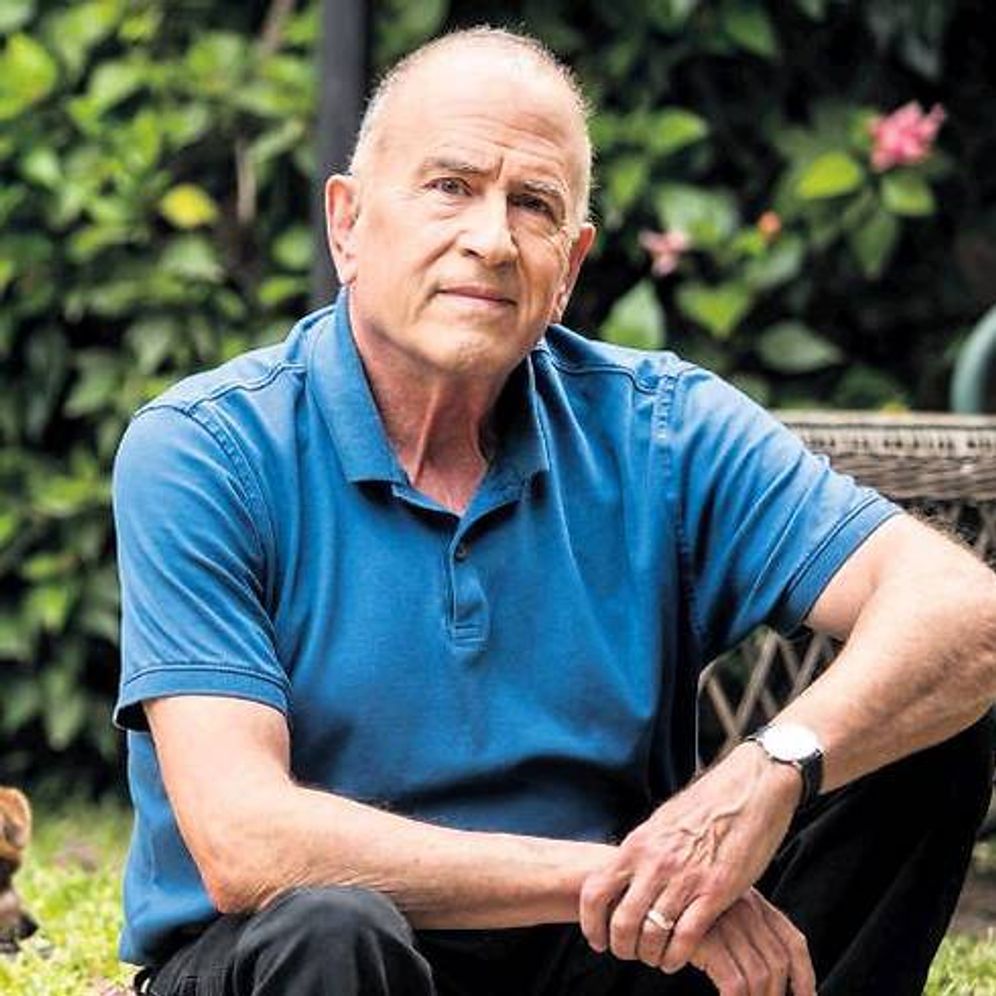
In the mid-1960s, Lieutenant Yossi Alpher, then a junior Military Intelligence officer, was instructed to go at night to an Israeli Air Force base and meticulously check through huge piles of military equipment, and weapons and ammunition in particular, to ensure they bore no distinguishing Israeli marks.
In those days, as is the case now too, Yemen was embroiled in a fierce civil war – between the Saudi-backed Royalists (the Shia Zaidis, the Houthis of today) and the so-called Republican rebels, supported by Egypt and the Soviets.
The Saudis turned for help to Britain, which in turn sought help from Israel, the strongest power in the region and Egypt's main enemy.
For slightly more than two years, an Israeli cargo aircraft made 14 dangerous nighttime sorties to Yemen, dropping Egyptian weapons seized during the 1956 Sinai Campaign to the Royalists, with the help of an Israeli Mossad operative on the ground.
The British, for their part, sent two senior SAS members to Israel, one by the name of the Gene and the other Tony – and hence the unofficial codename for the operation, “Gin and Tonic”.
"The main objective was to pin down and wear out Egyptian forces. We're talking about the period between the Sinai Campaign and the Six-Day War. We knew there was another war coming. We also knew that the Egyptians were using mustard gas in Yemen. That frightened us a great deal,” says Alpher.
The full extent of the operation has been released for publication for the first time in Alpher's book, “Periphery: Israel's Search for Middle East Allies.”
A long-serving Mossad official who went on to head the Jaffee Center for Strategic Studies, Alpher has written a comprehensive study about the covert strategy devised by David Ben-Gurion to breach the hostile Arab ring surrounding Israel.
"Nasser spoke regularly of his desire to throw the Jews into the sea. The Mossad looked for allies to offset this desire and be able to say: We're not alone," Alpher explains.
The Trident alliance
The high point of the "Periphery doctrine" was the tripartite intelligence pact involving Israel, Turkey and Iran – termed Trident among the partners.
"At the first trilateral meeting between the sides that took place in Turkey in late September and early October of 1958," Alpher reveals, "the participants – all heads of their respective countries' spy agencies – decided on a series of joint intelligence operations that included subversive activities directed against Nasser's influence and the influence of the Soviets."
The American dimension was critical too. "As soon as we completed the establishment of Trident, we ran to tell the Americans about it," Alpher says. "We bragged; look, we've put together a NATO pact of our own.
"Ben-Gurion portrayed the alliance to the Eisenhower administration as an effective means to thwart Soviet infiltration into the Middle East, and also as a counterbalance against the radical Arab states..."
The Central Intelligence Agency didn't remain indifferent. On a deserted hill north of Tel Aviv, the US agency financed the construction of a two-story building to serve as Trident headquarters. "The ground floor included a 'Blue Wing' for the Iranians and a 'Yellow Wing' for the Turks," Alpher recalls.
"Bobby, an excellent chef, served non-kosher Hungarian food and the guests were very satisfied," Alpher recalls.
From the late 1950s and through to the Khomeini revolution in 1979, the semi-annual meetings between the heads of the three intelligence services were held in a different country every time.
"I remember the excitement that gripped me when I arrived for my first meeting and was introduced to General Nassiri, the awe-inspiring commander of the SAVAK, the shah's intelligence agency.
The alliance also involved the exchange of intelligence on an almost-daily basis. "We used to receive daily reports on the passage of Soviet vessels through the Dardanelles Strait," Alpher says. "This was of dual importance – information about Soviet supplies to the Arab states and information we could share with the CIA."
The Iran-Israel cooperation was even more active: Jews who fled Iraq for Iran via the Kurdish region in northern Iraq went on from there to Israel; IDF officers trained Iranian forces and Israel sold arms to Iran; in 1958, Iranian weapons were supplied via Israel to conservative Shia groups in southern Lebanon; and on behalf of the Iranians, Israeli intelligence officials set up a body that was responsible for recruiting and handling agents, with its efforts focused on Iraq and also countering Nasser's subversive activities among the Arabs of the Khuzestan Province in southwest Iran.
Rabin in a blonde wig
Israel's relations with Morocco were another component of the Periphery alliance. Israel helped the Moroccan intelligence agency set up its bodyguards unit and others, including a sophisticated technologically division. In return, the Moroccans provided Israel with first-grade intelligence, including intimate access to the deliberations of the Arab Summit Conference in Casablanca in September 1965.
Some 12 years later, when the North African state served as the stage for arranging then-Egyptian President Anwar Sadat's historic visit to Jerusalem, with Morocco's King Hassan as the mediator.
Alpher: "A meeting between the king and Mossad chief Yitzhak Hofi led to another royal meeting, this time with Prime Minister Yitzhak Rabin, who arrived in Morocco incognito and wearing a blonde wig.
At the next meeting, Hofi held talks with Hassan Tuhami, Sadat's deputy, and this paved the way for a meeting between Tuhami and Moshe Dayan, foreign minister in (Menachem) Begin's government. For his secret trip to Morocco, Dayan removed his eye patch and wore a fedora hat. Mossad officials who saw his passport photo couldn't believe it was Dayan."
The non-assassination of Khomeini
In the 1970s, with the fires of the revolution growing ever-more intense in Tehran and elsewhere in the country, Alpher was put in charge of the Iranian file in the Mossad’s research unit. "And that's when I discover the terrible ignorance," he says. "Despite the fact that we were invested up to our necks in that country, with 1,500 Israelis working and living there, we knew almost nothing about the opposition."
In mid-January 1978, Alpher was summoned urgently to the office of Mossad chief Hofi.
With several of the agency's top brass in attendance, Hofi laid out the reason for the meeting: the secular prime minister appointed by the shah to govern Iran in his stead, Shapour Bakhtiar, had approached the head of the Mossad's Tehran branch, Eliezer Tsafrir, asking that the Mossad to assassinate Khomeini, exiled in France.
"Hofi declared he was opposed in principle to the use of assassination against political leaders, but he asked for the thoughts of those in attendance," Alpher recounts.
One division head said: 'Let Khomeini return to Tehran. He won't last.” Alpher, too, was against the assassination.
The Mossad ended up rejecting the idea. "Just two months after that meeting, I realized who we were dealing with, and already then I regretted not supporting Bakhtiar's request," Alpher says.
Ronen Bergman is a senior intelligence affairs analyst for Yediot Ahronot. This article is published courtesy of Ynet. For the original unabridged version of the article http://www.ynetnews.com/articles/0,7340,L-4671127,00.html