Eisenkot vows to use Knesset majority to repeal judicial overhaul, advance October 7 inquiry
Yashar leader calls for immediate parliamentary action before a new government is formed, including mandatory service and greater support for IDF personnel

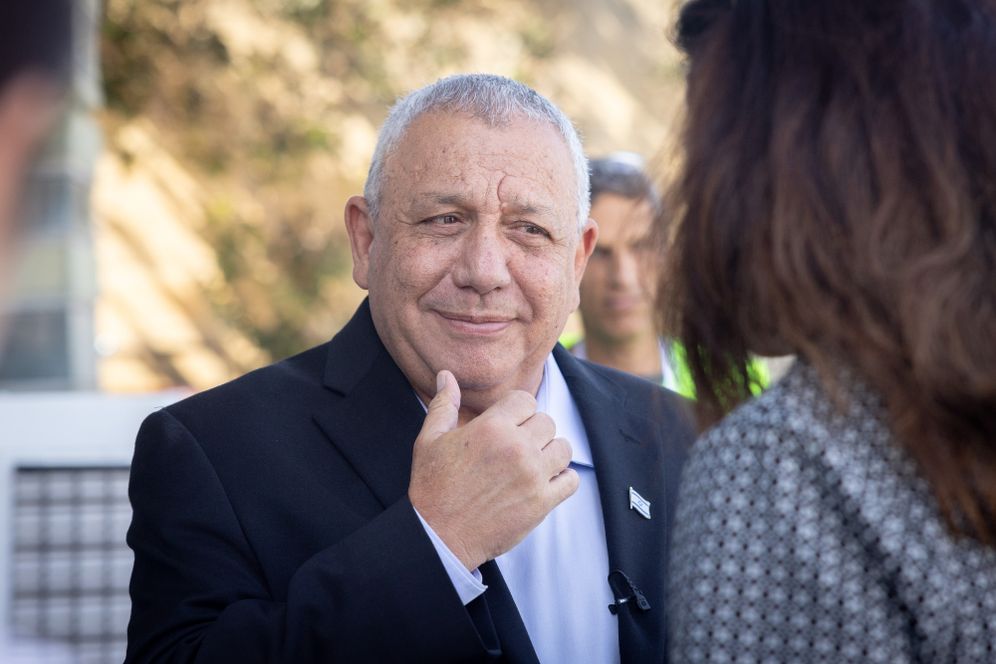
Yashar leader Gadi Eisenkot said Saturday evening that he would seek to use the parliamentary majority opposed to Prime Minister Benjamin Netanyahu to advance an October 7 state commission of inquiry, mandatory service and the repeal of judicial overhaul legislation, without waiting for a new government to be formed.
In a statement outlining his plans following Tuesday’s election, Eisenkot called for immediate steps to increase the number of Israelis serving in the IDF and improve compensation and recognition for those who serve.
“Do not let anyone mislead you: in the State of Israel, it is the Knesset that grants its confidence to the government—not the other way around,” he said.
Eisenkot charged that Netanyahu had spearheaded a “culture of lies” that divided Israel, and said the election results reflected a clear demand for change. He promised to pursue his agenda while seeking broad agreement rather than allowing “one side” to overpower the other.
Alongside the parliamentary measures, Eisenkot reiterated his intention to form the broadest possible “Zionist, state-oriented government.” He said any lawmaker willing to accept four principles would be a potential partner: recognition of Israel as Jewish, democratic, liberal and egalitarian; commitment to the Declaration of Independence; military, national or civilian service for all citizens; and recognition of Hamas as a terrorist organization whose military and governing power in Gaza must be destroyed.
He urged an extraordinary effort to avoid another election and a prolonged political crisis. Until a new government is sworn in, he added, he would support military action only in response to direct and immediate threats that could not wait.
The statement came as Eisenkot and Yair Lapid, the No. 2 on Naftali Bennett’s B’Yachad list, met Saturday evening for their first publicly acknowledged talks since the vote. The two said they discussed the results and coordinating their next moves.
Meanwhile, Yisrael Beytenu leader Avigdor Liberman said he had received several approaches regarding the Knesset speakership but had “no desire or intention” of taking the position. His statement followed Friday reports that opposition parties were seeking to replace Likud’s Amir Ohana when the new Knesset is sworn in on November 10.
Eisenkot’s parliamentary strategy faces a significant obstacle: the four parties in the anti-Netanyahu bloc hold 48 seats, with Ra’am and the Joint List accounting for another 19. Cooperation with the Arab parties would therefore be needed to secure a majority, while Liberman has opposed such cooperation and has not clarified whether he would back replacing Ohana. Lapid and Liberman were also expected to meet, according to Channel 12.