The domino effect: How Houthi terror at Bab el-Mandeb affects us all
Houthi threats to a vital shipping route drive up costs worldwide, squeeze Egypt’s revenues and confront Israel and Saudi Arabia with new security challenges

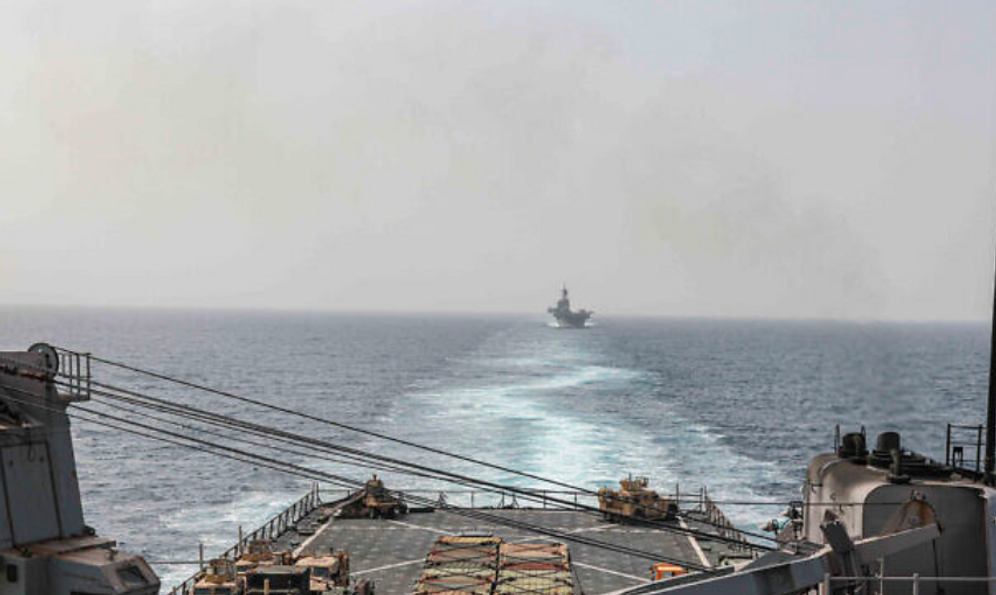
The Houthi rebels’ takeover of the Bab el-Mandeb Strait off Yemen set off a crisis with consequences for security and economies worldwide. Just 30 kilometers wide, the strait is a vital artery connecting the Red Sea to the Indian Ocean. Under normal conditions, roughly 12% of global maritime trade and about 10% of seaborne oil and natural gas shipments pass through this bottleneck. The Houthis’ ability to block this critical route made them a strategic threat with global reach.
The Houthis’ military presence and threats forced international shipping companies to abandon the shortcut through the Suez Canal and take the long route around Africa’s Cape of Good Hope. The economic implications were substantial: the detour adds between 6,500 and 7,000 kilometers to each voyage between Asia and Europe, extending journey times by 10 to 14 days. Fuel and onboard supply costs soared, while war-risk insurance premiums rose by hundreds of percent for vessels still choosing to cross the strait.
Higher shipping costs fed directly into global supply chains, setting off a domino effect that pushed up the prices of consumer goods, energy and raw materials and significantly increased inflationary pressure worldwide.
For Saudi Arabia, the crisis presented a particularly complex strategic dilemma. Blocking Bab el-Mandeb threatens Saudi oil exports from Red Sea ports and undermines the kingdom’s ambitions to develop trade and tourism along its western coast. Riyadh’s options ranged from seeking quiet understandings and paying off the Houthis to openly or covertly joining a US-led Western naval coalition intended to exert military pressure and impose a naval blockade on the terrorist group’s strongholds.
The repercussions were also felt in Jerusalem. For Israel, the development transformed the Red Sea from a secondary theater into an active and dangerous strategic front. It threatened further damage to the port of Eilat, where shipping traffic from the Far East had ground to a halt. Beyond the economic fallout, Israel’s defense establishment faced demands for greater attention to the southern theater, including naval deployments and intelligence resources. It also had to maintain readiness against cruise missiles, drones and explosive-laden boats targeting Israeli assets and essential supply routes.
Regionally and internationally, the Houthi takeover strengthened the Iranian-led axis of terror and gave Tehran a powerful means of exerting pressure on the global economy without having to close the Strait of Hormuz itself. The new situation tested strategic alliances across the Middle East. It increased the need for discreet security and intelligence coordination between Israel, the Gulf states and Egypt, while making Arab countries less willing to acknowledge those ties publicly for fear of direct escalation with Yemen and Iran.
The major powers took divergent approaches. The US and Britain led patrols, defensive operations and targeted strikes against the Houthis. China, heavily dependent on trade through the Suez Canal, preferred quiet diplomatic pressure on Iran and avoided overt military involvement entirely. Egypt paid one of the heaviest prices in this contest for influence: the sharp loss of Suez Canal revenue, a critical source of foreign currency, deepened its already severe economic difficulties.
The central question now is whether the West and other major powers can safeguard international freedom of navigation in an era of asymmetric warfare, or whether Iran will succeed in establishing facts on the ground that reshape the Middle East’s alliances. The crisis at Bab el-Mandeb demonstrated that the global economy is only as strong as its weakest link. When an extremist actor gains control of such a strategic chokepoint, the cost becomes too great for the international community as a whole.