Afghan poppy cultivation more than quadruples despite Taliban ban; farmers say crops no longer feed families
The Taliban regard their ban on poppy growth as one of their signature achievements and have cited it in their efforts to win international legitimacy

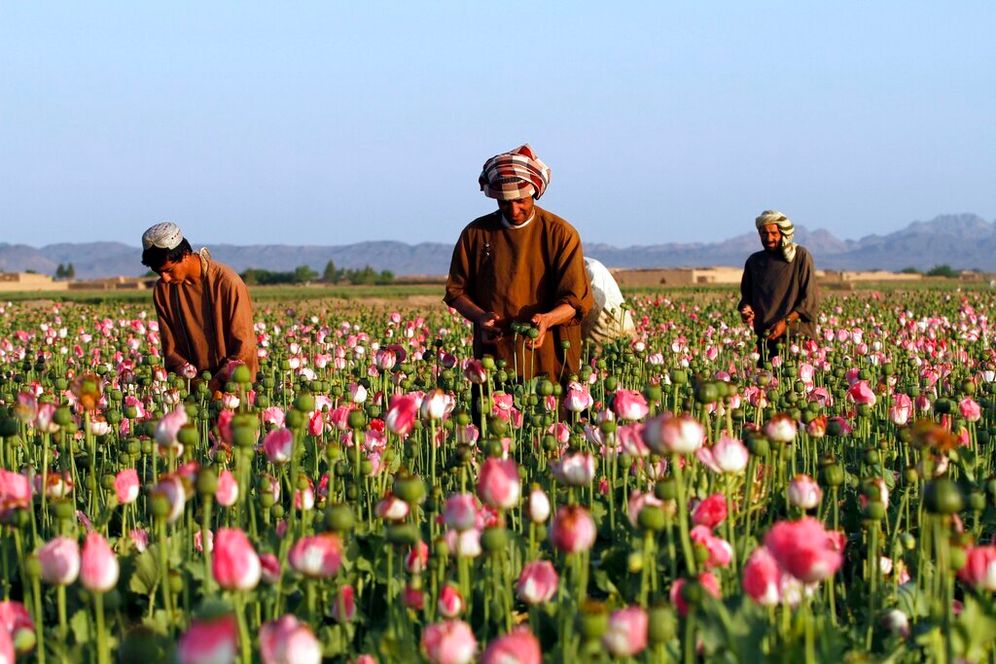
Poppy cultivation across Afghanistan more than quadrupled this year from 2025 to an estimated 43,300 hectares, according to satellite imagery analyzed by the UN Office on Drugs and Crime (UNODC). The jump reverses four years of a Taliban opium ban so strict that poppy all but vanished from the country’s fields, as farmers say legal crops no longer pay enough to feed their children.
In years gone by, Afghanistan’s fields produced about 80% of the world’s opium. Sales this year generated an estimated $525 million, the highest figure since 2018 apart from 2022, when the ban sent prices soaring. Cultivation is still only about a quarter of the 177,000 hectares planted in 2021, the year before the ban.
The Taliban rejected the findings, saying actual cultivation was about half the UN estimate and that eradication efforts continued.
Balkh province, which UNODC found to be poppy-free last year, is growing the crop again, though few farmers would admit it amid Taliban scrutiny. Growers now hide the plants inside cereal fields and behind mud walls.
Many farmers “don’t have any other choice than to go back to poppy cultivation,” said Polleak Ok Serei, UNODC’s country representative for Afghanistan.
Mohammad Dawood, 28, of Baba Yusuf village in Balkh, said he is still complying with the ban, but on a bad day he earns one fortieth of what poppy once paid. “We were doing well,” he said. “Now, my children are malnourished.”
Wheat barely covers its costs, farmers in the village said, and cotton prices have fallen by about two-thirds amid a nationwide glut. Landowner Gul Nazar, 56, partly blamed that slump on Pakistan’s closure of the border late last year. He said he would not grow poppy again if his family’s conditions improved, but could not promise the same if they worsened. “When a person becomes hungry,” he said, “they will do anything.”
Suggested articles
The strain is showing among children. UN agencies warned this month that 10 of Afghanistan’s 34 provinces have critical levels of child malnutrition, a number that could reach 14 in 2027.
Diplomats say foreign aid cuts and the Taliban’s isolation over their crackdown on women’s rights have also played a role, but doctors and patients at the Alam Khil health center in Balkh mainly blamed falling farm income. A UNODC survey last year found that more than four in five households in Balkh and two nearby provinces had replaced none or only part of their lost poppy income.
Analysts say a full return to poppy would have major implications for global drug markets. “Combine this with the active trafficking networks within the country and the resilient smuggling operations to get the opiates out of the country, and you have a very bleak prediction for the future,” said Paddy Ginn, an analyst at the Global Initiative Against Transnational Organized Crime in Geneva.
Taliban Foreign Minister Amir Khan Muttaqi said at a meeting this month that “support for alternative livelihoods for farmers” was crucial to “ensure the continuation and strengthening of this campaign.” Ok Serei said there “was not enough support for alternative livelihoods” from either the Taliban government or the international community.