West Bank Palestinians see little difference between Israeli election candidates
As Israelis prepare to vote later this month, many Palestinians in the West Bank say they expect little change from the result, despite the election’s potential impact on their lives

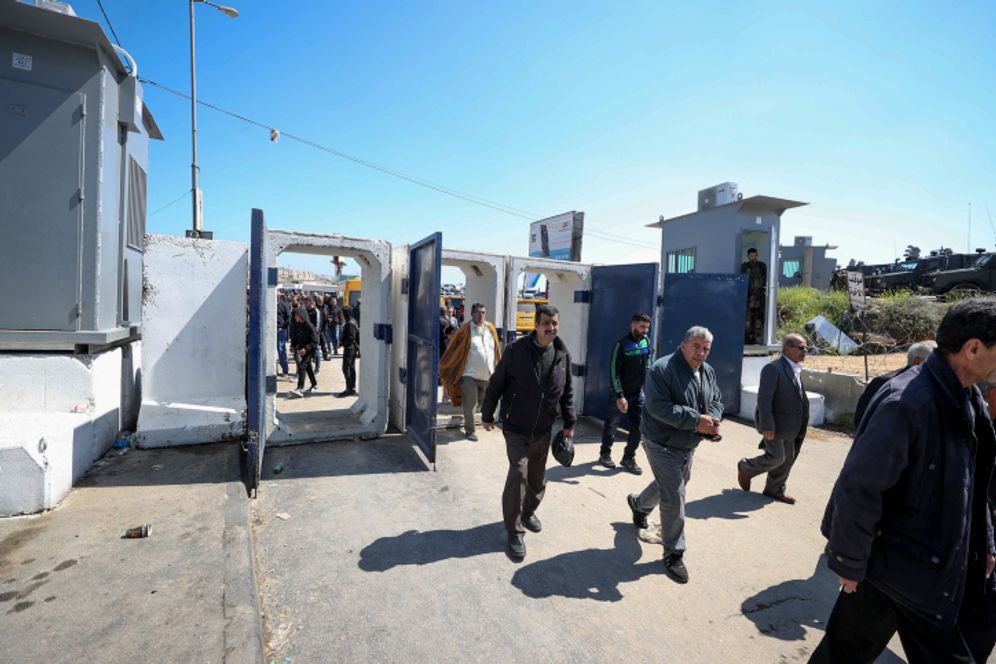
Millions of Palestinians will be affected by the outcome of Israel’s election on October 27th, but few have any say in who forms the next government.
For Palestinians living in the West Bank, the prospect of another Israeli government has prompted little expectation of a significant shift in policy. During a visit to Ramallah, i24NEWS found widespread scepticism that a change of leadership in Jerusalem would make much difference to daily life under Israeli military rule.
“There is some engagement, not a great deal. Most Palestinians do not expect the Israeli elections to produce significant change in Israeli policy vis-a-vis the Palestinians," said Dr. Khalil Shikaki, director of the Palestinian Center for Survey and Policy Research.
Palestinians have not held a national election since 2006. Palestinian Authority President Mahmoud Abbas recently postponed a scheduled vote, pushing it back to September 2027, leaving public opinion polls as one of the principal ways of gauging Palestinian political sentiment.
Shikaki, whose research tracks Palestinian public opinion, said many Palestinians believe the outcome of the Israeli election will do little to alter the policies they oppose.
“The overwhelming majority of Israelis, Israelis Jews - this is the perception of the overall majority of Palestinians - support the current policies of Netanyahu, and they will continue to support such policies when pursued by whoever is the next Israeli prime minister.
Little faith in a change of government
Around Ramallah’s Al-Manara Square, the scepticism was easy to find. Asked whether Israel’s election later this month would change anything, one Palestinian resident was unequivocal.
“I don’t think so.”
The same resident was asked whether the election of Yashar leader Gadi Eisenkot in place of Prime Minister Benjamin Netanyahu would make a difference.
“I don’t think so, because they are all from the same direction. There is a little bit of difference between one and another one… the difference is some will make it more easy, some will make it more difficult. But I hope peace comes to everybody.”
Not everyone was quite so dismissive of Eisenkot. Another resident said: “About Eisenkot, he is better than Netanyahu.” A third suggested that removing the most hardline figures from the government could bring some improvement.
“Maybe if they took (Security Minister Itamar) Ben Gvir and (Finance Minister Betzalel) Smotrich out, maybe it’s gonna get a little bit better, but they’re all the same.”
The two issues raised most frequently by Palestinians interviewed in Ramallah were settler violence and the cost of living. Economic pressures have become particularly acute for many West Bank residents since October 7, 2023. The loss of access to jobs inside Israel left many without a source of income that had often paid significantly more than employment available locally. There was some hope that a new Israeli government might ease those pressures, but little confidence that it would.
The far-right stands apart
While many Palestinians view Israel’s mainstream political figures as broadly interchangeable, Shikaki said that distinction does not extend equally to the entire political spectrum.
“They do distinguish and to a large extent they see that Israel has its own crazies, like Ben Gvir and Smotrich.”
Ben Gvir and Smotrich, both prominent figures on Israel’s far right, have become particular sources of concern for Palestinians.
Yet within the centre-right mainstream of Israeli politics, Palestinians see less separation between the current government and its predecessor, led by Naftali Bennett.
“The overwhelming majority of Palestinians do not see a difference between Bennet and Netanyahu. To them these are basically the same people. For some Palestinians, Bennet is even more extreme than Netanyahu.”
The result is a political contest that many Palestinians follow without expecting it to offer a meaningful alternative. Even where individual candidates are regarded as preferable to others, the broader direction of Israeli policy is seen as unlikely to change.
A deep distrust of Israeli media
That scepticism extends beyond politicians to the media reporting on them. West Bank Palestinians, including older residents who often speak Hebrew, tend to be wary of Israeli news outlets and frequently turn to other sources for information about Israeli politics and its implications for Palestinians.
“Al Jazeera remains the single most important source of information for Palestinians regarding almost everything to do with Israeli-Palestinin relations and that includes the Israeli elections,” Shikaki said.
He described a more profound deterioration in trust following the Hamas-led October 7 attacks and the subsequent war.
“October the 7th dramatically changed everything. For most Palestinians information coming out of Israel, any information, was seen as fake news.”
The mutual suspicion reflects a wider divide in how Israelis and Palestinians consume information about one another. Just as many Palestinians distrust Israeli reporting, many Israelis are sceptical of information coming from Palestinian sources.
In 2024, the Israeli government banned Al Jazeera from operating in territory it controls, further complicating an already contested media landscape.
A shared desire for peace
Despite their reservations about Israeli politics and media, the Palestinians interviewed in Ramallah were welcoming to the i24NEWS crew, even knowing they were speaking to a reporter from an Israeli news channel.
Each expressed a desire for peace. That aspiration is not unique to Palestinians. Many Israelis also say they want an end to the conflict, even as the two societies remain deeply divided over responsibility for it and the terms on which it might be resolved.
For the Palestinians who spoke to i24NEWS, however, the immediate question was not simply who would win Israel’s election. It was whether that victory would make any tangible difference to their lives.
Few appeared convinced that it would. The desire for peace was clear. How to achieve it remains the harder question.
Suggested articles
- Illegal resident previously involved in terrorist activity arrested while filming at a light rail station in Bnei Brak | i24NEWS
- Former Israeli Air Force intelligence chief, settler detained after West Bank clash | Yuval Barnea
- Dutch restrictions on West Bank goods raise fears of wider economic pressure on Israel | i24NEWS