Decisions ahead for Netanyahu and the prosecution, but the outcome matters less than ever - analysis
As Herzog renews his mediation efforts in Netanyahu's corruption trial, the judges' intervention has narrowed the legal dispute and diminished its political significance

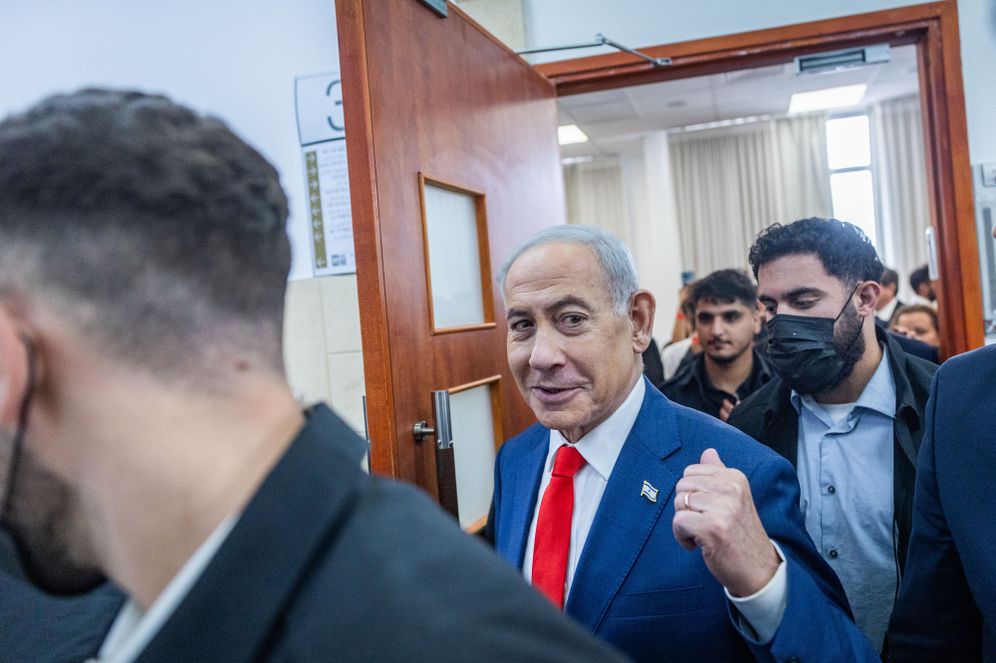
In Prime Minister Benjamin Netanyahu's corruption trial, if last week's announcement by the judges was an earthquake, then today across Jerusalem at the President's Residence came the first aftershock.
President Isaac Herzog renewed his standing invitation to the two sides in the case to meet for talks and mediation. This time, the invitation landed in a changed legal landscape, with the scope of the dispute narrowed dramatically by the judges' instruction to the prosecution to abandon, in essence, two of the three files.
Even so, a plea bargain could still require a potentially deal-breaking concession from Netanyahu: admission of guilt that could lead, through judicial decision, to his being barred from serving as prime minister (even if only after Netanyahu has exhausted his appeals). Accommodating that position would require Attorney General Gali Baharav-Miara to dilute the claims against Netanyahu, a major concession on her part (and by the prosecution).
Alternatively, Herzog could issue Netanyahu a pardon. Here, Israel's president has famously hesitated. The general practice in Israel is for the president to issue a pardon only once a conviction has been handed down or when a defendant admits wrongdoing. Herzog seems to have clung to that norm to avoid a potentially divisive binary decision.
That said, under the law, he may still have the authority needed to pardon Netanyahu. So Herzog could change his position, especially given his expressed eagerness to end the trial.
The case could also continue. The attorney general and prosecution plan to huddle in the coming week to decide how to proceed in the wake of the judges' announcement. Some legal experts in Israel even argue they should press on with all three cases, appealing in the end to the Supreme Court with hopes it would overturn the district court's ruling. Or the state could continue only with Case 1000, in which the judges signaled openness to convict, without striking a plea bargain with Netanyahu.
From a political perspective, the judges' announcement last week has reduced the potency of the trial as an electoral issue, at least for the anti-Netanyahu bloc. So talks in the President's Residence could have signal importance for the standing of Israel's legal system and practical impact on Netanyahu as a criminal defendant.
But plea bargain or not, pardon or not, the impact of the trial on Israeli politics and society looks set to fade. Netanyahu will continue to wrap the trial into the narrative that connects him to his base: Entrenched interests at key nodes in Israeli society leverage their privileged positions against us.
Beyond that, the issue looks set to fade, eclipsed by the other issues that have already come to dominate Israel's crowded public agenda. For the parties involved, and for Herzog, the stakes are lower than ever.
Suggested articles
- Following pressure, Israel's security cabinet approves pilot entry of IDF into Gaza, i24NEWS learns | LIVE BLOG | i24NEWS
- Netanyahu’s lawyers accept Herzog’s offer to host talks on ending trial | i24NEWS
- Netanyahu: "No one in the Hamas leadership will evade us"; Hamas weighs response after strikes kill 10 in Gaza | i24NEWS