Parkinson’s Law: The hidden dynamic behind Eisenkot’s coalition negotiations - analysis
Gadi Eisenkot, it turns out, has Parkinson's. Not the disease, Heaven forbid, but the law: Parkinson's Law, that work expands to fill the time allotted

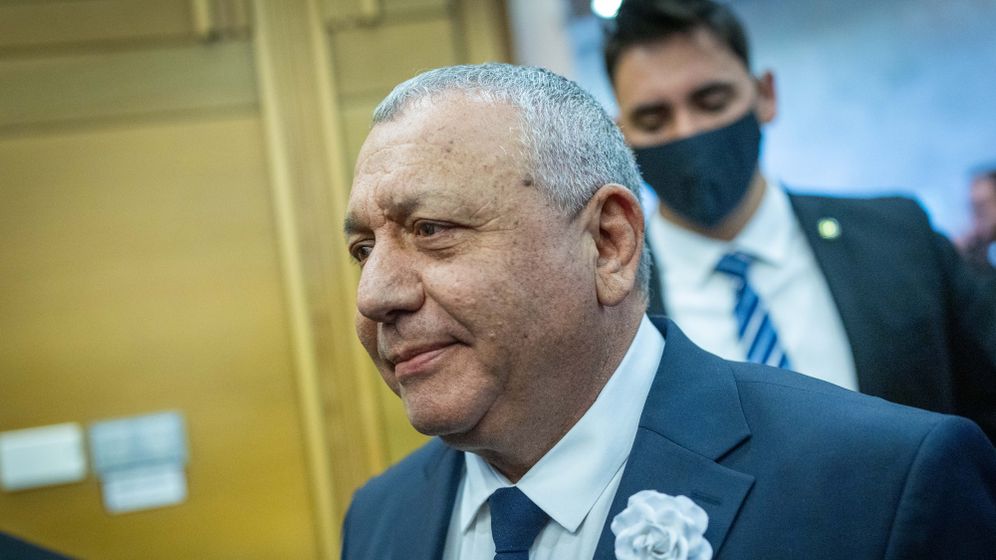
Gadi Eisenkot, it turns out, has Parkinson's. Not the disease, Heaven forbid, but the law: Parkinson's Law, coined by Cyril Northcote Parkinson in The Economist in 1955, that work expands to fill the time allotted.
And Israel's Basic Law: The Government allots plenty of time, which may not change the bottom-line result but has a big impact in other ways.
From November 8 when President Isaac Herzog handed Eisenkot a mandate to form a new government, Section 8 of the law gives Eisenkot 28 days to do so, which Herzog can extend for 14 more. Leaving Israel with a deadline either as candles burn for the third night of Chanukah on December 6, or long after the holiday is behind us on December 20.
In the spirit of Parkinson's Law, a shorter time frame would compress negotiations but probably not lead to a different bottom-line result. The weeks of meetings, statements, and hush-hush reports produce much signal and little noise. The balance of power in negotiations was set by election results, whether talks unspool over four weeks or four days.
But the drawn-out schedule has an important impact, in two ways.
The first is in the Knesset. Under Israeli law, he who holds the mandate can control the parliament, especially if (as here) he can mobilize a parliamentary majority behind him.
Eisenkot obtained the first tool upon receiving the mandate: Control of the Arrangements Committee, a temporary traffic cop that sets up committees and directs pending legislation toward them. This enables Eisenkot—as long as he holds the mandate—to control how and at what pace bills move toward votes in the plenum.
Eisenkot won the second tool on November 17 when his bloc won the Knesset speakership for his Yashar Party's Matan Kahana. The speaker controls the all-important calendar in the Knesset plenum and when bills come up for votes to become law.
A mandate-holding period of as much as six weeks is giving Eisenkot meaningful time to push through laws that repeal signature achievements of the outgoing government, especially on its controversial judicial overhaul. Meaning that even if he fails to form a government (and if his moves pass Supreme Court muster), Eisenkot could still leave a lasting impact on Israel's law books and society. In the high volume of signal from coalition talks, this is noise.
The long calendar has an impact in a second way: A longer window increases the odds of an external event that changes political calculations. In this case, the most likely external event is renewed war with Iran. The prevailing opinion in Israel is that war would help Prime Minister Benjamin Netanyahu, but war has unforeseen (and unforeseeable) consequences.
At any rate, Gadi Eisenkot continues apace, with meetings and statements and intrigue. The Knesset may give him a lasting legacy. An external event could change his operating arena. Principally, his decisions lie ahead, when his deadline approaches.
Suggested articles
- Eisenkot lays out security vision, challenges Netanyahu on Iran and West Bank policy | Yuval Barnea
- Eisenkot advances October 7 state inquiry bill amid unity government talks with Likud, i24NEWS learns | i24NEWS
- Eisenkot's Yashar and Netanyahu's Likud conclude second round of coalition talks without breakthrough | i24NEWS