‘A clock ticking’: Goldberg says Iran pressure campaign also poses deadline for Trump
The former White House official says Tehran faces mounting economic strain, while Washington must weigh the sustainability of its naval deployment and the risks of further strikes

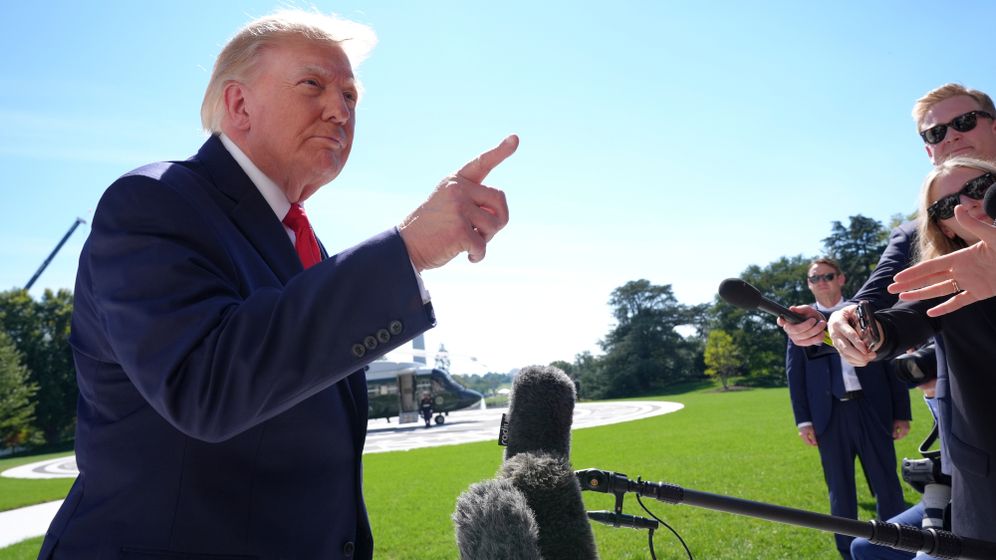
Iran’s leadership and the Trump administration face competing pressures as the conflict continues, with Tehran struggling under economic restrictions and Washington confronting decisions over how long it can sustain its military campaign, Richard Goldberg said in an interview on American View.
“So there’s a clock ticking on the Iranian side. There are clocks potentially on our side as well, and the president has to make some decisions,” said Goldberg, a senior adviser at the Foundation for Defense of Democracies and former White House National Security Council official.
Goldberg challenged the suggestion that President Donald Trump is trapped between an unpopular war and an unsatisfactory agreement. He argued that the combination of a naval blockade, sanctions and military damage has placed Iran under exceptional financial pressure.
But he acknowledged that the extent of Tehran’s remaining resources, and how long its leadership can withstand the squeeze, remains unclear.
“How long do people keep going without any money, without being able to afford things, without getting paid? That’s a serious question. I don’t know the answer to, and I don’t think anybody does,” he said.
Goldberg suggested Iranian leaders may be hoping that the US midterm elections will weaken Trump politically and bring pressure for a deal. If that does not happen, he argued, Tehran could seek to buy more time by pointing to the arrival of a new Congress in January.
Goldberg said maintaining pressure also carries costs for the United States, particularly if extended naval deployments interfere with ship maintenance, training and future operations.
He raised the possibility that military leaders could eventually ask Trump to choose between sustaining the blockade and accepting longer-term consequences for naval readiness. Whether a smaller deployment could maintain similar pressure, he said, is another unresolved question.
Further military action would bring a different set of risks. Goldberg warned that attacks on Iranian energy infrastructure could prompt retaliation against energy facilities elsewhere in the Gulf, potentially causing prolonged disruption and higher prices.
He said counter-drone defenses would be particularly important to protecting regional infrastructure.
Goldberg also discussed the possibility that improved intelligence or new military capabilities could allow US forces to strike underground missile facilities, command bunkers and remaining nuclear sites more effectively. He presented those possibilities as potential options, without confirming that a new operation had been decided.
Beyond the military calculations, he questioned what would follow if Iran’s government suffered a deeper breakdown.
“Fundamentally, what is the plan to actually help the people seize control of that country?” he asked.
Goldberg argued that economic collapse, blackouts or disrupted command structures would not automatically produce an organized challenge to the leadership. He questioned whether an opposition movement had the leadership, organization and protection needed to act.
His assessment placed the next phase of the conflict around three unresolved decisions: how long Trump is prepared to sustain the blockade, what risks he would accept in selecting further targets, and what political outcome Washington hopes its pressure will achieve.