Israel, identity and the Democrats: What Abdul El-Sayed's victory means for American Jews - analysis
Abdul El-Sayed's Michigan Senate victory exposed deep divisions among Jewish voters over Israel and Democratic Party loyalty, but the community's longstanding political balance may endure.

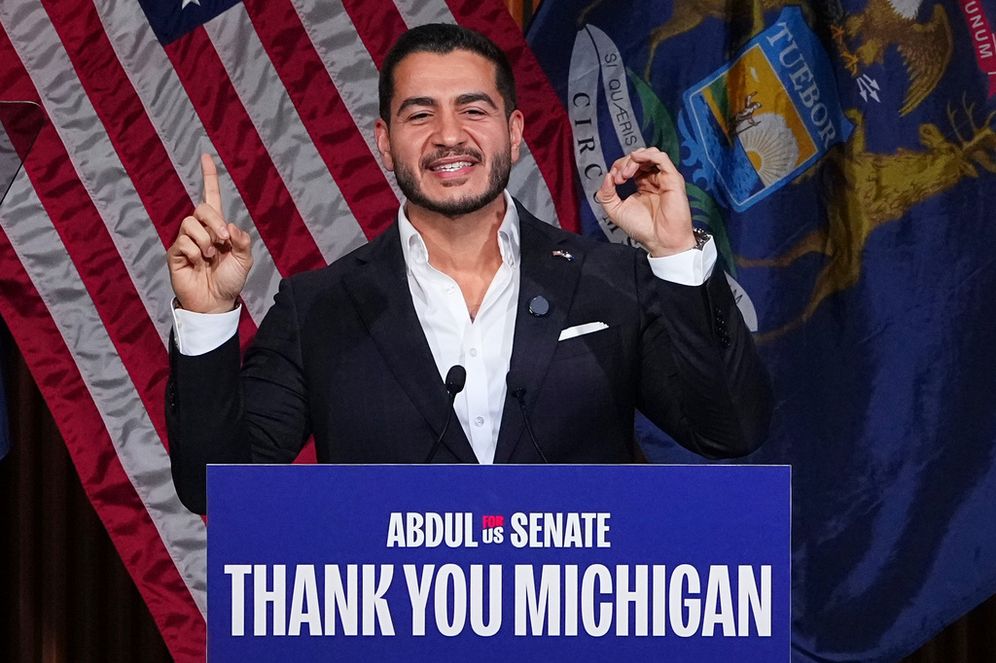
Abdul El-Sayed's run for the Senate raised the stakes to a high-pitched battle over American Jewish identity. But that doesn't mean the old ways are over.
Then-New York Times columnist Ross Douthat once wrote that American Jews have a strategy of "liberalism without/conservatism within."
"An oft-persecuted people’s flourishing," Douthat said back in 2018, "can both depend on maintaining a certain conservatism about its own patterns of marrying and begetting and cultural transmission (and, in the case of Israel, the safety of its lonely nation-state), and on encouraging liberalism and cosmopolitanism in the wider, potentially-hostile order in which the diaspora subsists."
Or, in the trite lexicon of Jewish youth groups, are you an American Jew or a Jewish-American?
Abdul El-Sayed's candidacy, which of course ended with his victory Tuesday night, pressed that question in the sharpest possible way.
A crossroads American Jews had long avoided became a gauntlet thrown before them: An either-or choice between maintaining red lines on fidelity to Israel and keeping loyal to a generations-long heritage of loyalty to the Democratic Party and to cosmopolitan, liberal ideals.
Perhaps 30% of Michigan's Jewish voters took the side of the former: Bolting what would otherwise be their identification with Democrats to vote against El-Sayed or abstain. Another large slice, perhaps 50% put aside red lines on Israel and checked El-Sayed's box.
Lost in the polling is what existed before the race and will come back: the yearning not to decide. In the Detroit Jewish community that raised me, the values always strived to achieve both and to build a balance. Even if, as Ross Douthat observed and as this election proves, that balance can come under challenge.
In the Detroit Jewish community, cries for unity have accompanied the tough arguments. Behind those is an understanding that many of those who voted for El-Sayed do not hate Israel. They voted for El-Sayed not because of his positions on Israel but in spite of them.
Faced with the choice, they struck a balance in favor of their left-wing or liberal worldview. In Michigan and beyond (let alone in Israel), many may find that frustrating or disappointing. But hatred of Israel it is not.
On the other hand, the attacks on Democrats who voted for the Republican Mike Rogers are equally off the mark. Many voted for Rogers just as they criticized what they saw as Islamophobia from the campaign and from Donald Trump. They voted for him in spite of a worldview with which they disagreed, not as an endorsement of it.
The good news is that the value system and strategy of more than a century, "liberal within" and "conservative without," can again prove resilient. More anti-Israel candidates will emerge in more parts of the United States, and more crossroads and gauntlets await.
But the basic desire of the American Jewish mainstream will live on: To both guard a liberal heritage of four generations and also show solidarity with a Jewish collective around the world and in the Jewish state.
Suggested articles
- Khamenei: 'Those who hope for a change in US policy after the elections are sorely mistaken' | LIVE BLOG | i24NEWS
- Trump's election night media blitz blames GOP losses on gas prices and war in Iran; does not regret launching war | i24NEWS
- 'The reason we lost is the war': JD Vance blames Iran war for Republican midterm defeats, as Trump mulls firing Hegseth | i24NEWS