Rubio warns against new West Bank crisis as tensions mount
The US secretary of state said Iran remains a threat to the region and questioned whether Tehran’s leaders want “to be a country or … a revolution"

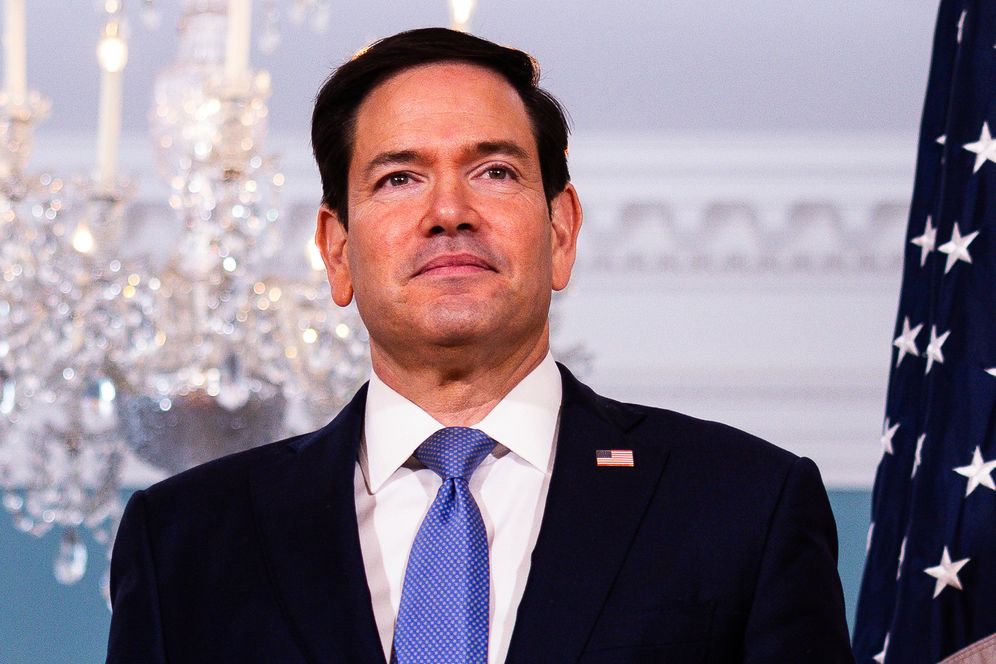
Washington’s top diplomat said on Wednesday that “the last thing” the Middle East needs “is an additional flashpoint, and the last thing we think Israel needs is an additional flashpoint,” regarding growing tensions in the West Bank.
US Secretary of State Marco Rubio, speaking on the sidelines of the United Nations General Assembly in New York, gave a laundry list of the strife engulfing the Middle East, including “the difficulties in implementing the agreements made with regard to Gaza, the tenuous situation in Lebanon, obviously now the Houthis and Saudi Arabia, the ongoing friction and conflict with Iran.”
Demurring on whether US President Donald Trump is considering taking action against Israelis the administration might feel are contributing to the violence in the area, Rubio told reporters that “our preference is that we communicate that to everyone that the president really doesn't think the world right now needs a West Bank crisis, and that's our position,” referring to the global community’s newer name for the historic region.
While keeping the details of renewed indirect discussions between the United States and Iran under wraps, Rubio said that, with regard to Trump’s perception that Tehran is killing time until the American midterms are over, “The Iranians are fundamentally misreading our political system.”
He said that for Trump, the Iranian issue is not a political issue. It is the fact that, for generations now, for almost 50 years, every American president—and, frankly, every country in the world, for the most part—agrees that Iran can never have a nuclear weapon.
Taking action to effectuate that outcome “comes at a price and at a cost. There's no doubt about it,” Rubio said, likely referring to high prices for oil and other commodities as a result of the war with Iran.
“But the cost of not doing something about it is substantially higher, especially for future generations,” Rubio added.
On Tuesday, Trump met in New York with leaders from a grouping of Gulf and Middle East allies. Rubio did not directly address whether an agreement was reached on how to move forward with the Iran issue, but said there was a “strong consensus that Iran is a malign force in the region.”
“I think writ large, you've seen a lot of support from many of those countries for the sanctions and the economic cost that the United States is imposing, so we work and coordinate very closely with these countries for a variety of reasons,” Rubio said, including “because they're in a position to be very helpful on the economic front, and there's an expectation that they will live up to that. And the other is because they are directly threatened.”
“At the end of the day, the one thing you will find in the region is that virtually every country in the region is facing the threat of some Iranian proxy that has, for years—not for the last few months, for years—threatened the safety and security of these countries, and on that, there's very strong consensus that Iran is a malign force in the region.”
Ultimately, Rubio said the fundamental challenge to reaching a breakthrough with the Islamic Republic is “really at the core of what Iran needs to decide: Do they want to be a country or do they want to be a revolution?”
He faulted a split between the country’s political echelon and the Islamic Revolutionary Guard Corps, blaming the latter for violating the memorandum of understanding agreed to this summer, which quickly collapsed.
“I think all of us would recognize that in the end, right now, the ultimate decision making in Iran lies in the hands of people that are strong believers in Iran, the revolution, and that makes interactions problematic, because you can deal with the people that represent Iran, the state, and you could reach agreement on some points, and you can even discuss the potential for agreement on other points,” Rubio said.
https://x.com/i/web/status/2102781482682941727
This post can't be displayed because social networks cookies have been deactivated. You can activate them by clicking .
He added that while it “doesn't mean we stop trying if there's an opportunity to do something,” the split is a factor in negotiations, and “I think it's important to highlight that this is a real impediment.”
As Yemen’s Houthis, an Iranian proxy, continue their recently reignited conflict with Saudi Arabia, Rubio called Riyadh “a strategic defense partner. The US made commitments to them. We will live up to those commitments. We are living up to those commitments now,” amid reports that Trump dismissed calls from Saudi leadership to directly support Riyadh militarily in the fight.