'Received with bewilderment,' Russia rejects Netanyahu claim it ran antisemitic online campaign
Netanyahu said he remains in occasional contact with Putin and suggested Putin does not want Iran to acquire nuclear weapons

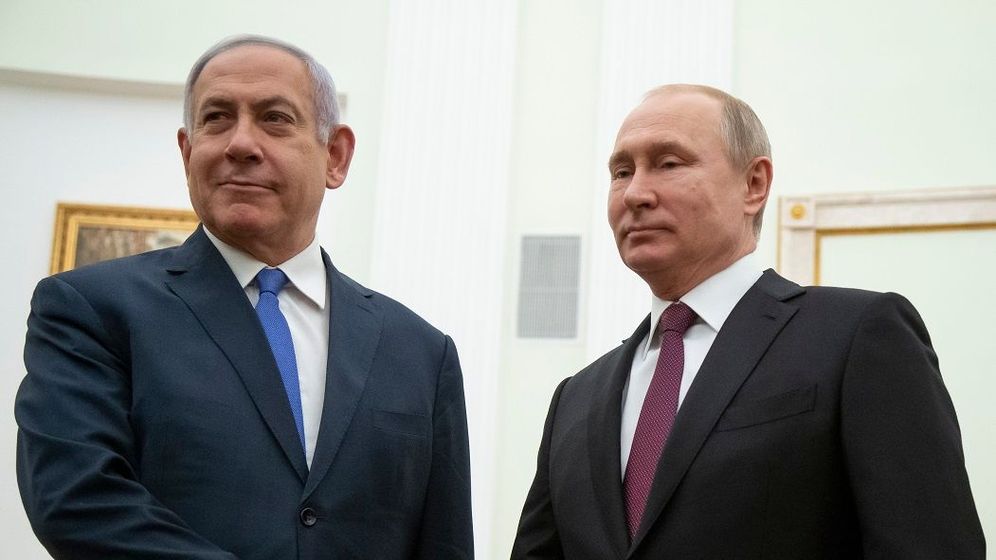
Russia’s Foreign Ministry rejected accusations by PM Benjamin Netanyahu that Moscow was involved in an antisemitic online campaign, calling them entirely unsubstantiated and saying it received them “with bewilderment,” in a statement reported by TASS.
“We have received with bewilderment these entirely unsubstantiated accusations against our country, voiced publicly by the Prime Minister of Israel, a state with which Russia shares a rich, common history,” the ministry said. It argued that attributing an antisemitic campaign to Russia appears “particularly absurd.”
The ministry cited what it called a fact well known to the Israeli side and repeatedly acknowledged by it, that thanks to the policies of Russia’s leadership, manifestations of antisemitism in the country are virtually non-existent.
The ministry also noted the timing. “It is particularly disappointing that such statements were made on October 18, the very day that Russia and Israel marked the 35th anniversary of the full restoration of diplomatic relations,” it said.
Addressing Netanyahu’s references to so-called “bot farms,” the ministry said Russia proposed as early as 2018 that Israel enter a bilateral agreement on cooperation in information security, and received no response. The ministry concluded that Netanyahu had “chosen to engage in media-driven provocations” ahead of Israel’s parliamentary elections, rather than fostering a dialogue between cybersecurity experts.
Netanyahu made the accusations in response to a question from i24NEWS. He accused Russia of aiding Iran and of using artificial intelligence to operate antisemitic bot networks targeting Israel and Jews worldwide.
The prime minister leveled unusually sharp criticism at Moscow while acknowledging that Israel and Russia share some interests despite their differences.
Netanyahu said Israel and Moscow have conflicting interests, but that he remains in occasional contact with Russian President Vladimir Putin, speaking with him when necessary. He also suggested Putin does not want Iran to acquire nuclear weapons, arguing that a nuclear-armed Tehran could threaten Russia’s own interests.
Among the potential risks, he said, was the possibility that Iran could recruit Muslim groups within Russia to act on its behalf.
The remarks marked a shift in tone from Netanyahu’s longstanding portrayal of his relationship with Putin as an important asset in Israel’s foreign and security policy. His public accusations highlighted tensions between the two countries.
Suggested articles
- 'Russia does not consider Trump’s statements strong,' Zelensky pleads for help as Russia targets energy grid | i24NEWS, Henry Kirshner
- Kremlin ‘has nothing to say yet about the proposed energy ceasefire’ following Trump truce announcement | i24NEWS
- Witkoff arrives in St. Petersburg for talks with Putin following Oslo meeting with Zelensky | i24NEWS