Myanmar found guilty of genocide, but survivors say fight for justice is far from over - analysis
The International Court of Justice found Myanmar responsible for genocide, but survivors say the landmark ruling must now lead to individual accountability, restored citizenship and a safe return home

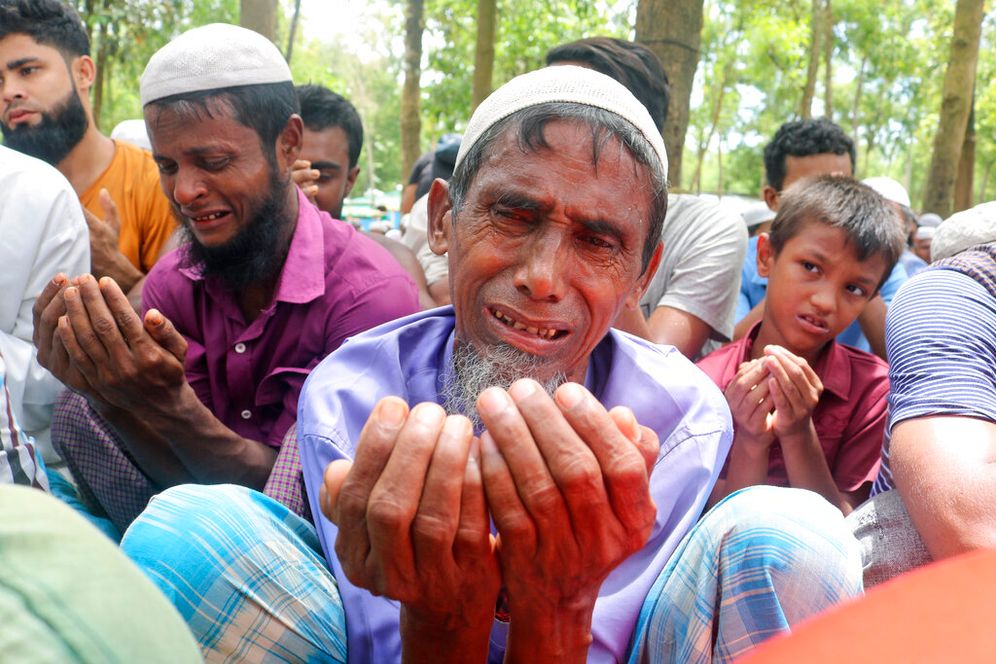
The International Court of Justice (ICJ) has ruled that Myanmar committed genocide against its Rohingya Muslim minority during a military campaign in 2017, marking a historic legal victory for a community that has faced decades of persecution.
The November 19 ruling follows a case brought by The Gambia in 2019 and establishes Myanmar's responsibility under the Genocide Convention.
For Yasmin Ullah, Executive Director of the Rohingya Maìyafuìnor Collaborative Network (RMCN), the judgment represents more than a legal milestone. As a survivor of earlier violence against the Rohingya who joined The Gambia's delegation at the court, she sees it as recognition of a community whose identity and rights have long been denied.
"For generations, Myanmar denied our identity and our history and our right to belong," Yasmin Ullah told i24NEWS' Global Eye.
"We want our rights, we want our homes, and we want our citizenship and our future back."
Decades of persecution and the multiple perpetrators
The Rohingya are a predominantly Muslim ethnic minority historically concentrated in Myanmar's western Rakhine State, along the border with Bangladesh.
Although Rohingya communities have lived in the region for generations, Myanmar's authorities have long disputed their identity and citizenship rights. The country's 1982 citizenship law effectively excluded most Rohingya from full citizenship, leaving much of the population stateless and facing restrictions on everything from movement to education and healthcare.
Violence against the community intensified in 2012, when clashes between ethnic Rakhine Buddhists and Rohingya Muslims escalated into widespread attacks and displacement.
The situation deteriorated dramatically in August 2017, when Rohingya insurgents attacked state security installations, prompting the military to launch what it described as clearance operations.
Those operations became a campaign of mass killings, sexual violence and village burnings that forced more than 740,000 Rohingya to flee into neighboring Bangladesh.
Myanmar's military, known as the Tatmadaw, was the principal perpetrator of the atrocities examined by the ICJ. Soldiers, police and other security personnel carried out the operations, while some local ethnic Rakhine civilians also participated in attacks against Rohingya communities.
Ullah described the scale of the violence as devastating, recounting killings, mass rape and attacks on children.
"Not only that, soldiers were found to have shot people down while they were trying to flee, landmines were planted around the areas that they were trying to flee to," she said.
But the violence against the Rohingya did not end in 2017.
In recent years, civilians have increasingly found themselves caught between Myanmar's military and the Arakan Army, an ethnic Rakhine armed organization fighting in the current civil war between a myriad of ethnic militias taking up arms against the state.
Rohingya armed organizations, including the Arakan Rohingya Salvation Army, have also been implicated in intimidation, killings and forced recruitment of the civilian population.
The ICJ judgment, however, specifically addresses Myanmar's responsibility for the genocidal military operations of 2017, rather than every armed group subsequently implicated in violence.
Who will be held accountable?
Myanmar's then civilian leader, Aung San Suu Kyi, personally appeared before the ICJ in December 2019 to defend her country, rejecting allegations that its military operations constituted genocide.
The military subsequently overthrew her government in February 2021, and military chief Min Aung Hlaing, who oversaw the 2017 crackdown, eventually assumed the presidency.
While the ICJ ruling establishes Myanmar's responsibility as a state, it does not amount to criminal convictions of individual perpetrators.
That distinction is particularly important to Ullah.
"The ICJ establishes state responsibility, but states do not commit crimes by themselves," she said.
"There are human beings behind those atrocities, and they must face individual criminal accountability."
Ullah specifically called for Min Aung Hlaing and other military leaders to face prosecution.
"No rank, no title, and no political office should shield him or other perpetrators from accountability."
Efforts to pursue individual responsibility are already underway.
In November 2024, the International Criminal Court's prosecutor requested an arrest warrant for Min Aung Hlaing over alleged crimes against humanity involving the deportation and persecution of Rohingya.
Separately, an Argentine court issued arrest warrants against 25 individuals in February 2025 in connection with atrocities against the Rohingya.
Ullah is also a lead complainant in a case filed in Indonesia in April 2026, seeking to pursue Min Aung Hlaing under the principle of universal jurisdiction, which would allow national courts to prosecute certain serious international crimes committed abroad.
"We cannot allow perpetrators to escape accountability simply by crossing borders or hiding behind state authority," Ullah said.
Suggested articles
- UN top court finds Myanmar responsible for genocide against Rohingya | i24NEWS
- 'Butcher of Bosnia' Ratko Mladic dies in UN prison while serving life sentence for genocide | Yuval Barnea
- 'You hear the screams... and then you hear silence': New report exposes systematic sexual violence on October 7 | i24NEWS, Henry Kirshner
More than a million Rohingya remain in exile
Despite the legal victory, the humanitarian situation facing the Rohingya remains severe.
More than 1.2 million Rohingya refugees are currently living in Bangladesh, primarily in overcrowded camps around Cox's Bazar. Others have sought refuge in Malaysia, India, Indonesia and Thailand, often without permanent legal status.
Many refugees have spent nearly a decade dependent on international aid, with limited access to basic state resources.
Ullah warned that reductions in food assistance were contributing to malnutrition, citing monthly food allocations falling from $12 to as little as $6 per person.
For refugees already living in severe poverty, the reductions have heightened concerns over food security and the long-term welfare of children.
Yet despite these conditions, Ullah says many Rohingya still hope to return to Myanmar.
Recalling a visit to refugee camps in Bangladesh in August, she described meeting a woman who insisted that refugees were not seeking to remain dependent on international aid.
"We're not here to ask for a handout," Ullah was told by one woman in the camp.
"We would like to go home when it is possible."
Can the Rohingya return to Myanmar?
The ICJ's ruling creates new obligations for Myanmar, including reparations and measures to facilitate the safe and voluntary return of displaced Rohingya. But obstacles remain.
Myanmar continues to face civil conflict, while the Arakan Army controls much of Rakhine State, including areas where Rohingya communities once lived.
The military government has shown little willingness to restore Rohingya citizenship, while accusations of abuses against civilians by multiple armed groups have complicated prospects for repatriation.
For many refugees, returning home would require more than an end to fighting. It would also mean guarantees of citizenship, freedom of movement, property rights and protection from renewed persecution.
The judgment may strengthen international pressure on Myanmar, but translating it into meaningful change will depend on enforcement efforts of authorities on the ground to protect Rohingya rights.
For Ullah, the verdict represents a long-awaited acknowledgment of the community's suffering, but its ultimate significance will depend on whether it brings tangible results.
"And this judgment comes, I think, in time just before we all lose hope," she said.
Nearly a decade after the mass exodus of 2017, the Rohingya have secured a landmark legal victory. However, a path remains to be laid out on how to hold perpetrators responsible for their crimes and how to safely repatriate Rohingya refugees who choose to return home.