Why did Iran try to assassinate far-right Spanish politician Alejo Vidal-Quadras?
Spanish prosecutors say Iran ordered the 2023 assassination attempt in retaliation for Vidal-Quadras's longstanding support for the Iranian opposition group MEK.

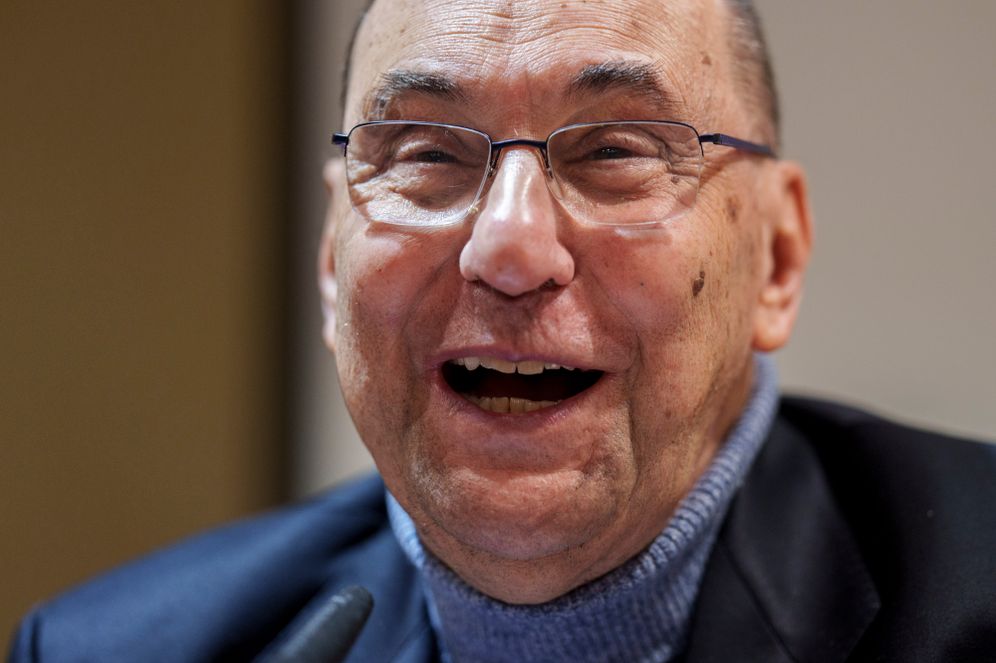
November 9, 2023, 1:30 p.m., Madrid: Alejo Vidal-Quadras leaves a church in the upscale Salamanca neighborhood of Madrid.
He turns his head to face the street and is shot through the jaw by a would-be assassin who was aiming at his throat.
The assailant immediately flees the scene on a motorcycle.
Vidal-Quadras was taken to hospital where he recovered and first accused Iran of being behind the attack.
The Spanish prosecutor's office charged eight suspects with the attempted assassination in July 2025.
On October 23, 2026, the prosecutor's office announced that the assassination was commissioned by the Iranian government in retribution for Vidal-Quadras's support for anti-government movements in Iran.
Vidal-Quadros is a veteran of the Spanish right, entering politics as a key figure in the Catalan branch of the conservative People's Party. He spent most of his career sitting in the European Parliament as a representative for Spain.
In 2014, he split from the People's Party to form the insurgent far-right party Vox, although he left the party soon afterward due to its poor showing in European elections.
Vidal-Quadros played an instrumental role in removing the People’s Mojahedin Organization of Iran (MEK) from the EU's list of designated terrorist organizations in 2009.
He received nearly 1 million euros from the group, which he claimed was to support his own political ambitions in 2013.
In October 2022, he was sanctioned by Iran for supporting terrorism. He has accused the Spanish Foreign Ministry of not paying enough attention to the threat to his life over this issue.
“Of course I contact the Spanish Minister of Foreign Affairs,” he told The Independent. “‘Look, there is this list that has been made public by the Iranian regime, I'm worried about it’. They didn't consider it relevant. And one year later, I was shot.”
The People's Mojahedin Organization of Iran (MEK) was founded in the early 1960s as an opposition group to the Shah of Iran, Reza Pahlavi. A report to the US Congress quotes one historian who described the movement as “a combination of Islam and Marxism.”
During this period, MEK began to be seen as a terrorist organization due to attacks killing US service members in Iran, and was also accused of being responsible for the US Embassy seizure in 1979, which the group denies.
By the early 1980s, MEK had fallen out with the newly established Islamic Republic of Iran and began a bombing campaign against high-ranking officials, including the successful assassination of Iran’s chief justice and dozens of other officials in 1981.
Initially, the group fled to Iraq where it was shielded by Saddam Hussein and permitted to use Iraqi territory to launch terror attacks in Iran, including the assassination of Iran's deputy chief of staff, Ali Sayyad Shirazi, in 1999.
By the late 2000s, the group had begun pushing for delisting as a terrorist organization, succeeding in 2008 in the UK and in 2009 in the EU, with Vidal-Quadras's help.
As part of the delisting campaign, MEK cells in Iraq were ordered to disarm and surrender their weapons to US forces in the country, leading the organization to leave Iraq for Albania in 2013 after the IRGC began threatening them.
The group continues to claim a central position in organizing resistance to the Islamic Republic, although the congressional report notes that opinion polling in Iran and among the diaspora does not support this claim.
The US State Department told Foreign Policy magazine in 2022 that “the United States does not see the MEK as a viable democratic opposition movement that is representative of the Iranian people.”
Israel was accused of collaborating with MEK to assassinate Iranian nuclear officials in 2012.