Gaza awaits Israel's elections, but many doubt any change in policy
Amid the postponement of Palestinian elections, Palestinians are following the Israeli elections knowing that it will influence their future, despite their limited ability to affect its outcome

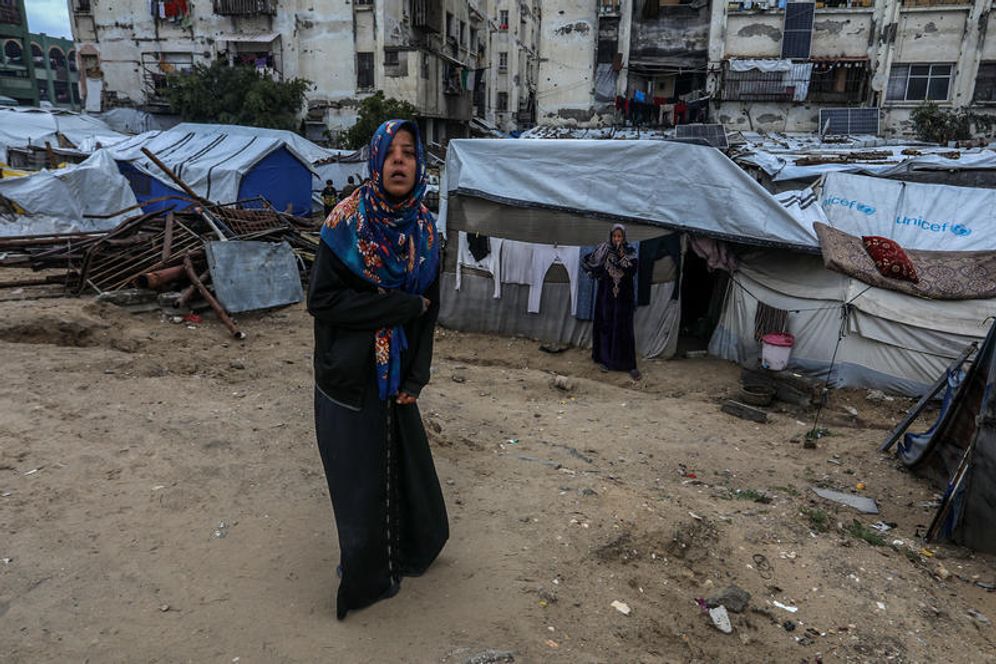
In the Gaza Strip, where three years of war have exhausted the population, destroyed the foundations of daily life, and tightened opportunities, bets on the results of today's Israeli Knesset elections vary.
While some Gazans hope that the departure of Prime Minister Benjamin Netanyahu will open the door to change that alleviates their suffering, others believe that a change in government does not necessarily mean a change in Israeli policies, especially in light of the rise of the far right and the growing hardline rhetoric toward Palestinians.
Palestinian anticipation of Israel's election results reflects the extent of the predicament they face, amid stalled political processes, the ongoing humanitarian crisis, and the absence of a clear prospect for ending the war and its repercussions.
While Israeli voters head to the polls to determine the shape of their next government, the residents of Gaza find themselves affected by an electoral event beyond their political will, hoping that its outcome will bring about changes to their reality, which is burdened by killing, destruction, displacement, and siege.
Amid the postponement of Palestinian elections, Palestinians are following the Israeli elections as one of the possible factors that could influence their future, despite their limited ability to affect its outcome.
While Palestinian elections are supposed to serve as a gateway to renewing political legitimacy and determining national priorities, citizens find themselves facing a different event, watching its results in hopes of a chance to end the war or limit its consequences.
However, this anticipation does not necessarily mean that the results will lead to what the people of Gaza hope for.
A change in the Israeli government may rearrange some political calculations, but it does not guarantee an end to the war, the lifting of restrictions imposed on the Strip, or the launching of a comprehensive reconstruction process, unless it is accompanied by actual shifts in Israeli policies and international pressures capable of influencing decisions on the ground.
Divergent stakes in Gaza
In the displaced persons camps in Deir al-Balah in central Gaza, where Palestinians live after being dsiplaced from northern Gaza, opinions on the Israeli elections vary between those who see them as a potential opportunity for change and those who doubt their ability to bring about real transformation.
Camp residents believe that the fall of the Netanyahu government could open the door to a different approach toward the Gaza Strip and give Palestinians a chance to break free from the cycle of killing, destruction, and siege, as well as to regain at least the minimum requirements for life.
This hope is based on the belief that a change in Israeli political leadership might provide space to reconsider the conduct of the war and the future of Gaza, even if it is not sufficient by itself to guarantee tangible results.
On the other hand, observers believe that limiting the crisis to Netanyahu as an individual ignores the nature of the transformations within Israeli political society. The rise of the far right and the growing influence of hardline movements have increased doubts about the prospects for any substantial change in policies toward the Palestinians.
They point out that positions regarding the Gaza Strip, the West Bank, and displacement go beyond disagreements between political figures, and are also linked to broader trends within the Israeli party system.
According to analysts, the arrival of a new government does not guarantee a change in Israeli dealings with the Palestinians. Names and alliances may change, but the same policies continue in the absence of a deep political review of the current course.
Moreover, hardline positions toward the Palestinians have a significant presence in the Israeli scene, which limits expectations about the ability of a government change alone to bring about a tangible transformation.
The Israeli elections are a reflection of Palestinian despair.
The anticipation of the election results is not solely based on the hope for a change in government, but also reveals the state of exhaustion and despair experienced by the residents of Gaza after years of war.
The fact that Palestinians are compelled to follow the Israeli electoral process and tie the prospects of improving their lives to its outcome reflects, according to observers, the extent of their inability to influence their own reality and the absence of a Palestinian political horizon capable of providing clear pathways out of the crisis.
Analysts point out that the ongoing humanitarian suffering and the decline of basic living conditions make any possibility of political change a matter of interest to the population, even when the chances of its realization are limited.
In this context, the paradox becomes increasingly clear between the postponement of the Palestinian elections and the anticipation of the results of the Israeli elections, as if the future of the Palestinians has become more dependent on the decisions of the Israeli voter than on their own political will and their ability to renew their representative institutions.
According to observers, this reality reflects a crisis that goes deeper than just the absence of elections or stalled negotiations; it is linked to the weakness of the political tools available to the Palestinians and the declining ability to influence decisions that affect their daily lives.
Amid the ongoing war, expectations regarding the outcome of the Israeli elections have become part of the search for any possible window to alleviate suffering, even though many realize that this window may not actually lead to real change.
Changing the government does not mean changing the approach.
In an analysis of the situation, observers believe that the Palestinian reliance on the results of the Israeli elections reflects a lack of clear prospects for solutions, given the ongoing war and the absence of sufficient indications that it could be ended through existing political avenues.
They point out that the elections may result in a government that is less hardline on certain issues, or give the Israeli opposition greater room to maneuver and demand an end to the war. However, this does not necessarily mean a fundamental change in policies toward the Palestinians.
Analysts affirm that any real change requires effective international pressure to push the Israeli government to stop the war and commit to a clear political path. They point to the importance of European and international positions, along with American pressure, in turning statements and political stances into practical steps.
In this sense, the Israeli elections do not appear to be an independent factor capable of changing the Palestinian reality, but rather a political variable whose results may interact with broader international and regional positions.
The change that the Palestinians await does not depend solely on the identity of the next prime minister, but rather on the extent to which influential parties are willing to push Israel to reconsider the policies that have contributed to the continuation of the war and the worsening of the humanitarian crisis.
Regarding the potential for different political forces to come to power, observers believe that a change of government does not guarantee a fundamental shift in dealing with the Palestinians or in respecting their rights.
They point out that Palestinian, Arab, and international reliance on Israeli elections as an entry point for change reveals the limited alternatives available, and reflects a reliance on transformation from within Israeli society instead of building effective political and international pressure to enforce policy change.
Analysts add that Netanyahu’s continuation in power may be interpreted as a mandate to maintain the current political approach, and perhaps even push it towards greater hardline positions. However, the arrival of another figure as prime minister does not necessarily guarantee a different course. The distinction between a change in leadership and a change in policies remains fundamental when assessing the impact of the elections on the Palestinians.
Specifically in the Gaza Strip, political estimates indicate that there are broad intersections within the Israeli scene regarding a number of key issues related to the future of the Strip, which makes it uncertain to expect a major shift simply with a change in government. In fact, the next government may continue to pursue strict policies toward Gaza, even if Netanyahu is no longer at its head.
Between limited hopes and widespread doubts, Gaza awaits the results of the Israeli elections from the position of one affected, not a participant in decision-making. For the residents of the Strip, the question is not only about who will govern Israel, but also whether the election results will translate into tangible change that ends the war, eases the suffering, and opens the way for reconstruction. Or will a change of faces leave them facing the same reality, waiting for a political decision over which they have no means of influence.