High Court freezes new law halting arrests of Haredi draft evaders hours after Knesset approval
Justice Ofer Grosskopf issued a temporary injunction hours after the bill's passage, suspending its implementation pending a High Court hearing

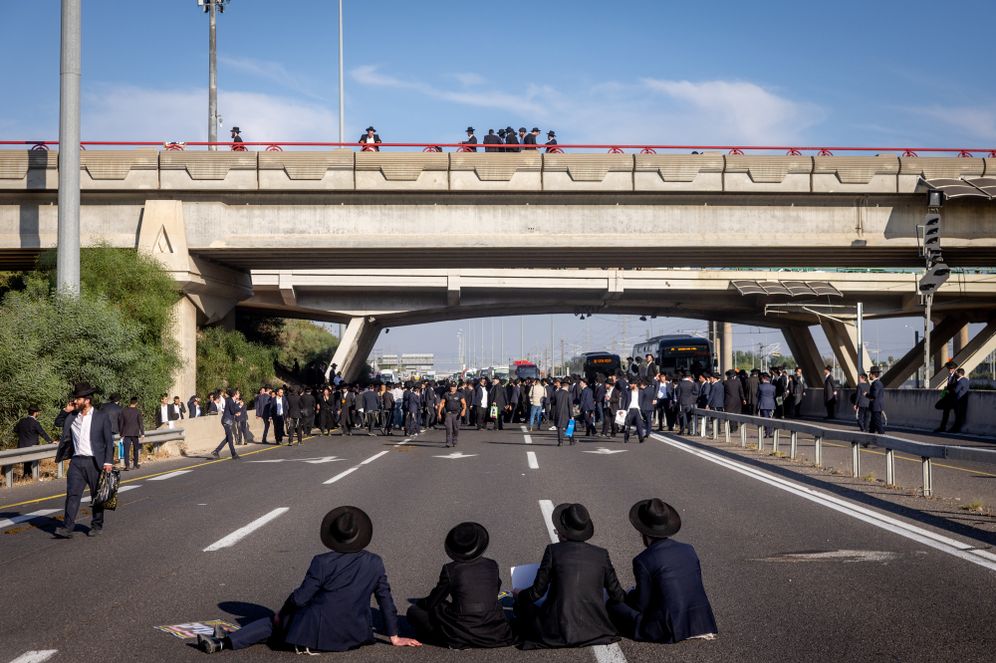
Israel's High Court of Justice on Wednesday suspended a newly passed law that would have frozen the arrest and enforcement proceedings against ultra-Orthodox (Haredi) Israelis who fail to report for mandatory military service, just hours after the legislation narrowly passed in the Knesset.
Supreme Court Justice Ofer Grosskopf issued a temporary injunction halting the law from taking effect while the court considers petitions challenging its legality.
In his ruling, Grosskopf said the decision was based on the court's longstanding jurisprudence regarding the conscription of yeshiva students and concerns over selective enforcement.
"Given this court's longstanding case law on the issue of drafting yeshiva students, the significance of freezing arrest, investigation and enforcement proceedings only with respect to certain segments of the population, and the serious arguments raised by the petitioners regarding the law's validity, a temporary order is granted suspending the law's entry into force until a further decision is made," he wrote.
The ruling effectively freezes implementation of the legislation. The state and other respondents have been given four days to submit their responses before the court holds an expedited hearing.
Grosskopf also said the petitions should be heard "as soon as possible" by an expanded panel of justices, although some legal commentators noted that a single justice cannot formally order an expanded panel, a decision that ultimately rests with the Supreme Court president or a three-judge panel.
The decision immediately drew fierce criticism from members of Israel's governing coalition.
Shas chairman Aryeh Deri accused the court of judicial overreach, saying the injunction was issued with unusual speed against a law approved by the Knesset.
"The speed with which the Supreme Court issued an interim order against a law passed by a majority in the Knesset is another expression of judicial activism," Deri said. "Instead of allowing a process intended to prevent further deterioration and create time for broad consensus in Israeli society, the court has chosen to deepen the crisis."
Deri further argued that public trust in the judiciary had eroded and pledged that Shas would continue working to protect Torah students and advance judicial reform.
Housing Minister and United Torah Judaism lawmaker Meir Porush was even more critical, calling the ruling "illegal" and declaring that "any police officer or soldier who arrests Torah scholars is acting unlawfully."
The legal battle comes amid an ongoing national dispute over military conscription for ultra-Orthodox men, an issue that has become one of the most contentious political and constitutional debates in Israel since the Supreme Court ruled that blanket exemptions for yeshiva students lack a legal basis.
The government has sought temporary measures while attempting to negotiate a broader draft law acceptable to both coalition partners and the military.