Meet Religious Zionism-Zehut's lineup: Who’s who in the 26th Knesset
Who’s who in the Religious Zionism-Zehut's list? Meet the people behind the names, explore their backgrounds, and discover their paths to the 26th Knesset

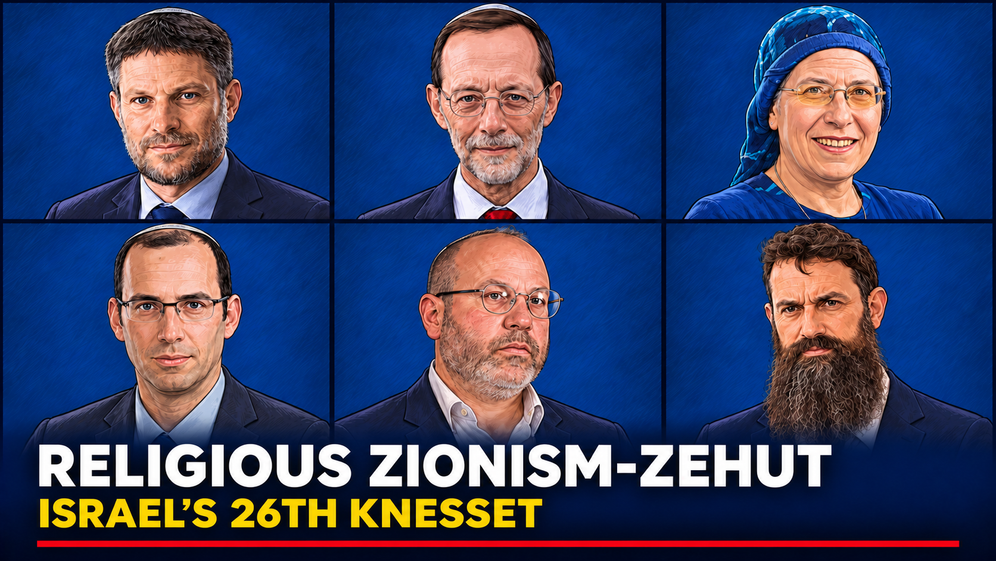
Two strands of Israel’s right joined forces in 2026 when Bezalel Smotrich’s Religious Zionism and Moshe Feiglin’s Zehut agreed to run on a shared ticket. The alliance brings together Religious Zionism’s emphasis on religion and settlement with Zehut’s blend of Jewish nationalism and libertarian economics. In this installment of our Knesset profile series, we meet the people behind the partnership- their backgrounds, their priorities and their visions for Israel’s future.
Read more from i24NEWS’ profile series on the parties of the 26th Knesset >> Click here
Bezalel Smotrich — No. 1
Bezalel Smotrich trained as a lawyer and built his public career in settlement activism. In 2006, he co-founded Regavim, which monitors construction and land use and campaigns against what it describes as illegal building on state land. He also helped establish the Union of Zionist High Yeshivot and campaigned against settlement freezes and prisoner releases.
First elected to the Knesset in 2015, Smotrich served as deputy speaker before winning the National Union–Tkuma leadership in 2019. He became transport minister that year and later renamed his party Religious Zionism, leading joint election lists with Otzma Yehudit and Noam. In 2022, he became finance minister, fast-tracking a record amount of government funding to settlement construction in the West Bank.
He has been formally sanctioned by the United Kingdom, Australia, New Zealand, Canada and Norway because of repeated incitement of violence against Palestinians in the West Bank.
Born in 1980 and raised in Beit El, Smotrich is married with seven children and lives in Kedumim. He studied at Mercaz HaRav and other yeshivas, then enlisted at 28, serving in the IDF’s Operations Directorate.
Moshe Feiglin — No. 2
Moshe Feiglin served as an officer in the IDF’s nuclear, biological and chemical defence corps before becoming a prominent opponent of the Oslo Accords. His activism resulted in convictions for unlawful assembly in 1995 and sedition and publishing incitement to civil disobedience in 1997.
He pursued national politics through Likud, entering the Knesset in 2013 and serving as deputy speaker. In 2015, he founded Zehut, combining Jewish nationalism and Israeli sovereignty over the territories with individual rights and free-market economics. After unsuccessful electoral efforts and a return to Likud’s primaries, he revived Zehut in 2024 and announced a joint run with Religious Zionism in 2026.
Born in Haifa in 1962 and raised partly in Rehovot, Feiglin is married with five children and lives in Karnei Shomron in the West Bank. His grandson Yair Levin was killed during military operations in Gaza in June 2024.
Orit Strock — No. 3
Orit Strock built her public career in settlement advocacy and legal campaigning. From 2000, she headed the legal-political department of Hebron’s Jewish community and later led the Human Rights Organization in the West Bank. Through the organisation, she pursued complaints and lawsuits alleging police violence against protesters opposing the Gaza disengagement and the evacuation of the settlement Amona.
Strock entered the Knesset in 2013 on Jewish Home’s list as a Tkuma representative. She served on the Foreign Affairs and Defense and Constitution Committees, returning to parliament in 2021 with Religious Zionism. Her parliamentary interests have included peripheral communities and integrating children with disabilities into education.
Born in Jerusalem in 1960, Struck became religiously observant as a teenager. She is married to Avraham Strock, has 11 children and lives in Hebron’s Avraham Avinu neighbourhood.
Simcha Rothman — No. 4
Simcha Rothman built his career in law and campaigning to change Israel’s judicial system. He interned in the Justice Ministry’s legal advice and legislation department, worked at the Registrar of Nonprofit Associations and later established his own law firm.
In 2013, he co-founded the Movement for Governance and Democracy, serving as its legal adviser until entering the Knesset in 2021. He also represented justice minister Amir Ohana in proceedings concerning acting state attorney Dan Eldad’s tenure and served on the Israel Bar Association’s disciplinary court. He was the head of the Knesset’s Justice Committee, and was one of the architects in the government’s judicial overhaul plans.
Born in Bnei Brak in 1980, Rothman is married with five children and lives in Pnei Kedem in Gush Etzion. He holds a law degree from Bar-Ilan University and served as a religious-affairs NCO at the military engineering school. His ancestors moved to Israel in the early 20th century from Ohio.
Tzvika Mor — No. 5
Tzvika Mor’s professional background is in education, with academic training in teaching and educational management. He holds a bachelor’s degree from Lifshitz College and a master’s in the management and organisation of education systems from Herzog College. He completed a PhD in psychology from the University of Cordoba in 2025.
Mor’s public profile is closely connected to his family’s experience of the October 7 attack: his son Eitan was abducted from the Nova festival and released on October 13, 2025. During his captivity, Tzvika founded the Tikva Forum with other hostage family members, which urged the government not to agree to a hostage deal, opting to continue fighting instead.
Born in Bnei Brak in 1976, Mor lives in Kiryat Arba with his wife and their eight children. He served in the Paratroopers Brigade in the header program, combining his duty with torah study.
Itamar Eitam — No. 6
Itamar Eitam built his background in military service and national-security studies. A graduate of the Hispin high-school yeshiva and Eli pre-military academy, he enlisted in the Egoz unit in 2001 and holds a master’s degree in national security from Bar-Ilan University. Since October 7th, he has completed nearly 700 days of active reserve service and has been recognised as an IDF-disabled veteran.
He co-founded the Reservists’ Generation of Victory movement, which advocates continuing the war until terrorist organisations are defeated. He also led Wounded of War for Victory, seeking to give wounded soldiers a stronger voice in public debate.
Born in 1981 and raised in the Golan Heights, Eitam is the son of former minister and reserve brigadier general Effi Eitam. He is married to Naama, has six children, and lives in Hoshaya.