Netanyahu's 'unity'? Eisenkot's 'emergency'? Or none of the above?
Netanyahu’s call for “unity” and Eisenkot’s push for an “emergency” government frame rival bids to secure coalition partners and prepare voters for compromise, or another election

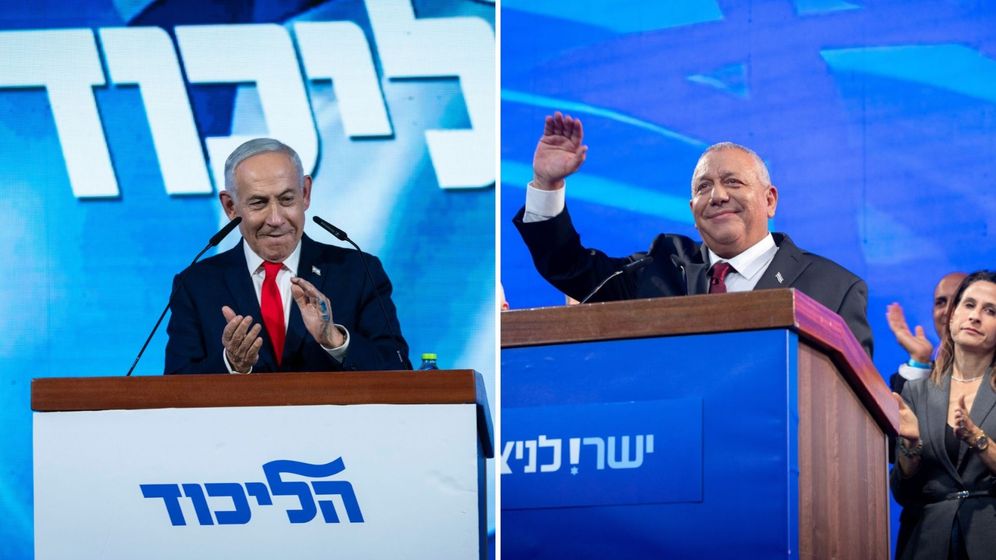
Israel's coalition politics are haggled in back rooms. But rhetoric still matters. And so we have Benjamin Netanyahu calling for a "unity" government, and Gadi Eisenkot calling for an "emergency" one.
Their lexicon, of course, is designed for rhetorical advantage, either to put pressure on potential coalition partners or to set the table for elections next spring should a government fail to be formed.
For Netanyahu, unity is meant to telegraph compromise with the opposing camp, even as the prime minister vows a tough political line. Netanyahu has said he wants a coalition with all 53 seats of his existing right-wing bloc, plus whichever Zionist parties wish to join.
That would leave potential comers as junior partners in a government dominated by the right-wing and Haredi figures of the current (now caretaker) government. Netanyahu markets this as unity in order to seize a rhetorical advantage of being seen as conciliatory and willing to compromise. But, traditionally, Israeli unity governments have had a more equal balance of rival political camps.
Eisenkot is marketing an "emergency" to convey urgency—and the need for compromise—to his bloc's base. In the run-up to elections, party leaders from the bloc, such as Avigdor Liberman and Naftali Bennett, promised a tough line on working with Arab parties or Haredi ones. Mathematically, if he is to set up a government with himself as sole prime minister, Eisenkot must, at things stand, partner with at least one of those two sectors.
The compromise for his bloc's base is not an easy one. Parts of the bloc's public reject coalition partnership or support from either of the two Arab parties. And many in the bloc also reject linking with Haredi parties, given the expected concessions on the emotional issue of drafting Haredi yeshiva students to the military.
Eisenkot's success or failure will be determined, primarily, by backroom talks. But to lay the groundwork for needed far-reaching compromises, Eisenkot wants to use messaging on an emergency to convince his bloc's base: You have to compromise, he explains, because Israel is at an emergency.
In the past, emergencies have changed the shape of governments: in the period before the Six-Day War, at the outset of the COVID pandemic, in the aftermath of October 7. The threat from Iran and changes in US politics will challenge Israel but don't meet the same threshold as emergencies past.
Instead of "unity" or "emergency," we have politics. And the slow political calendar set out in Israel's basic law on the Knesset points the way to months of politics, on the way to a new government or more elections.