Oct. 7 inquiry, PM term limits and judicial overhaul rollback: Here are the new bills put forth by Yashar
Eisenkot’s “Yashar!” faction, alongside other parliamentary factions, submitted bills to establish a state commission of inquiry into October 7, and impose prime ministerial term limits

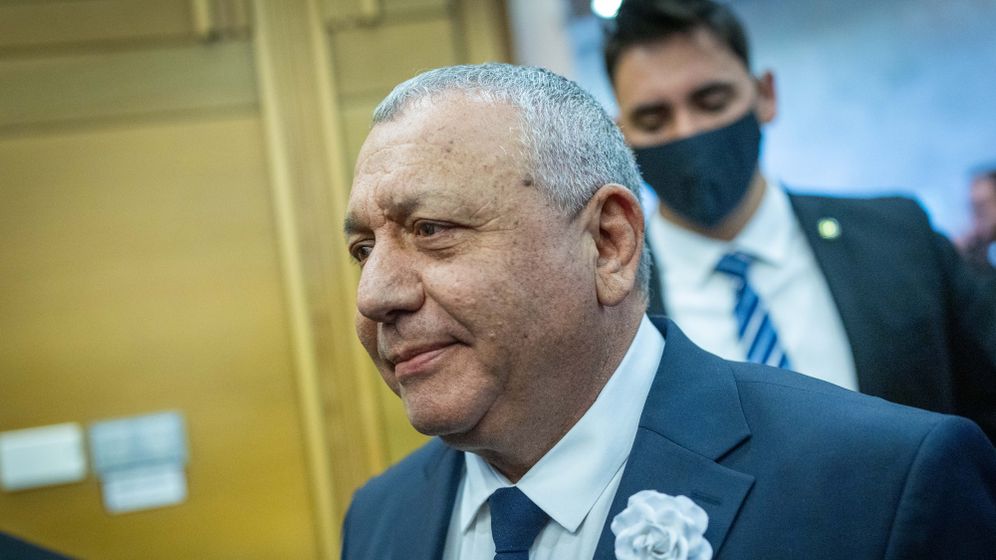
Gadi Eisenkot’s Yashar! party submitted bills alongside other parliamentary factions at the opening of the Knesset session to establish a state inquiry into October 7, limit how long a prime minister can serve and reverse judicial and constitutional changes advanced by the outgoing government.
The proposals reach across some of Israel’s most consequential institutions, from the courts and the attorney general to broadcasting regulation and the body responsible for investigating police officers.
At the center of the package is a proposal to establish a state commission of inquiry into the October 7, 2023, massacre. Such a commission is a formal investigative body whose chair and members are appointed by the president of the Supreme Court.
Under the existing framework, it can be established by the government or, in specified circumstances involving a state comptroller’s report, by the Knesset’s State Audit Committee.
A second bill would amend Basic Law: The Government to impose a maximum tenure on the prime minister. The announcement did not specify the number of years or terms permitted, whether consecutive and nonconsecutive service would be treated differently, or whether previous time in office would count.
The rest of the package seeks to repeal measures the faction calls the “regime overhaul”—its description of legislation changing the relationship between elected officials and institutions responsible for legal oversight.
One target is the law governing the attorney general’s legal advice, representation of the government in court and oversight powers. The legislation allows the government to reject the attorney general’s legal position in certain circumstances and broadens its ability to obtain separate courtroom representation. Repealing it would reopen the question of how much freedom ministers should have to act against the advice of the government’s chief legal adviser.
The party also seeks to repeal an amendment to Basic Law: The Judiciary and Amendment No. 105 to the Courts Law. These laws sit within the framework governing Israel’s courts. The judicial selection changes approved in 2025 increased political influence over appointments, replacing the Israel Bar Association’s representatives on the selection committee with representatives chosen by the coalition and opposition.
Another proposal concerns the rules for declaring a prime minister unable to serve, often referred to as the “incapacity law.” The 2023 amendment restricted the grounds to physical or mental inability and placed the decision-making process in the hands of the prime minister, government and Knesset under specified procedures. The proposed repeal would revisit those restrictions and the question of who can determine that a serving premier cannot perform the job.
The package also targets broadcasting legislation. A broadcasting law approved in 2026 provides for a new regulator to replace existing regulatory bodies, changing the structure through which the broadcast sector is overseen. The faction’s brief statement did not identify the exact provisions its repeal bill would remove.
The proposed repeal of Amendment No. 45 to the Police Ordinance concerns the investigation of police misconduct. That amendment provides for the Police Internal Investigations Department to become an independent body within the Justice Ministry, separate from the State Attorney’s Office, with its own budget and a new leadership appointment mechanism. It also introduces a role to resolve disputes between police investigators and other investigative or prosecutorial bodies.
Taken together, the proposals set out an agenda focused on accountability for October 7, limits on the premiership and changes to the institutions that oversee government conduct.
The proposals touch on issues that have brought Israelis into the streets for years. The judicial overhaul sparked mass demonstrations in 2023 over concerns about judicial independence and checks on government power. Since October 7, protesters have also demanded accountability for the failures surrounding the attack, including a state commission of inquiry.