Final election polls point to deadlock as neither bloc secures a majority
i24NEWS puts Netanyahu’s bloc at 59 seats, while Kan projects 50; both surveys leave the rival camps short of the 61 seats needed for a Knesset majority

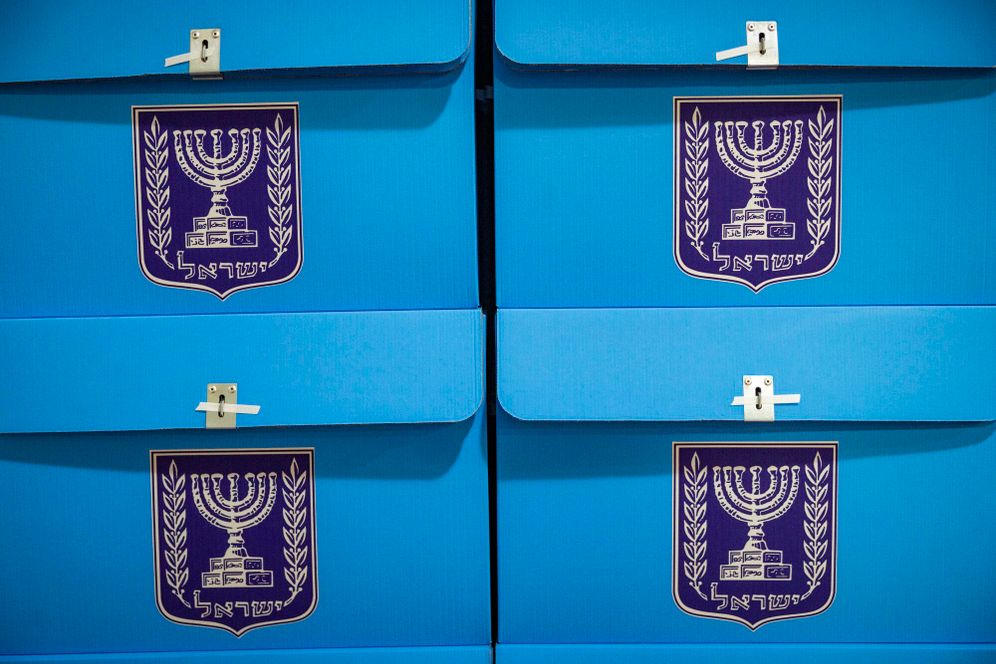
Israel’s final pre-election polls point to a potential political deadlock after Tuesday’s vote, with neither Prime Minister Netanyahu’s bloc nor the rival camp led by Gadi Eisenkot projected to secure an outright parliamentary majority.
Surveys published Friday by i24NEWS and Kan offered sharply different assessments of the balance of power. But both left the main competing blocs without a clear path to a government on their own.
The i24NEWS poll, conducted by Direct Polls, gave Netanyahu’s bloc 59 seats in the 120-member Knesset, two short of a majority. Eisenkot’s bloc received 47 seats, while the Arab parties held 14.
Kan’s survey showed a substantially weaker result for Netanyahu’s camp, putting it at 50 seats, down from 51 in its previous poll. Eisenkot’s bloc remained unchanged at 52, also well below the majority threshold.
The findings raise the prospect of difficult coalition negotiations, with smaller parties, electoral-threshold results and turnout potentially determining the next government.
One significant difference between the surveys was the performance of Ofer Winter’s Amcha Israel party.
In the i24NEWS poll, the party crossed the electoral threshold and won four seats after falling short in the channel’s previous two surveys. Its entry helped lift Netanyahu’s bloc from 58 to 59 seats.
Kan, however, put Amcha Israel below the threshold, with 2.9% of the vote. The difference illustrates how the fate of a small party could alter the parliamentary balance.
The surveys also disagreed on which party would finish first. i24NEWS put Likud ahead with 26 seats, followed by Eisenkot’s Yashar with 21. Kan gave Yashar 22 seats and Likud 20.
Naftali Bennett’s Beyachad party received 12 seats in the i24NEWS survey and 14 in Kan’s, where it gained two seats compared with the previous poll.
Both surveys gave the Joint List nine seats and Ra’am five, leaving the Arab parties with a combined 14 seats.
Kan also asked voters what they would prefer if Eisenkot’s bloc finished ahead of Netanyahu’s but failed to reach 61 seats.
The responses were almost evenly split: 27% favored a unity government, another 27% preferred a repeat election, and 26% supported a minority government led by the change bloc with the Arab parties abstaining.
Among opposition voters, 45% backed a minority government. Among coalition voters, 47% preferred another election.
The results suggest that even if Tuesday’s vote produces a clear advantage for one camp, agreement on how to form a government could remain elusive.
Kan found that 80% of opposition voters were certain they would vote, compared with 75% of coalition voters. However, 36% of respondents said they had not made a final decision on which party to support, up from 30% in the previous survey.
In head-to-head questions about suitability for prime minister, Eisenkot led Netanyahu by 44% to 38%. Bennett and Netanyahu were tied at 38% each.
The i24NEWS survey was conducted on October 22 among 5,124 adults using a digital system combined with a panel. It reported a sampling margin of error of plus or minus 1.4 percentage points at a 95% confidence level.
Don't miss i24NEWS live rolling coverage of the Israeli elections: Exit poll to be published on Tuesday, Oct 27th at 10pm IST/4pm EST