Why the Strait of Hormuz has become the center of a global maritime dispute
As Iran continues pressing for greater authority over Hormuz, the dispute has become a central issue in broader US-Iran negotiations

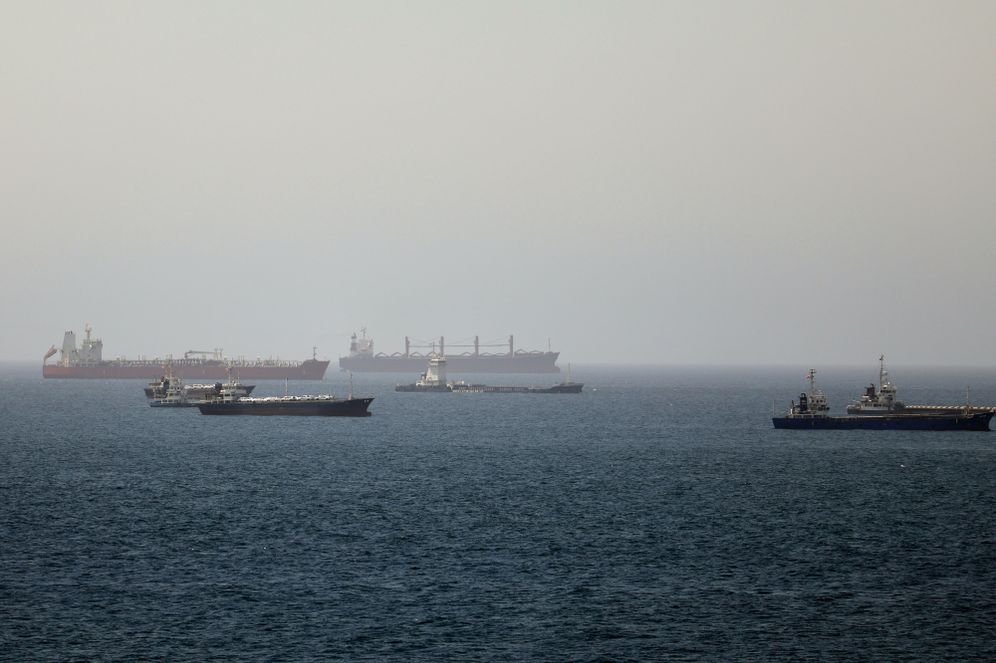
The question of who controls the Strait of Hormuz has emerged as one of the defining issues in the confrontation between the United States and Iran, with competing visions over the future of one of the world's most strategically important waterways.
President Trump recently floated the idea of imposing a 20 percent protection fee on cargo transiting the strait before quickly abandoning the proposal.
At the same time, Iran has been pressing for a permanent role in approving traffic through Hormuz and has argued it should be able to collect fees from vessels using the passage.
The debate goes far beyond shipping charges. At its core is the legal and political question of how international straits are governed.
A Narrow Waterway With Global Importance
The Strait of Hormuz is approximately 21 miles wide at its narrowest point. The internationally recognized shipping lanes pass through the territorial waters of both Iran and Oman, with no corridor of international waters separating them.
Despite that geography, vessels transiting the strait enjoy the right of transit passage under the United Nations Convention on the Law of the Sea (UNCLOS) and customary international maritime law. Because Hormuz connects two larger bodies of water, commercial shipping has the right to move continuously and expeditiously through the passage.
While Iran and Oman may regulate navigation, safety and environmental protection within their territorial waters, they cannot suspend transit passage or discriminate against vessels based on nationality.
International maritime law also draws a distinction between charging for services and charging for passage itself. States may collect fees for services such as pilotage, tug assistance or port facilities, but they cannot impose a compulsory toll simply for crossing an international strait.
Iran's Expanding Claims
Tehran argues that it provides security and coordinates maritime traffic through Hormuz.
However, Iran has also threatened, intercepted and attacked vessels that did not follow its preferred routing, while indicating that ships from friendly countries could receive favorable treatment and those linked to its adversaries could face restrictions.
Critics argue that such an approach goes beyond neutral traffic management by making access to an international waterway contingent on political considerations.
Iran has also sought to extend its role beyond its own territorial waters, pressing for authority over traffic moving through the Omani side of the strait, where vessels may not require any services from Tehran.
Lessons From Other Strategic Waterways
Supporters and critics of Iran's position frequently point to other major maritime chokepoints as comparisons.
The Strait of Malacca, which lies within the territorial waters of Indonesia, Malaysia and Singapore, demonstrates how coastal states can jointly manage one of the world's busiest shipping lanes without allowing a single country to exercise exclusive control.
The three nations cooperate on navigation safety, environmental protection and maritime security through coordinated mechanisms. Shipping nations and industry groups may contribute funding or equipment to support those efforts, but participation remains voluntary rather than compulsory.
Iran appears to be seeking a different model—one that combines international recognition of its management role with the authority to collect fees and exercise greater discretion over which ships may pass.
Such an arrangement would grant Tehran many of the benefits of an international governance framework while stopping short of the shared administration and equal access that characterize the Malacca system.
The Montreux Model
Another frequently cited example is Turkey's management of the Bosphorus and Dardanelles under the 1936 Montreux Convention.
That treaty guarantees commercial navigation while granting Turkey defined authority over military vessels and permitting charges for specified services.
Crucially, Turkey's powers are derived from an internationally negotiated convention that clearly establishes the scope of its authority, wartime rules and applicable fees.
Some analysts argue Iran may be seeking to secure a comparable legal framework for Hormuz—one that would formalize its role in regulating traffic and potentially collecting certain fees.
Unlike the Montreux Convention, however, any such arrangement would emerge against the backdrop of repeated threats to commercial shipping, raising concerns that negotiations would be conducted under coercive pressure rather than mutual agreement.
The Broader Legal Framework
The Strait of Gibraltar reflects the more common international standard governing strategic waterways.
Although its waters fall under the sovereignty of the coastal states, commercial vessels retain transit rights between the Atlantic Ocean and the Mediterranean Sea. Ships may be charged for entering ports or requesting services, but not simply for passing through the strait.
Man-made waterways such as the Suez Canal and Panama Canal operate under different legal principles. Their tolls are intended to finance the use and maintenance of constructed infrastructure rather than the exercise of sovereignty over a natural international strait.
A Growing Diplomatic Challenge
Trump's short-lived proposal to impose a protection fee briefly challenged the longstanding U.S. position that international straits should remain open to navigation without compulsory transit charges.
Its withdrawal restored Washington's traditional support for freedom of navigation.
As Iran continues pressing for greater authority over Hormuz, the dispute has become a central issue in broader US-Iran negotiations.
Even if diplomats were able to reach a formal agreement on paper, implementation could prove considerably more difficult. Continued Iranian threats and attacks on commercial shipping have raised questions over whether any future arrangement could balance Tehran's security concerns with the longstanding international principle that one of the world's most important maritime chokepoints should remain open and accessible to all.