Iraq's bid to mediate Iran-Gulf tensions faces major obstacles, former UN envoy warns
Former Iraqi diplomat Feisal Amin al-Istrabadi questions whether Baghdad can be a mediator, warning that Iran-backed militias plus weak government authority could undermine diplomatic ambitions

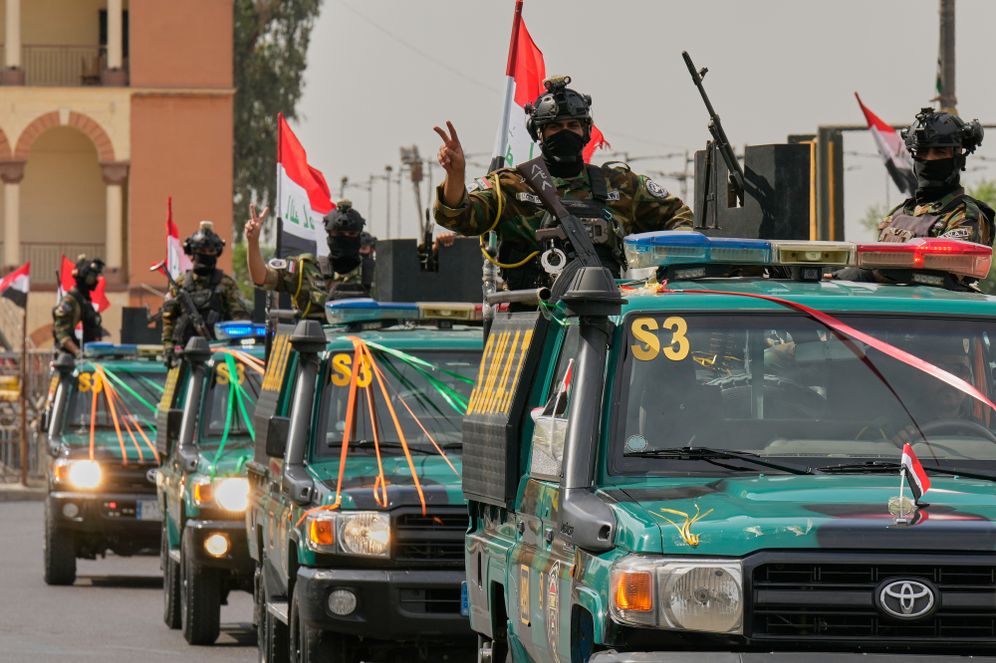
Iraq's efforts to position itself as a mediator between Iran and Gulf Arab states face significant challenges, with the country's internal political divisions and the influence of Iran-backed militias casting doubt over its ability to facilitate meaningful negotiations, former Iraqi diplomat Feisal Amin al-Istrabadi has warned.
Speaking on i24NEWS' Middle East Now, al-Istrabadi, a former Iraqi ambassador to the United Nations and founding director of Indiana University's Center for the Study of the Middle East, questioned whether Baghdad could serve as a credible intermediary while struggling to maintain control over armed groups operating within its borders.
His comments come as Iraqi Foreign Minister Fouad Hussein seeks to organize talks between Iran and Gulf states, with diplomatic contacts underway but no date announced. "Iraq is in a very odd position here," al-Istrabadi said, noting that Baghdad has previously helped facilitate discussions between Iran and the United States, as well as between Tehran and Saudi Arabia.
He pointed to Iraq's earlier mediation efforts between Saudi Arabia and Iran, which eventually culminated in a Chinese-brokered diplomatic rapprochement in 2023.
"China sort of snuck in at the last minute and took the credit," he remarked.
Despite Iraq's previous diplomatic successes, al-Istrabadi argued that the current regional conflict presents a fundamentally different challenge. "Iraq is technically a non-belligerent, a neutral in the war between the United States and Israel on one side and Iran on the other," he explained.
However, he noted that Iraq's territory and airspace have been used by multiple parties to conduct attacks, while Iran-aligned militias operating inside Iraq have also targeted neighboring countries. "This is a very odd position to be in, where the government is neutral, but its territory is being used," he said.
The former diplomat expressed skepticism about Baghdad's ability to overcome those contradictions. "Because of that particular history in this particular case, it's difficult for me to see that Iraq is a meaningful interlocutor as a neutral mediator."
Al-Istrabadi also questioned whether Iraq's relatively inexperienced prime minister possesses the political influence necessary to deliver a diplomatic breakthrough. Nevertheless, he stressed that reducing regional tensions remains firmly in Iraq's national interests, particularly given the economic consequences of the ongoing conflict.
Al-Istrabadi also warned of Iraq's heavy dependence on oil revenues, which account for roughly 90 percent of government income according to international estimates, leaving the country particularly vulnerable to disruptions in regional shipping routes.
Suggested articles
He warned that declining oil revenues could have severe consequences for Iraq's heavily government-dependent workforce, although economic conditions have stabilized somewhat in recent months. "If the situation escalates again, Iraq will once again be one of the victims of this war," he said.
Beyond the economic fallout, al-Istrabadi identified Iraq's inability to disarm Iran-backed militias as one of the most serious challenges facing the government.
Baghdad has repeatedly pledged to bring armed groups under state authority, a longstanding demand from Washington. However, the former ambassador argued that the government's political dependence on militia-affiliated parties makes such efforts deeply unrealistic.
"The current prime minister could not have become prime minister without the support of the parliamentary parties of the very militias that he's expected by the United States to disarm," he said.
"It was always a non-starter."
Al-Istrabadi said the original September 30 deadline for disarming the militias had been pushed back, reportedly until March or April 2027, although he expressed serious doubts that the revised timeline would be met.
He also criticized previous attempts to integrate armed factions into Iraq's official security apparatus, arguing that many groups retained their existing leadership and command structures despite technically becoming part of state institutions. "True integration, as opposed to what was done, which was a legal fiction whereby the units survived intact, including their command structures," he said.
Suggested articles
Ultimately, al-Istrabadi warned that the Iraqi government's lack of authority over powerful armed factions limits not only its domestic security ambitions but also its credibility as a regional diplomatic player. "The Iraqi state is simply not powerful enough to coerce the militias into surrendering their arms, nor indeed into fully integrating into the security and armed forces," he said.
For Baghdad, the challenge is therefore twofold: convincing Iran and its Gulf neighbors that Iraq can serve as a neutral diplomatic forum, while demonstrating that its own government has sufficient authority over the armed groups operating on Iraqi soil.