Is opposing Israel becoming a winning strategy for Senate Democrats? - analysis
Chris Van Hollen's challenge to Chuck Schumer tests whether growing opposition to Israel can translate into political power within the Democratic Party.

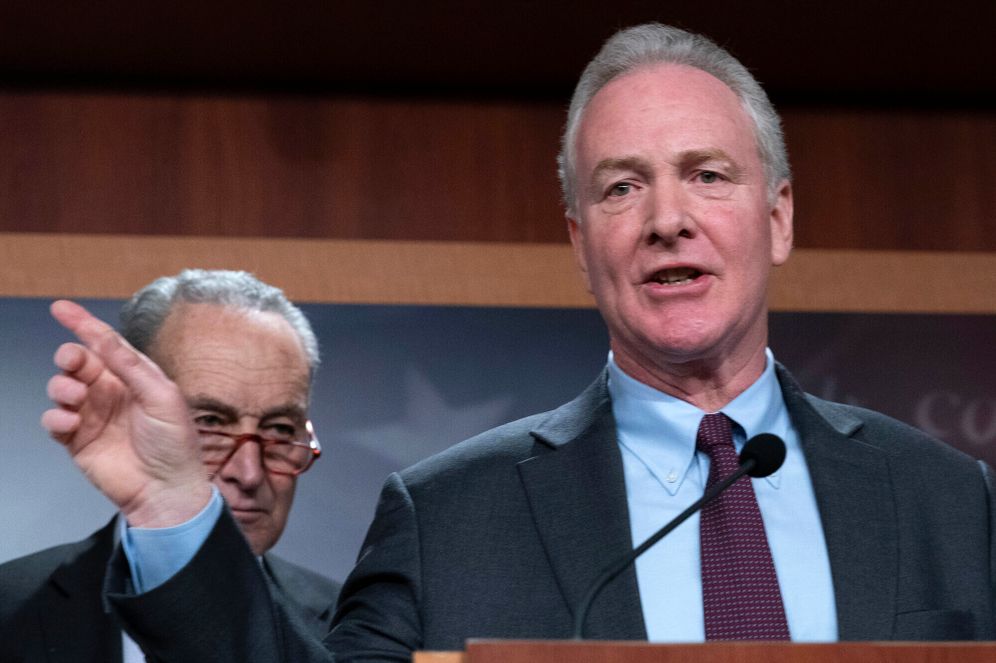
Much like the Israel weapons embargo resolutions that were doomed to failure in a Republican-controlled Senate, the current Senate majority leader campaign will be watched not for the result itself, but as a barometer to keep track of change in the air.
Current Minority Leader Chuck Schumer is the frontrunner. The New Yorker prides himself on being the shomer, or guardian, of the Jewish people, while overseeing a party rife with antisemitism and having endorsed the likes of Michigan’s Abdul El Sayed, who believes Israel, and apparently only Israel, should not be tied to any particular faith or culture.
Still, Schumer refused to vote in favor of the myriad resolutions introduced by the likes of Sen. Bernie Sanders and his ilk to cut off funding and weapons for Israel’s military, even as half his caucus did so.
Schumer is being challenged from the left by Maryland’s Chris Van Hollen, who has found a niche for himself among Senate Democrats as increasingly and disturbingly hyper-focused on big, bad Israel.
He has taken aim at AIPAC, urging Senate candidates and Democratic committees to reject funding and support from the lobby group.
This is the same Van Hollen who once campaigned for the House on being “absolutely committed” to Israel’s security, and spoke weeks later of the “unbreakable” bond between Americans and Israelis. He once said during a debate that “I would not try and interfere or undermine in any way the decisions of the state of Israel to defend itself.”
Van Hollen said this week that 15 Senate Democrats have told him they will back him for the leader role, while Schumer allies said their guy is expected to get at least 40 votes out of what will be a 56-member caucus.
Of those who have actually publicly stated their intentions, Schumer is up 16-5, with Van Hollen suffering a blow this week, as his fellow Maryland senator, Angela Alsobrooks, stated her intention to back Schumer.
To be clear, the vote isn’t all about Israel. Van Hollen has made it part of his campaign platform, even as he told MS NOW that the race “much bigger than that.”
Schumer has not specifically cited Israel in his own pitch.
A strong showing for Van Hollen will only give more tailwind to those who want to force those types of resolutions to the Senate floor. But an underperformance could send the opposite message: that it’s not en vogue to be Van Hollen-level obsessive about Israel.
We saw a similar circumstance over in the House this week. Hakeem Jeffries of New York, the current minority leader, won approval from Democrats by a 251-11 vote to take over as House speaker in January.
Rep. Henry Cuellar told CNN that the vote’s margin “tells you that’s a small number of votes that are marginalized” and that “this small little group cannot tell the caucus where we need to be at.”
While the identities of all 11 aren’t known, the majority of those who have revealed themselves ran on an explicitly anti-Israel platform, while Jeffries has largely held the line on his support of the Jewish state.
Suggested articles
- Israel, identity and the Democrats: What Abdul El-Sayed's victory means for American Jews - analysis | Owen Alterman
- Haley Stevens crosses the aisle, appears with Republican Mike Rogers at church as she endorses him for Michigan Senate seat | Yuval Barnea
- Michigan: Anti-Israel candidate Abdul El-Sayed win the Senate Democratic primary | i24NEWS