Hezbollah recruiting Brazilian criminals to launch terror attacks against Latin American Jews and Israeli
Hezbollah is reportedly relying on criminal networks in Brazil to recruit agents, finance its activities, and prepare operations against Israeli and Jewish interests

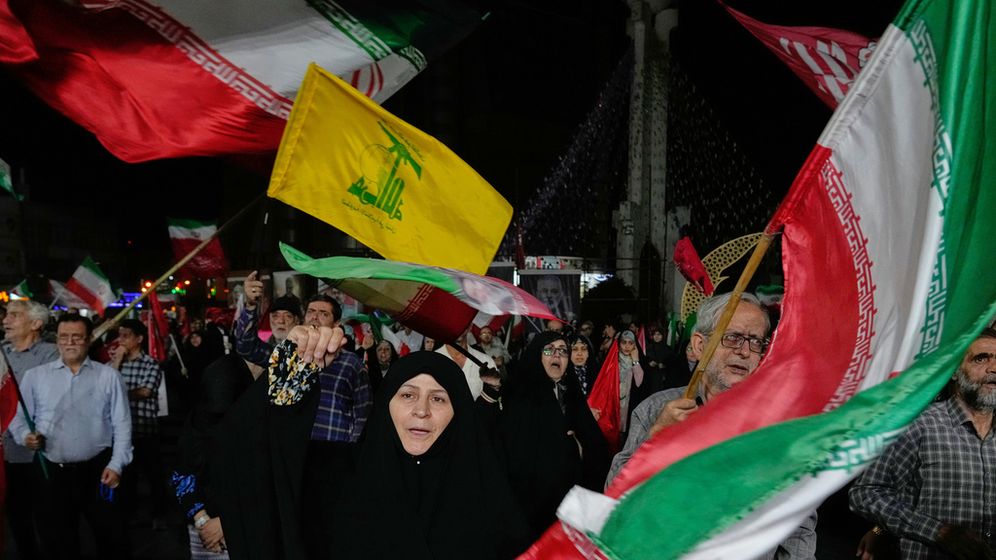
Hezbollah is said to have found a new pool of recruits in Latin America far from its traditional recruitment networks, according to an analysis published by the Washington Institute.
Hezbollah is seeking to enlist convicted criminals, notably in Brazil, by exploiting their financial difficulties and their resentment towards the justice system.
This strategy emerged from Operation Trapiche, an anti-terrorist investigation launched in November 2023 by the Brazilian federal police with the support of Israeli Mossad. The investigations uncovered a recruitment and funding mechanism intended, according to the investigators, to develop clandestine operational capabilities on the continent.
The presumed operation of the network is particularly concerning. Men with no prior connection to Hezbollah are approached in Brazil, then sent to Lebanon to receive training. Upon their return, some were tasked with monitoring synagogues, Israeli diplomatic missions, and figures in the Jewish community.
For Lucas Gualtieri, a Brazilian federal prosecutor specialized in organized crime, this method would allow Hezbollah to conceal its involvement in potential attacks. By recruiting individuals motivated by money rather than ideology, the organization could attempt to portray certain operations as isolated criminal acts.
The investigation is particularly focused on the background of Lucas Passos Lima, who was recruited through a network established in Brazil. After two trips to Lebanon in 2023, he allegedly filmed three synagogues, a Jewish cemetery, the Israeli embassy, and a rabbi in the Brasília region. The investigations also revealed weapons handling training and the acquisition of surveillance equipment.
The investigators also uncovered a financial aspect. Brazilian tobacco businesses are believed to have helped finance the recruits' travel to Beirut, where they were allegedly trained in clandestine communication techniques. Some are said to have learned to exchange information via unsent email drafts in order to limit traces of their communications.
The financing of these activities would also involve cryptocurrencies. In a separate case, a São Paulo broker, Dante Felipini, is accused of having set up several digital wallets for the benefit of Hezbollah and the Iranian Revolutionary Guard. He is notably being prosecuted for money laundering and financing terrorism.
The analysis finally highlights a major judicial issue. In Brazil, the courts have confirmed that a financial motivation does not exclude the classification of terrorism when an individual knowingly participates in a terrorist project. This interpretation could strengthen prosecutions against criminal networks working for foreign armed organizations.
For the Brazilian authorities and their international partners, the challenge now is to identify these networks before they lead to attacks. Investigators in particular recommend strengthening financial surveillance, monitoring shell companies, and tracking cryptocurrency transactions.
Suggested articles
- Netanyahu: Facts of reported settler assault on US photographer remain unclear | LIVE BLOG | i24NEWS
- Israel frustrated as Lebanese army fails to dismantle Hezbollah infrastructure | Guy Azriel
- Hezbollah cluster bomb kills student, injures 23 on school trip in northern Israel | i24NEWS, Yinon Shalom Yatach