‘Can we not defend from our own border?’ Miri Eisin questions Israel’s Syria strategy
“Can Hamas do that again? And if they can’t, do you continue acting as if they can?” the former head of IDF Combat Intelligence asked, extending the same question to Hezbollah and Syria.

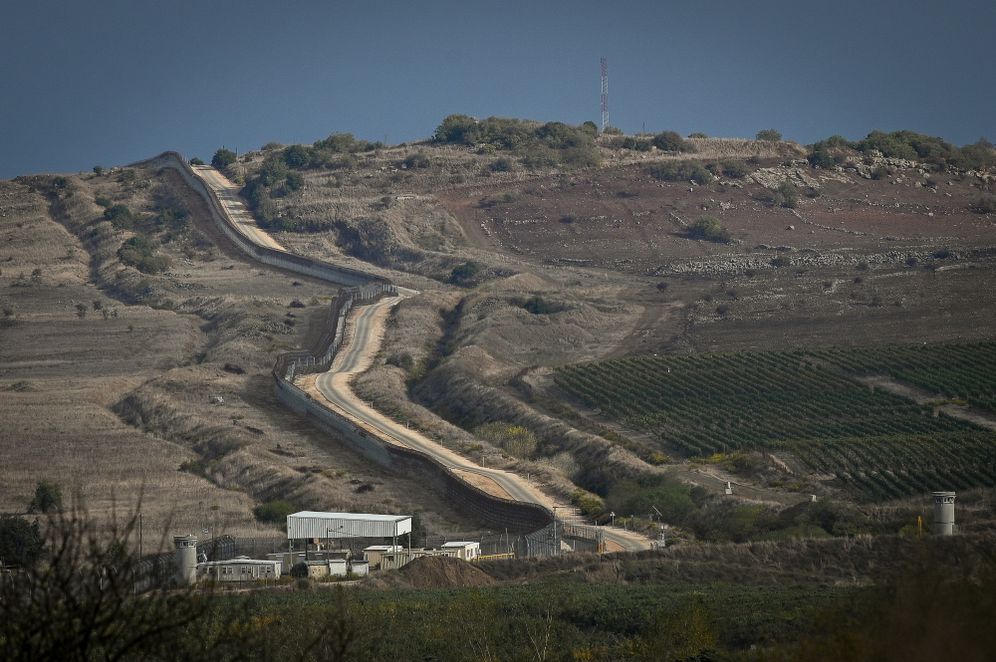
Israel’s military presence inside Syria risks creating new enemies rather than simply keeping existing threats at bay, former head of IDF Combat Intelligence Col. Miri Eisin warned, questioning whether Prime Minister Netanyahu’s security doctrine is adapting to the changes it has helped bring about.
Speaking on i24NEWS’ On the Record, Eisin supported the principle of preemptive action but challenged the assumption that protecting Israel requires an indefinite deployment beyond its borders.
“Can we not defend from our own border? Do we have to be five, 10 kilometers into the Syrian side?” she asked.
Eisin, a senior fellow at Reichman University’s International Institute for Counterterrorism, said Israel’s operations had helped prevent another October 7-style attack. But she questioned whether preventing a repeat of the last catastrophe was sufficient preparation for the next threat.
“Can Hamas do that again? And if they can’t, do you continue acting as if they can?” she asked, extending the same question to Hezbollah and Syria.
For Eisin, Syria offers the clearest case for reassessing Israel’s forward military presence.
She credited Israel’s campaign against Hezbollah with helping create the conditions for the fall of Syria’s dictatorship. Although she expressed reservations about Syria’s new leadership, she argued that continued Israeli deployments could give otherwise divided groups a shared cause.
“I think in the tipping point that we’re making more Syrians against us,” she said.
Syria’s focus, she argued, should be rebuilding its own country. Israel should avoid allowing its presence to become a rallying point that shifts attention toward confrontation.
“They have to build their own country. It shouldn’t be about being against Israel. It should be about Syria.”
Eisin advocated moving back to the internationally recognized separation line, arguing that a withdrawal could reduce daily friction without abandoning an offensive security strategy. Terrain and defensive requirements would still matter, she said, but the current situation allowed Israel to take a measured risk.
Eisin also warned of a cycle in which military deployments encourage demands for civilian settlement, creating further territory that would then require protection.
“You build the new communities and then you have to protect them,” she said. “So you’re going to go further in and further in.”
Her criticism distinguished between taking the military initiative and permanently holding ground across a border.
“I’m all for that security doctrine,” she said of an offensive approach. “That doesn’t mean you have to do it from the other side of the border.”
She acknowledged that Syria, Lebanon and Gaza present different challenges. But in each arena, she argued, the consequences of remaining inside neighboring territory must be weighed alongside the immediate defensive benefits.
On Lebanon, Eisin said weakening Hezbollah must be accompanied by efforts to prevent Iran from restoring the group’s funding and weapons supplies. Reconstruction also requires partners, she argued, or Tehran could regain influence by financing the rebuilding itself.
Alienating countries that could help would undermine that effort.
“We really need to still have allies, not just the United States,” she said.
Eisin also questioned the limits of military force against Iran. While defending the decision to kill Supreme Leader Ali Khamenei, she expressed doubt that Israel could deliver regime change from abroad.
“I don’t think you can topple a regime from the outside,” she said, advocating continued pressure on Iran’s proxies instead.
Her central challenge to Netanyahu’s doctrine was whether military successes were being translated into a sustainable strategy. Preventing another October 7 remains essential, she argued, but Israel must also recognize when its actions risk generating the next source of hostility.
Suggested articles
- Syria fears possible Israeli-backed Druze offensive in Sweida, Syrian official tells i24NEWS | Amichai Stein
- Syria’s revised textbooks elevate Islamist identity, sideline minorities; Israel still the “enemy” in curriculum | i24NEWS
- Netanyahu says phone call with Syrian President Ahmed al-Sharaa stopped Druze massacre | i24NEWS, Ari Kalman