Israel-Turkey relations: How October 7 changed everything
'In simple English, it was designed to avoid a future direct confrontation because in Israeli eyes, Israel has no strategic depth'

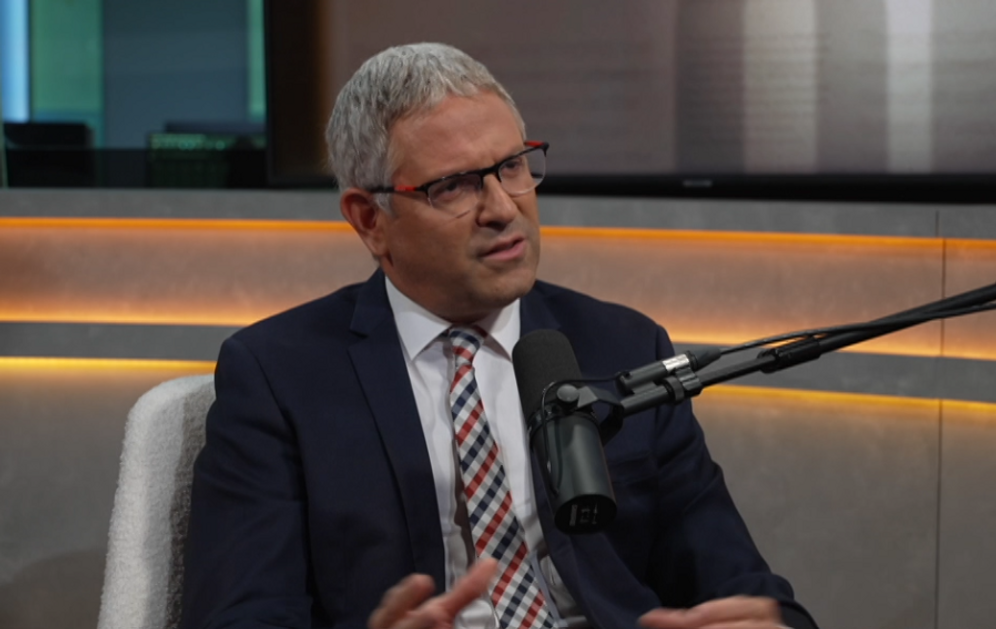
Dr. Hay Eytan Cohen Yanarocak sat down with i24NEWS’ On the Record on Wednesday to discuss the changes in Israel's relations with Turkey after October 7.
Cohen Yanarocak laid out the three steps that brought down the previously good relationship. First, Erdogan weakened the political strength of the Turkish armed forces, which were traditionally much closer to Israel. Then came Then came the Mavi Marmara incident, which brought the Israel-Palestine conflict to the forefront of relations, made worse by Turkish support for Hamas after October 7. And finally, the fall of Assad put Israel and Turkey on a collision course as their foreign policy goals clashed.
Cohen Yanarocak said he did not believe a change in government would make a difference because both countries’ national interests were misaligned.
He said the situation has gotten far more complicated in recent years as more actors have entered the Middle East: "This is much more complicated when you have more components in the equation."
But he emphasized that a direct military confrontation would not be in either side’s interest, as it would only help Iran. "Such a friction between the two states will only play into the hands of the Ayatollah regime in Iran, which is also considered a traditional rival of the Turkish administration."
Cohen Yanarocak described the Israeli strikes against the northern Syrian Abu al-Duhur airbase as "pre-emptive and preventive," and said they were aimed at drawing clear red lines.
"In simple English, it was designed to avoid a future direct confrontation because in Israeli eyes, Israel has no strategic depth, unlike Turkey, which has a huge territory. October 7 shaped the Israeli security perception. The new trauma is not well understood in Turkey and in other Arab capitals."
He then turned to how October 7 had reshaped the region.
"We truly believe in the spirit of the Abrahamic Accords. I would like to remind our audience that before October 7, we were only talking about regional peace. Then this so-called axis of resistance, which was driven by Iran, turned everything upside down. Now we are talking only about war or absence of peace. This is the main problem. Unfortunately, everything was forgotten. October 7 was a tectonic change in the relationship between Israel and Turkey."
"They did not speak about the Israeli suffering,” he said. "They only began to focus on the Palestinian narrative."
"They decided to collapse the normalization. Turkey upgraded its diplomatic stance from pro-Palestinian to pro-Hamas, and when they did so, it also came with the systematic delegitimization of the State of Israel."
Cohen Yanarocak said that this was disappointing to him as a Turkish Jew: "I really do not want to see the country that I’m living in be at odds or in a hostile situation with the country that I grew up in. For me, it's a nightmare scenario."
Turning to the collapse of the Assad regime, he said, "Turkey managed to fill the vacuum that came into being after Iran's departure from Syria."
However, he said that Israel was lucky that Turkey was unable to bring Egypt into the new Sunni alliance of the Mecca Pact, otherwise, Turkish influence would surround Israel.
He said that the issue was less about Turkish influence in Syria and more about the open deployment of Turkish troops in Syria: "This is the new thing, in my opinion, this is the game-changer."
Cohen Yanarocak summed up the issues with the Turkish government’s current stance: "Rivalry is fine. I'm not complaining about rivalry. You know, two states may declare a rivalry against each other, may compete. But once you are engaging in this delegitimization on a daily basis. And once you issue arrest warrants against your so-called rivals, your rival begins to think twice about your intentions."
Suggested articles
- Israel has ‘golden opportunity’ to win over Saudi Arabia as Turkey, Pakistan falter, security official tells i24NEWS | Guy Azriel
- Saudis believe Houthis "will collapse like the Assad regime," trained fighters from Syria - report | i24NEWS
- Turkey blocks websites and accounts, dozens arrested in a wide-scale LGBTQ crackdown | i24NEWS