Yad Vashem opens archive of 7,000 witness interviews on Holocaust mass killings
“The forests, fields, and ravines where Jews were murdered are as much a part of the history of the Holocaust as the Nazi camps"

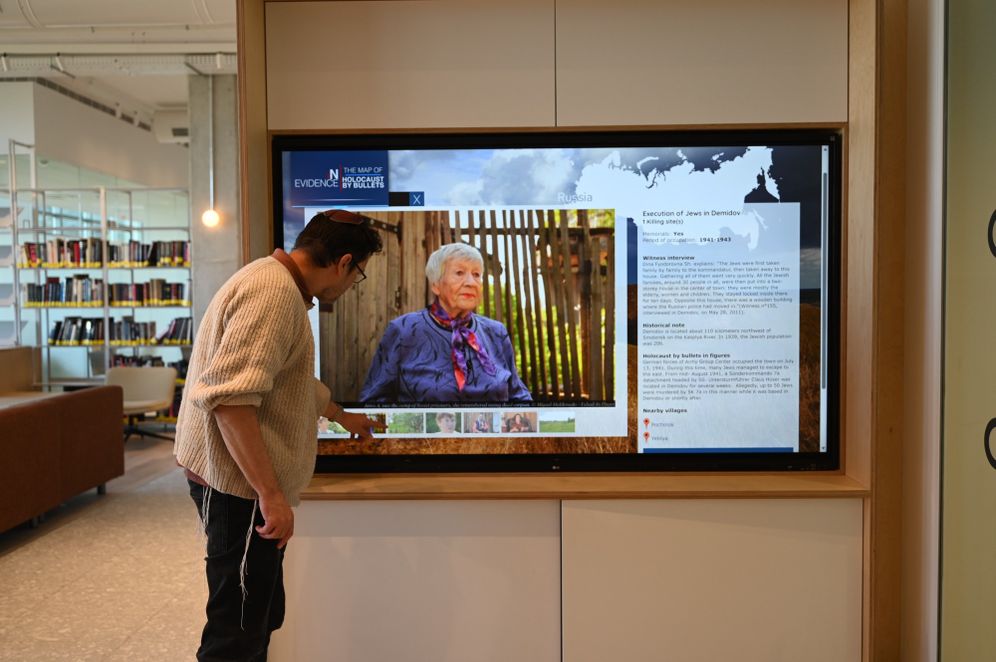
Vad Vashem opened an institute Monday that gives the public access to more than two decades of research into the mass murder of Jews across Eastern Europe.
The collection includes interviews with more than 7,000 local residents and records on more than 3,000 killing sites identified by investigators.
The records come from Yahad-In Unum, a French organization founded in 2004 by Catholic priest Patrick Desbois.
Its researchers traced massacres carried out by Nazi mobile killing units and local collaborators in forests, cemeteries and ravines. At many sites, no Jewish victims survived. Investigators turned to people who had seen the killings, including residents forced to dig mass graves.
Desbois said the first witness he interviewed was a woman named Lena. She was 17 and gathering wheat when a truck pulled up carrying Jewish women she knew. One called out to her for help. Lena hid and heard the woman calling her name until German forces opened fire. Years later, she could still tell Desbois where the women were buried.
Suggested articles
“Finding these graves also means restoring dignity to the victims, as Lena did for those women,” Desbois said.
The collection, which also includes research files and interactive maps, is housed in Yad Vashem’s archive building in Jerusalem. The new center, formally named the Patrick Desbois and Philip Friedman Institute for Documenting Holocaust Murder Sites, will expand Yad Vashem’s existing research into massacres in territories of the former Soviet Union.
“The forests, fields, and ravines where Jews were murdered are as much a part of the history of the Holocaust as the Nazi camps,” Yad Vashem Chairman Dani Dayan said. He said the institute would use the records in research and education to help people understand how the Holocaust unfolded and remember the victims and their communities.
Philip and Rose Friedman, longtime Yad Vashem supporters, helped bring the archive to Jerusalem. They backed the institute in honor of their parents, who survived the Holocaust, and relatives who were murdered.