Francesca Albanese apologizes after claiming that Jews were called “Muslims” in Nazi camps
The UN special rapporteur admitted to having misinterpreted the term "Muselmann" and the origin of the word "antisemitism"

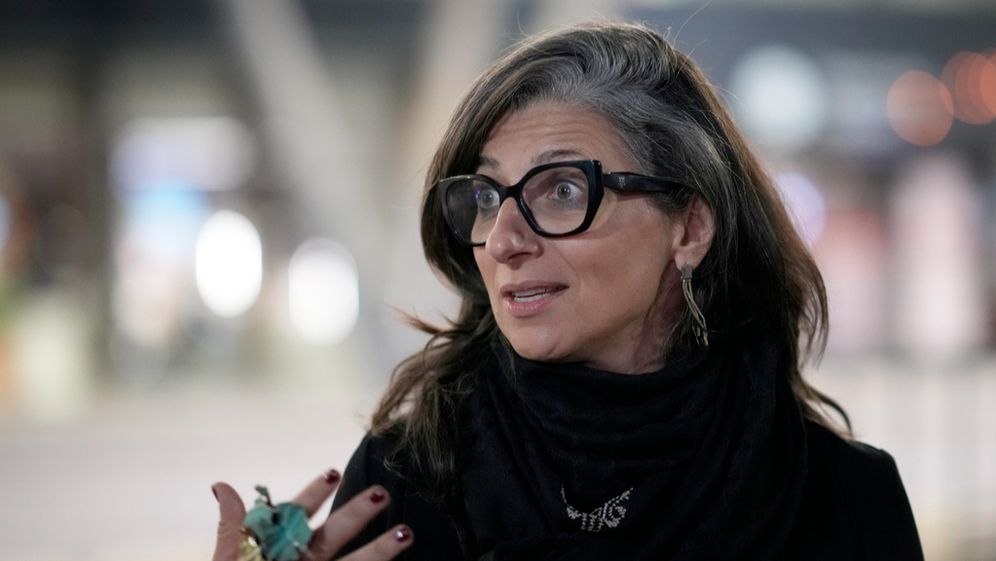
Francesca Albanese, the United Nations Special Rapporteur on the Palestinian territories, issued an apology on Monday after falsely claiming that Jews were called "Muslims" in Nazi concentration camps.
In an interview with the Latin American and Caribbean Confederation of State Workers, the diplomat attempted to demonstrate that the term "antisemitism" originally referred to hostility towards all Semitic peoples and not specifically Jews.
"When they were being led to the gas chambers, some accounts of life in the concentration camps indicate that the Jews were called 'the Muslims,'" she had said.
Francesca Albanese had also stated that the term "antisemitism" was originally intended to refer to any non-European person from the Middle East, before becoming focused on hatred of Jews.
In a message published on X, the UN official acknowledged having misunderstood the German term "Muselmann," literally "Muslim."
“I misinterpreted the term ‘Muselmann,’ used in Nazi camps to designate prisoners on the verge of death, and I wrongly concluded that the word antisemitism originally referred to hatred of all Semitic peoples,” she wrote.
She then acknowledged that the word had been created specifically to refer to hatred of Jews.
Suggested articles
The term "antisemitism" was popularized in 1879 by the German journalist Wilhelm Marr to refer to campaigns hostile to Jews. According to the International Holocaust Remembrance Alliance, it has always referred, since its inception, to prejudice and hatred directed at Jews.
The term "Muselmann" was used in the Nazi camps to describe inmates suffering from extreme exhaustion and severe symptoms of starvation. Its precise origin remains uncertain.
These prisoners, whether Jewish or non-Jewish, were often close to death and frequently selected to be killed. The term therefore did not constitute a racial category used by the Nazis to associate Jews with Muslims.
Yad Vashem denounced a "fundamental distortion" of the historical meaning of the word. The Israeli institution recalled that the expression had developed among camp inmates and that it could refer to both Jewish and non-Jewish prisoners.