i24NEWS Exit Poll: Likud wins 27 seats, Yashar 20; coalition bloc reaches 55 seats, opposition 49, and Arab parties 16
Likud with 27 seats, Yashar with 20 seats • Netanyahu's bloc with 55 seats, Eisenkot's bloc with 49 seats, the Arab parties with 16 seats • Winter does not pass the electoral threshold.

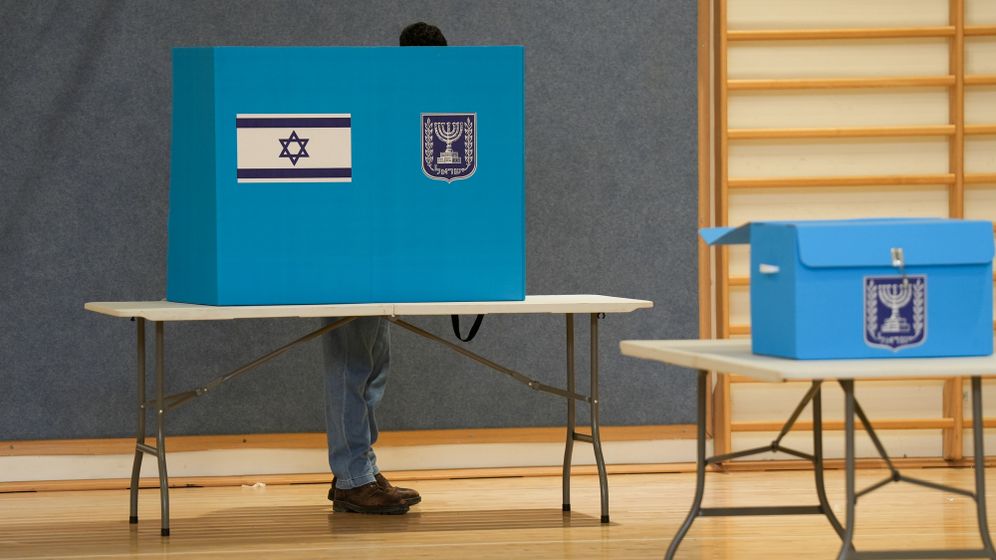
Prime Minister Benjamin Netanyahu's Likud emerged as the largest party in the i24NEWS exit poll on Tuesday night, winning 27 seats, while Gadi Eisenkot's Ma'an secured 20 seats.
According to the exit poll, Netanyahu's bloc is projected to win 55 seats, compared to 49 for Eisenkot's bloc, with the Arab parties securing a combined 16 seats. Ofer Winter's party failed to cross the electoral threshold, leaving neither major bloc with the 61 seats needed to form a majority government.
Naftali Bennett's B'Yachad received 15 while Yair Golan's Democrats received 9.
The Arab parties have emerged as the biggest successes of the election winning a combined 16 seats, 9 for the Joint List composed of Hadash, Balad, and Ta'al, while Mansour Abbas' Ra'am won 7. This comes after record turnout among Arab voters, with Arab cities throughout the country seeing some of the highest turnout.
The ultra-orthodox parties, Shas and United Torah Judaism won 8 and 7 seats respectively, while new commer Charedi Public Party failed to pass the threshold.
Itamar Ben-Gvir's Otzma Yehudit won 7 while their previous electoral ally, Bezalel Smotrich's Religious Zionism Party received 6. This is the first time both parties have entered Knesset without running on a combined list. Religious Zionism Party ran a combined list with Moshe Feiglin's Zehut, marking the first time Zehut has entered the Knesset.
Avigdor Liberman's Yisrael Beiteinu won 5 seats leaving him the smallest party according to the exit poll.
Preliminary exit polls show neither bloc receiving enough seats to form a government without the support of Arab parties. The coaltion received a total of 55 while the oppositon received 49.
Unless a party switches bloc, it is unlikely either bloc will be able to form a government.
There was high turnout across the country and the electorate with estimates hinting at this being the highest turnout in Israel's history. The high turnout is likely to have contributed strongly to the Arab parties' results.